This article begins with the making of a bracelet using Akoya Keshi pearls and continues into my work and thoughts during the year-end period. It is not a systematic explanation of Keshi pearls, but rather a record of how Flower Jem actually selected these small Akoya Keshi pearls and turned them into a piece of jewelry.
Remaking a Keshi Bracelet at the Beginning of the Year
Hello, this is Flower Jem.
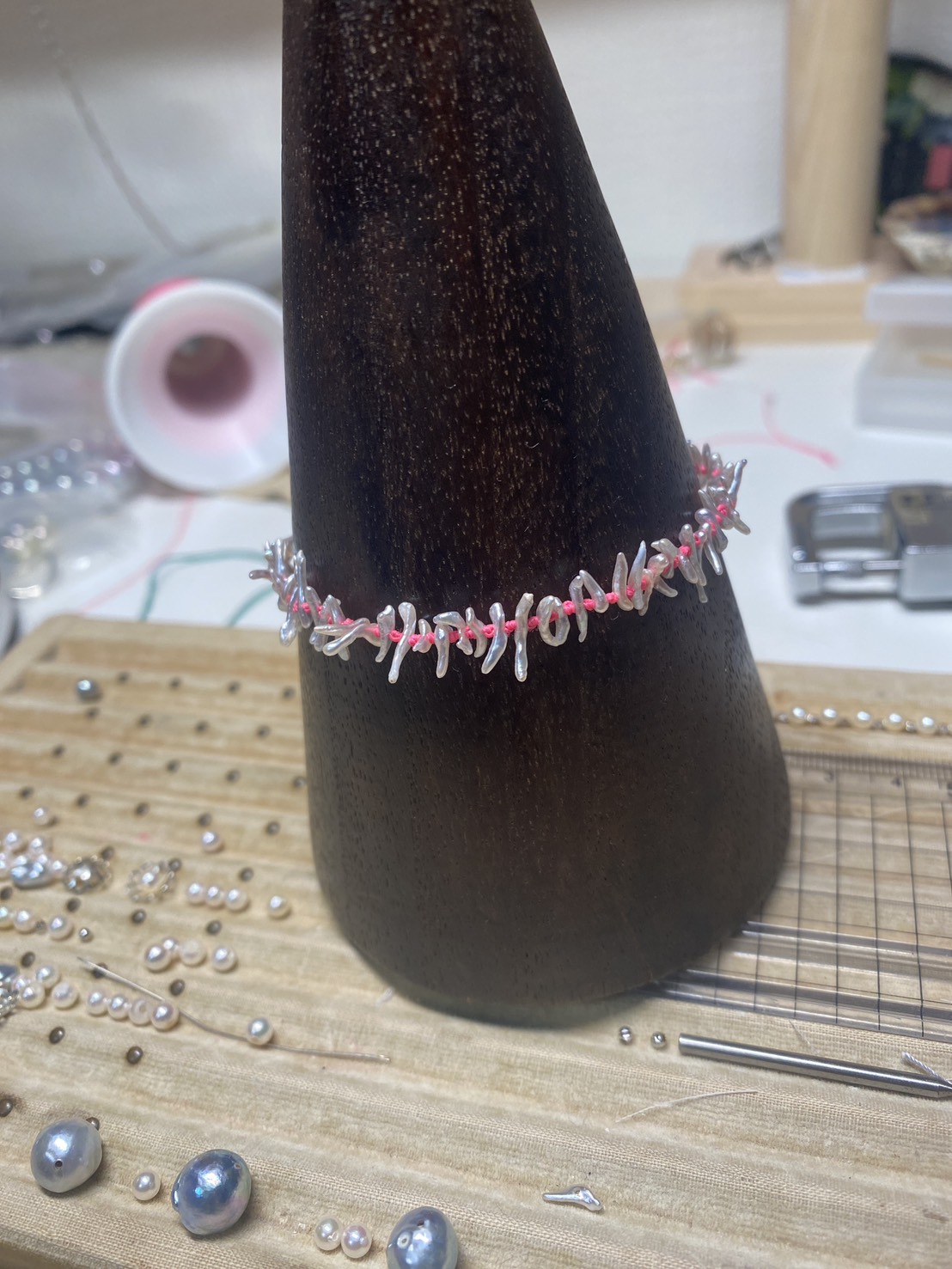
A new year has begun, and today, January 2nd, I spent my time remaking a Keshi bracelet.
This Keshi bracelet was originally made several years ago, but I received a new order for it around Christmas last year. The request was to extend the bracelet by a few centimeters, so that was the work I focused on today.
Four Hours for a Bracelet Under 100 USD
To start with the conclusion: it took nearly four hours to remake a 20 cm bracelet using an all-knot technique.
The reason is simple. Keshi pearls vary in thickness, so until the very end, it was impossible to know how many pearls would be needed to reach exactly 20 cm.
In the latter half of the process, I realized that the length was significantly short.
I untied the knotted thread and, using a thin wire, added Keshi pearls one by one onto the existing thread. This alone may have taken about an hour. If I had undone everything and started from scratch, it would have taken around two hours in total.
This bracelet is priced under 100 USD, but that does not mean I can afford to cut corners.
Year-End Days Are My Real Working Days
At the end of the year, I returned to my family home on the 30th and came back to my home in Kobe on the afternoon of the 1st.
While at my parents’ house, we cleaned the family grave together, did grocery shopping for the year-end and New Year meals, and even went to a coin laundry because a dog my brother brought along had an accident on the living room carpet. It was, in its own way, a peaceful time.
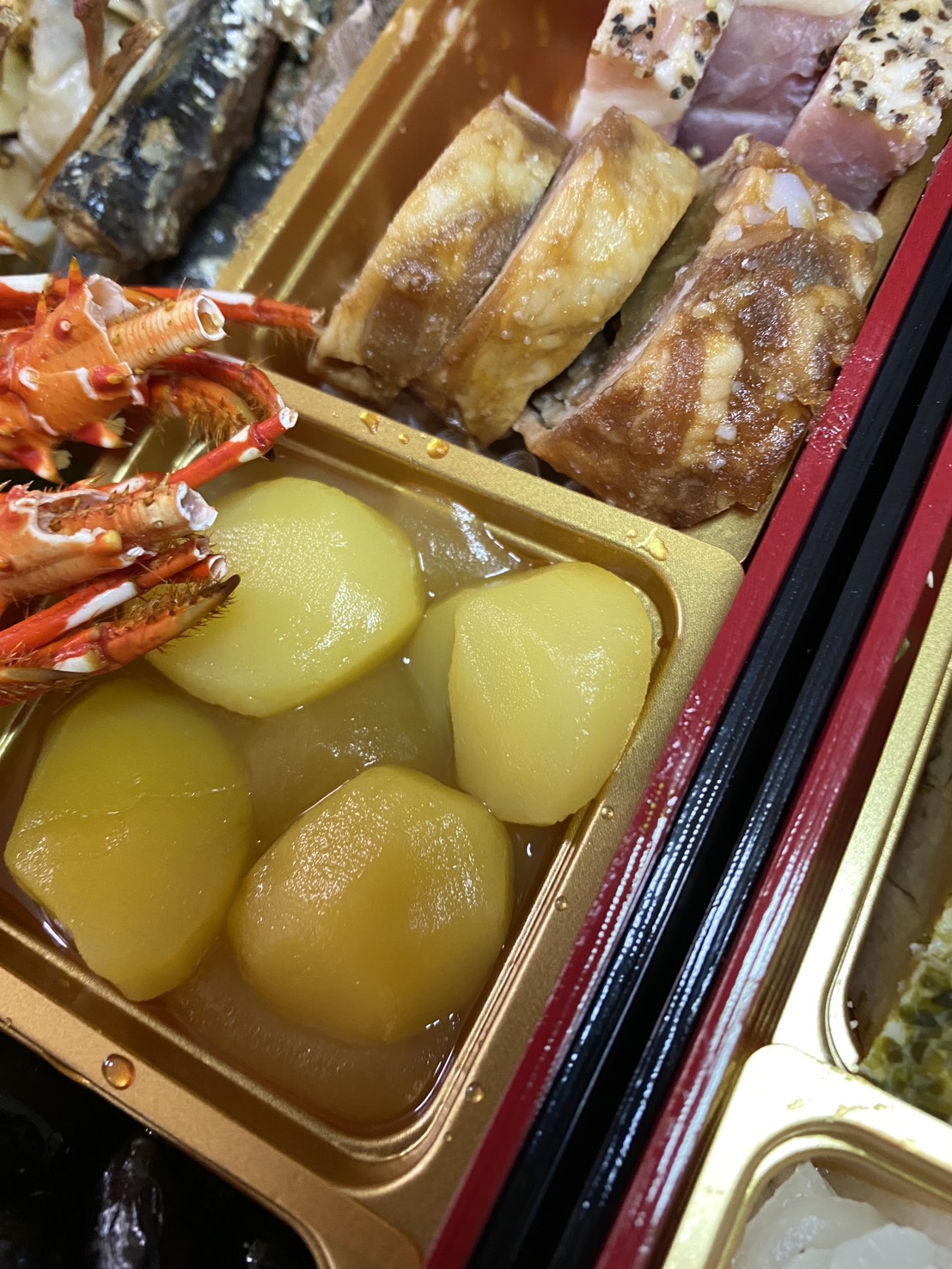
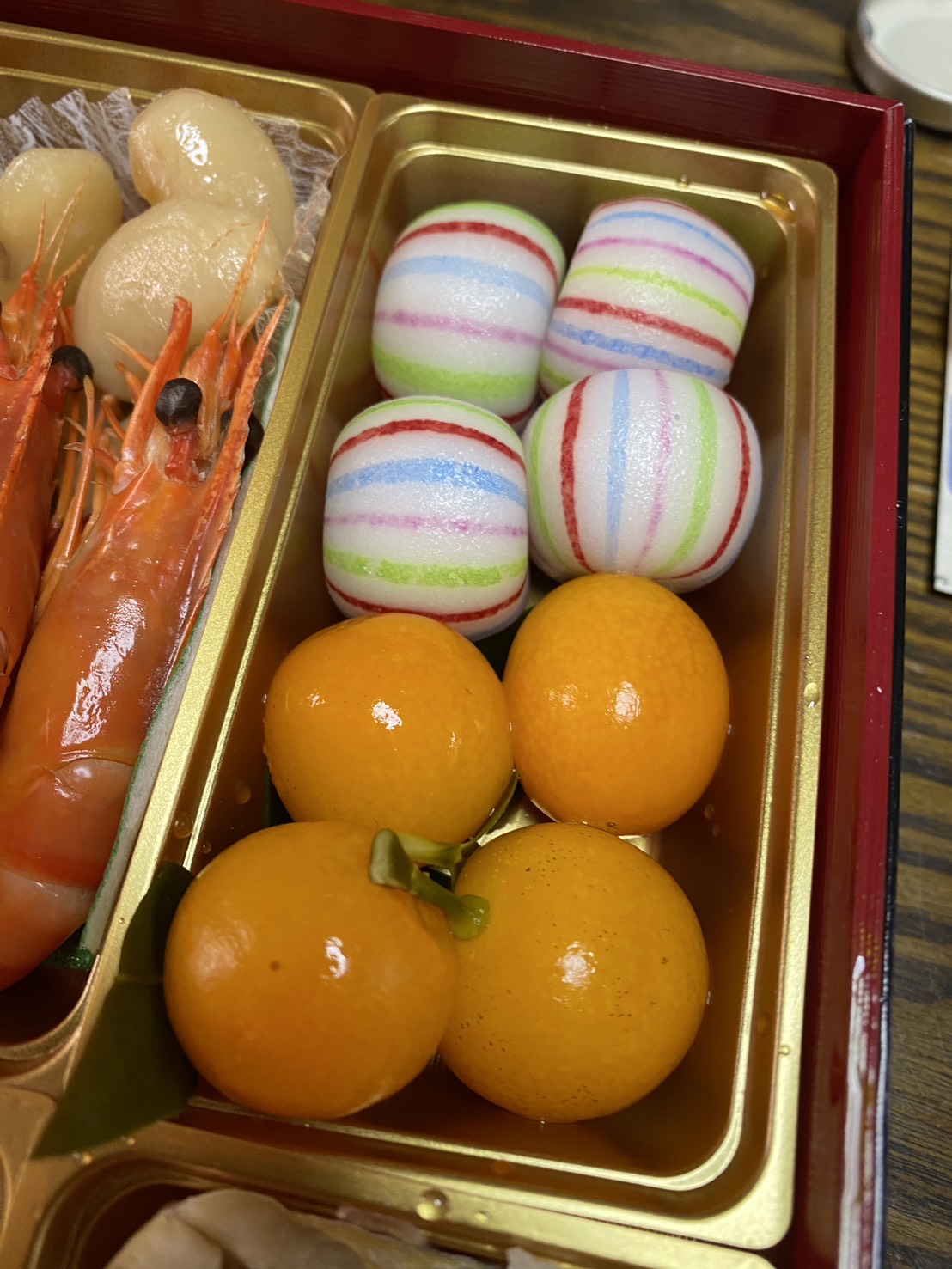
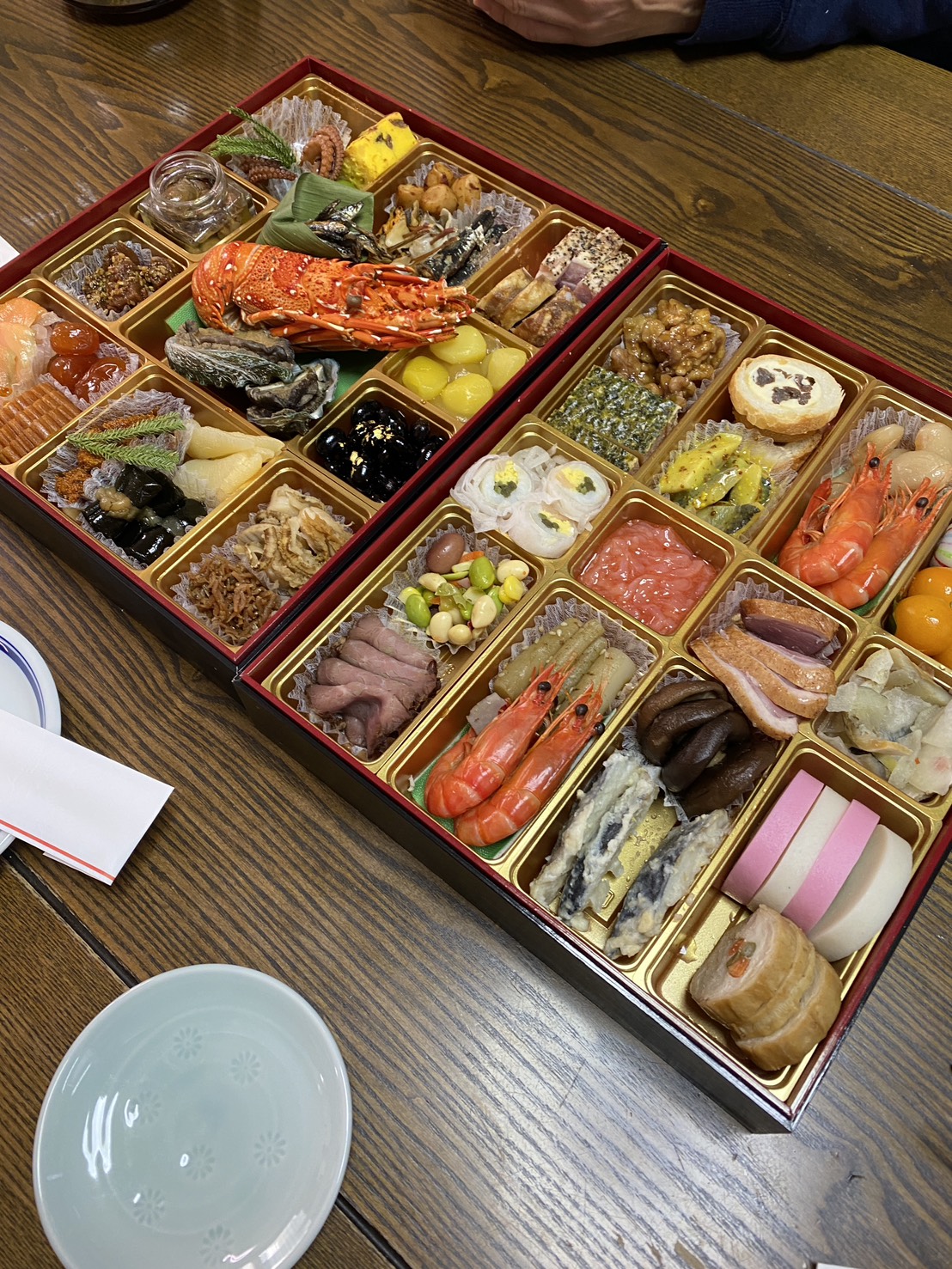
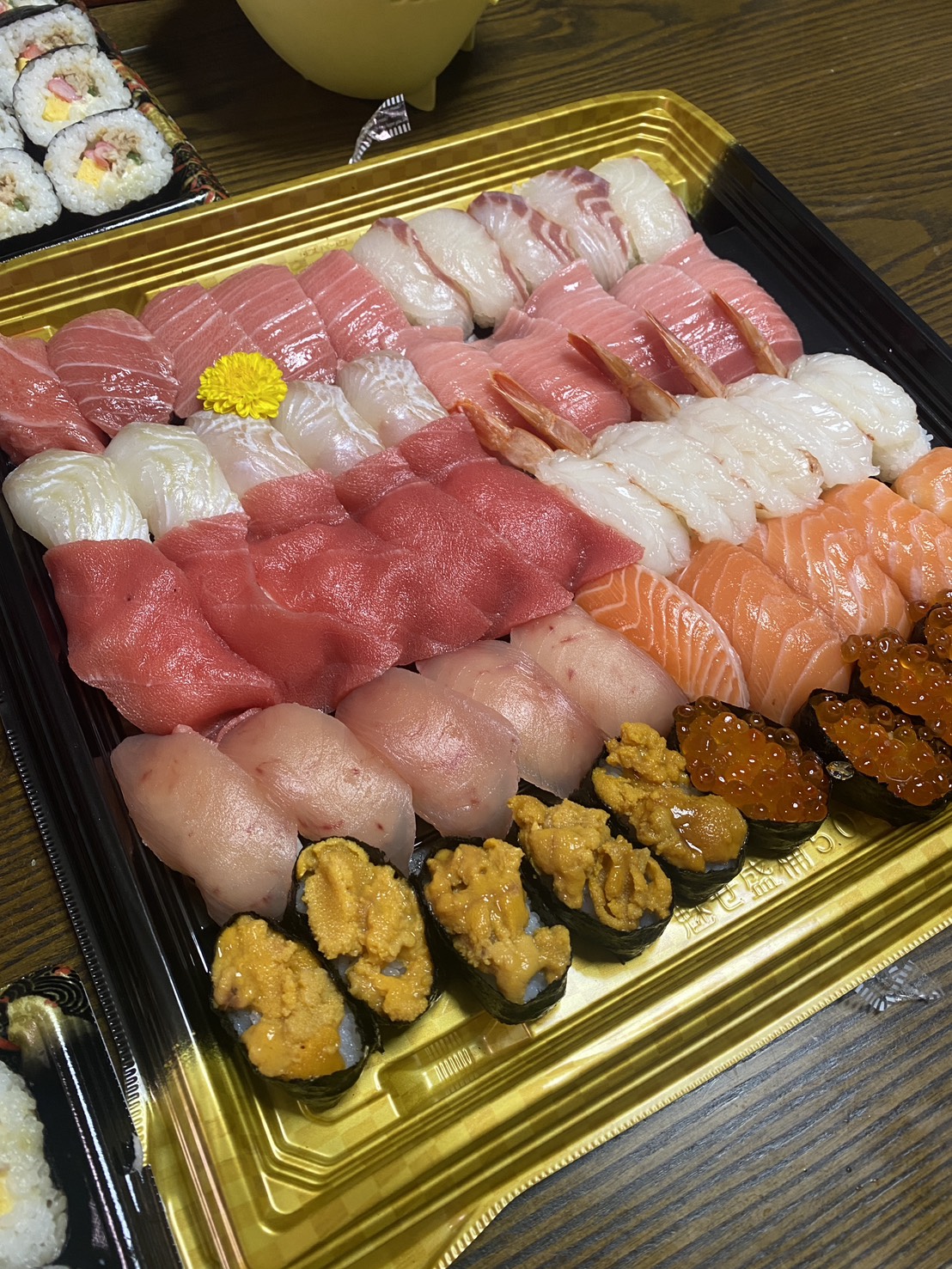
The sushi was purchased at AEON (a large Japanese retail group and supermarket chain), and the osechi dishes (traditional Japanese New Year foods) were something my mother ordered from somewhere.
In the past, my mother used to prepare all of the osechi dishes herself every year. In recent years, however, she has chosen to buy them instead.Personally, I feel that the quality of sushi served at high-end sushi restaurants in large cities is often disappointing. On the other hand, fish from regions where pearl farms are located are raised in rough seas, and that harsh environment strengthens them. As a result, fish from those areas tend to make exceptionally good sushi.Within that context, the sushi from AEON Group is honestly quite good.
They are certainly fish that lack strong muscle and could be described as somewhat overprotected, but considering the price, I find the sushi genuinely enjoyable.
Aside from that, I was editing a video of the process of making a double-strand pearl ring.
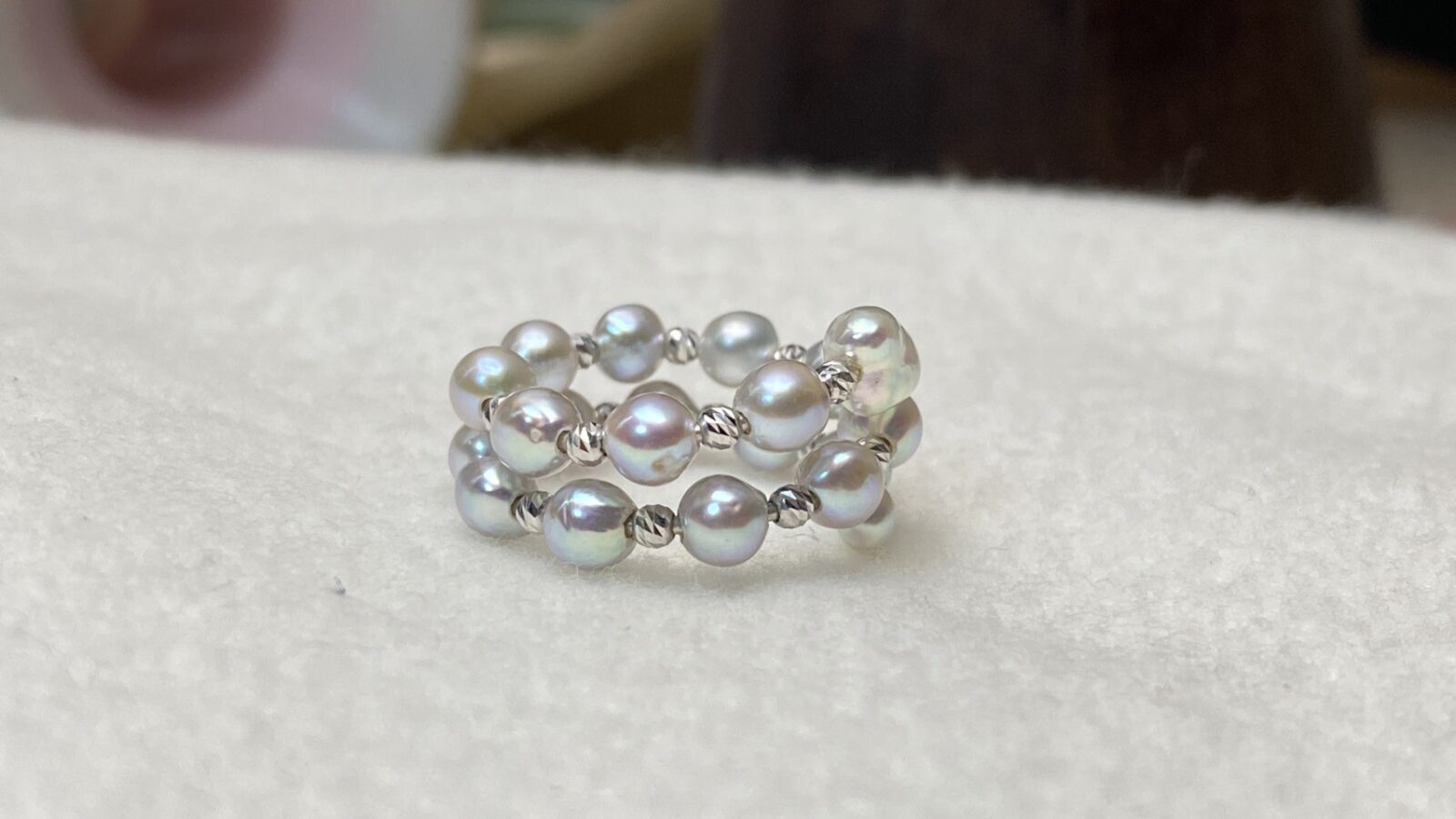
For me, the year-end and New Year holidays are not so much special occasions as they are precious days off from my weekday job—valuable time when I can finally work with pearls.
Last year, almost every month brought new ideas for pearl pieces I wanted to create. However, finding the time to actually make them was consistently difficult.
Meeting a Pearl Broker and Realizing How Little I Know
On the other hand, in September and October, I was fortunate to meet several people who had traveled to Japan from overseas. Within just one month, I was able to meet four different customers in person. It felt almost miraculous.
Perhaps it was because it coincided with Japan’s autumn travel season. I intended to look into that, but never did, and it remains a mystery.
Looking back further, my weekday job ended on the 28th. On that day, I did a simple year-end cleaning at my place in Osaka and headed to Kobe around noon. On the 28th and 29th, I cleaned my home in Kobe thoroughly.
On the night of the 28th, an acquaintance in the pearl industry introduced me to a pearl processing specialist, and the three of us had dinner together.
His family originally ran an Akoya pearl farm in Mie Prefecture, and he had been involved in pearl farming since elementary school. As an adult, he worked as a pearl broker.
I had heard of pearl brokers before, but this was the first time I had met one in person. In the pearl industry, brokers are often viewed negatively.
Harvested pearls are typically sorted for about two weeks and then sold at auctions, or traded directly with specific dealers. Broker transactions, however, are essentially under-the-table, meaning taxes are not applied.
For that reason, many pearl farmers say that selling pearls to brokers is unacceptable. Yet, according to him, many farmers publicly say no while privately selling to brokers.
Incidentally, the pearl farms owned by the company I used to work for were among the largest in Japan. Even so, the volume of pearls he handled as a broker exceeded that by more than ten times.
His experience and knowledge were immense, and I was keenly aware of how little I truly knew about pearls.
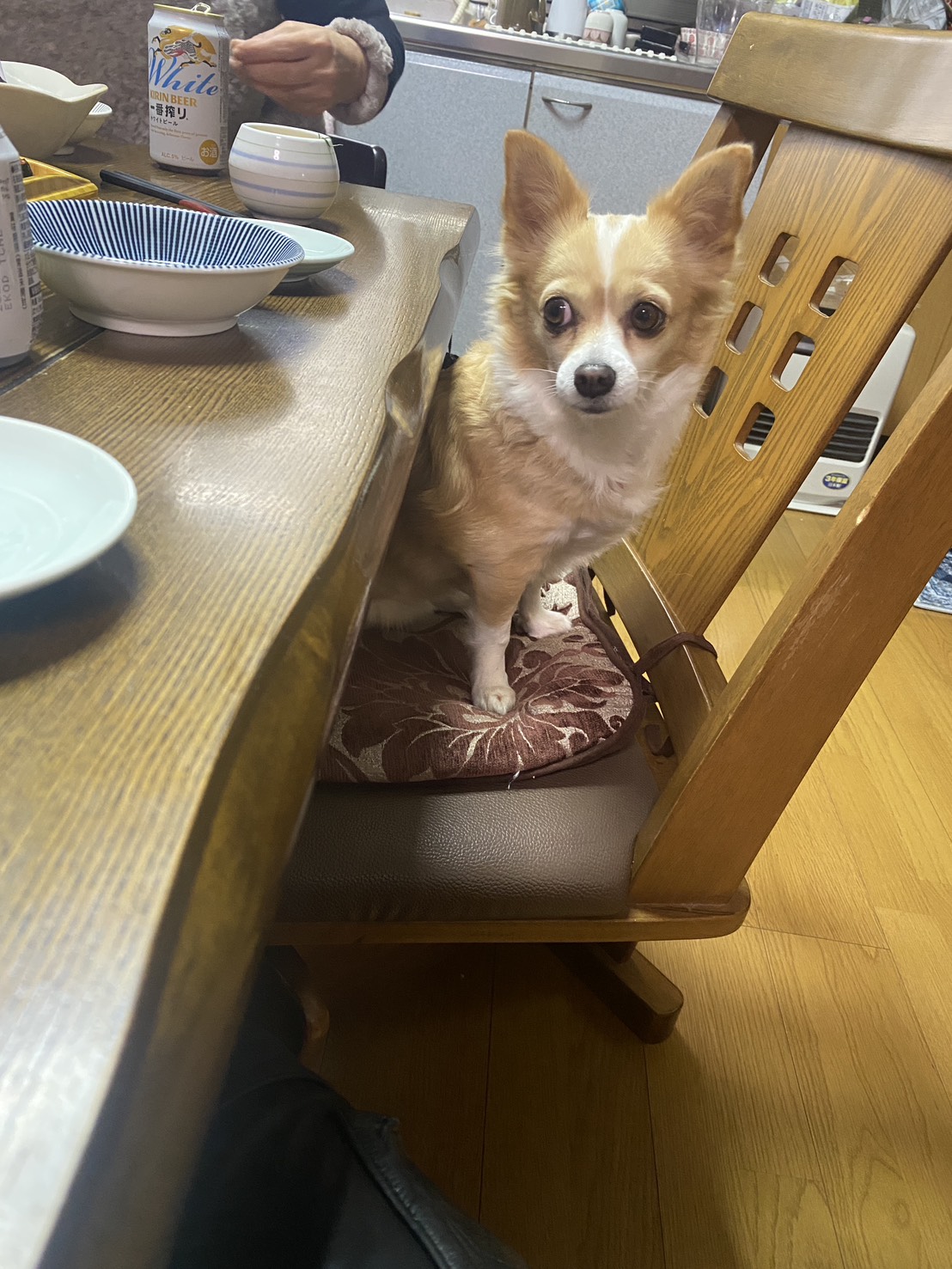
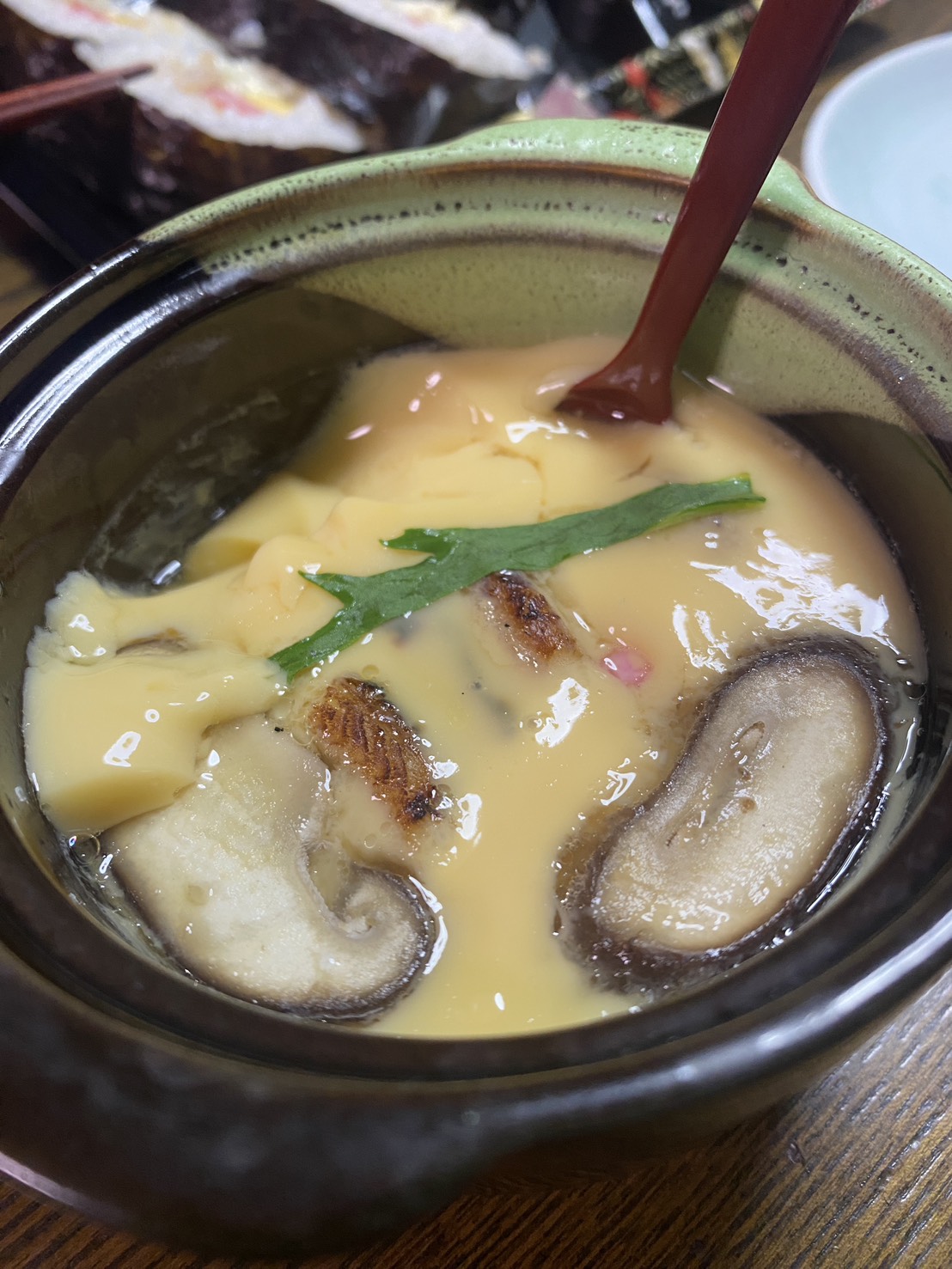
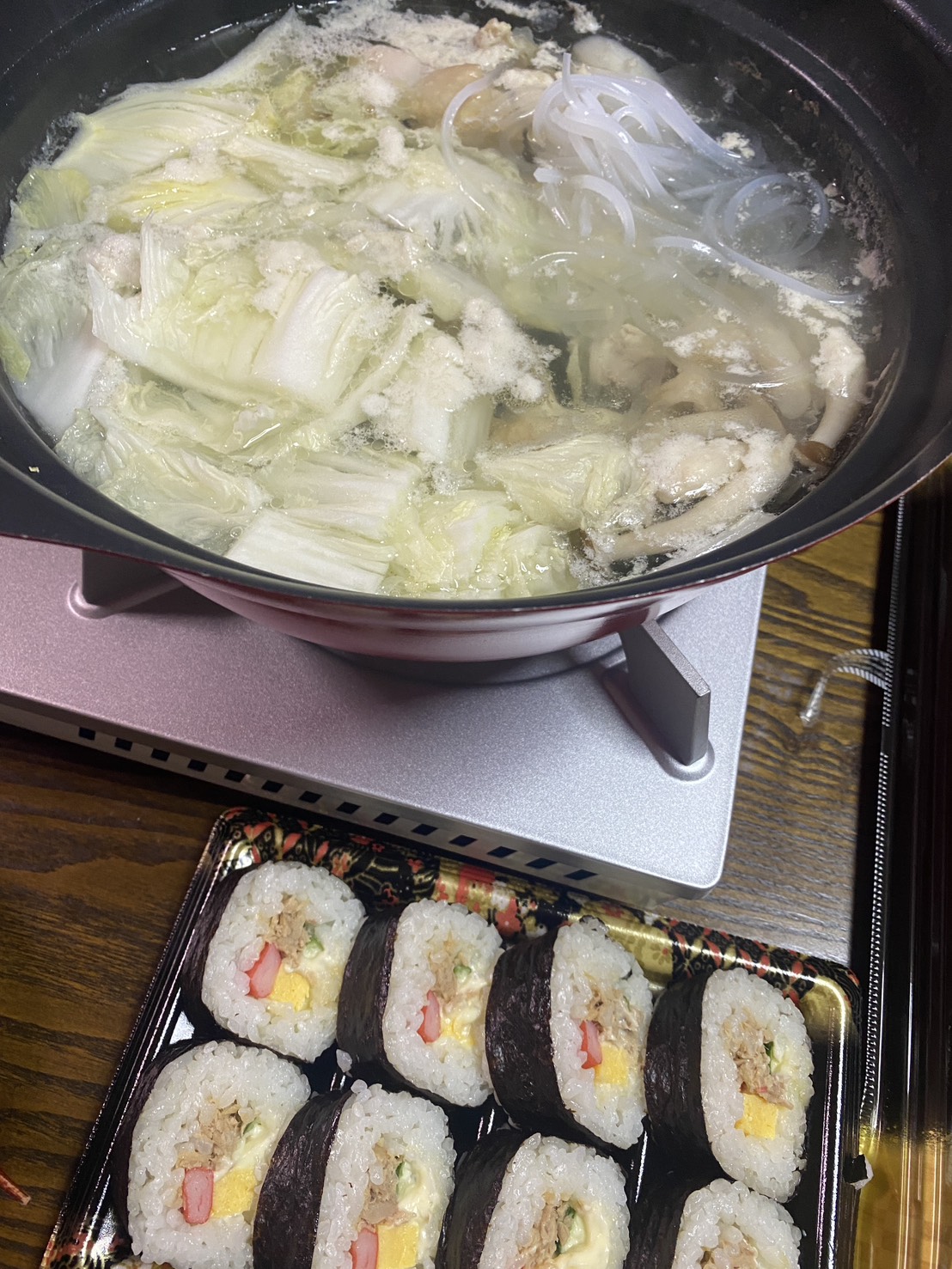
Lulu watching the food closely. Chawanmushi (a traditional Japanese savory steamed egg custard) made by my mother, rolled sushi, and a hot pot with chicken and pork.
Pearl Processing, Dyeing, and Things I Will No Longer Do
He also told me that he began working in pearl processing after the age of fifty, and he is now sixty-five.
He studied pearl toning and dyeing and now works as a pearl processor.
According to him, during toning or dyeing, the dye penetrates between the nucleus and the nacre layer. Some processors say toning penetrates from the surface, while dyeing penetrates between the nucleus and nacre.
Since both opinions come from professionals, I cannot say which is correct.
He also spoke about soaking pearls in hydrogen peroxide before processing, including details such as water temperature. He warned that immersing pearls in boiling water at 100 degrees Celsius can damage the nacre.
In the past, I have boiled pearls at that temperature for several tens of minutes, and I never noticed visible damage. However, after hearing his explanation, I have decided to stop doing that in the future.
Much of what he spoke about was extremely technical and, at times, beyond my level of understanding.
Profit, Wholesale, and the Direction I Chose
After hearing about Flower Jem, he told me frankly, “I don’t know much about retail, but it’s very difficult to make money with a shop like yours. You should start wholesaling.”
He is not wrong.
Today alone, I spent more than four hours on a bracelet priced under 100 USD. From a purely profit-driven perspective, this makes no sense.
Still, at this stage, I prioritize doing what I want to do through pearls over maximizing profit.
Flower Jem exists to be an honest and trustworthy option for people who genuinely love pearls.
I do not stubbornly refuse the idea of wholesaling. If the opportunity arises, or if it becomes necessary, I would consider it.
However, being told directly that it is impossible to survive with this shop alone was honestly shocking. I understood it intellectually, but hearing it from someone else still hurt.
Even so, I have no intention of changing my direction. I will continue as I am.
A Reunion with Bandmates and a Quiet Pain
The next day, I continued cleaning my home in Kobe.
That evening, two former bandmates—people I once played music with as a hobby—happened to be in Kobe, so I went out to meet them.
One is now married and living in Shizuoka near Tokyo; the other moved to Ibaraki after changing jobs.
It was good to see them both doing well, but the member who moved to Shizuoka is suffering from serious mental health issues due to problems in her marriage.
She appears fine when meeting friends, but in daily life she is emotionally exhausted.
Her husband leaves household chores and childcare entirely to her. Although he works a standard office job, he spends four nights a week away from home for his DJ hobby.
Even when she is unwell, he shows little concern and sometimes tells her not to be weak, claiming that since she does not work, she has no reason to be tired.
She used to be bright and outgoing, but since getting married, she has become much quieter.
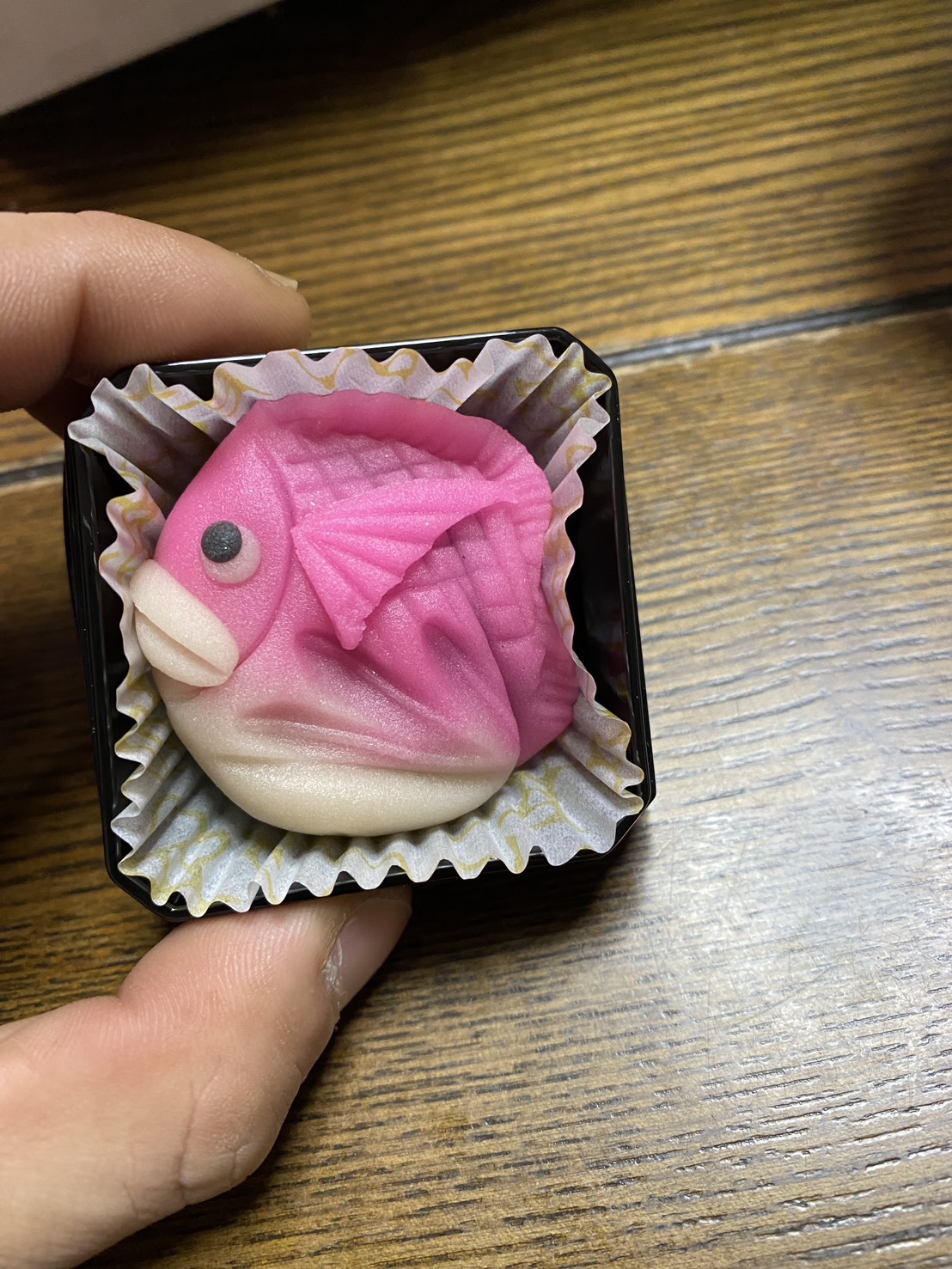
My father’s younger brother had broken his leg, but he has recovered and recently visited my parents’ home for the first time in a while. When he came, he brought us some traditional Japanese sweets as a gift.
Mental Illness, Recovery, and Things That Cannot Be Rushed
She is now consulting a lawyer and aiming for an amicable divorce. After that, she wants to study abroad in China. She spoke fondly of Hangzhou and its beautiful scenery.
Seeing her loss of energy was deeply saddening.
Several years ago, I suffered from a similar mental illness, which led me to leave my job at a pearl company.
People who have never experienced such illness sometimes say, “You’re just being weak. Others have it worse.”
When someone is already struggling, responses often shrink to a quiet apology.
It took me more than three years to recover to some extent. I told her that when you reach the very bottom and your heart becomes truly empty, recovery may finally begin.
There are things effort alone cannot fix.
Regarding the divorce, I encouraged her to rely on professional advice and proceed carefully.
Running for the Last Train
Our conversation was heavy, though mixed with lighter moments, and before we realized it, it was five minutes before their last train.
We paid quickly and ran together to the station.
Google Maps later showed the distance was 500 meters—a seven-minute walk—but we made it in four.
The last train turned out to be at 23:40, not 23:35, so they boarded with time to spare.
I considered walking home, but the exhaustion was overwhelming, so I took a taxi instead.
Kimono Pouches Made by My Mother
The next day, I worked on a double-strand Akoya pearl and mirror ball ring in the morning, then returned to my parents’ house in the afternoon.
At my parents’ house, my nephew had YouTube playing on the TV nonstop—content I could not understand.
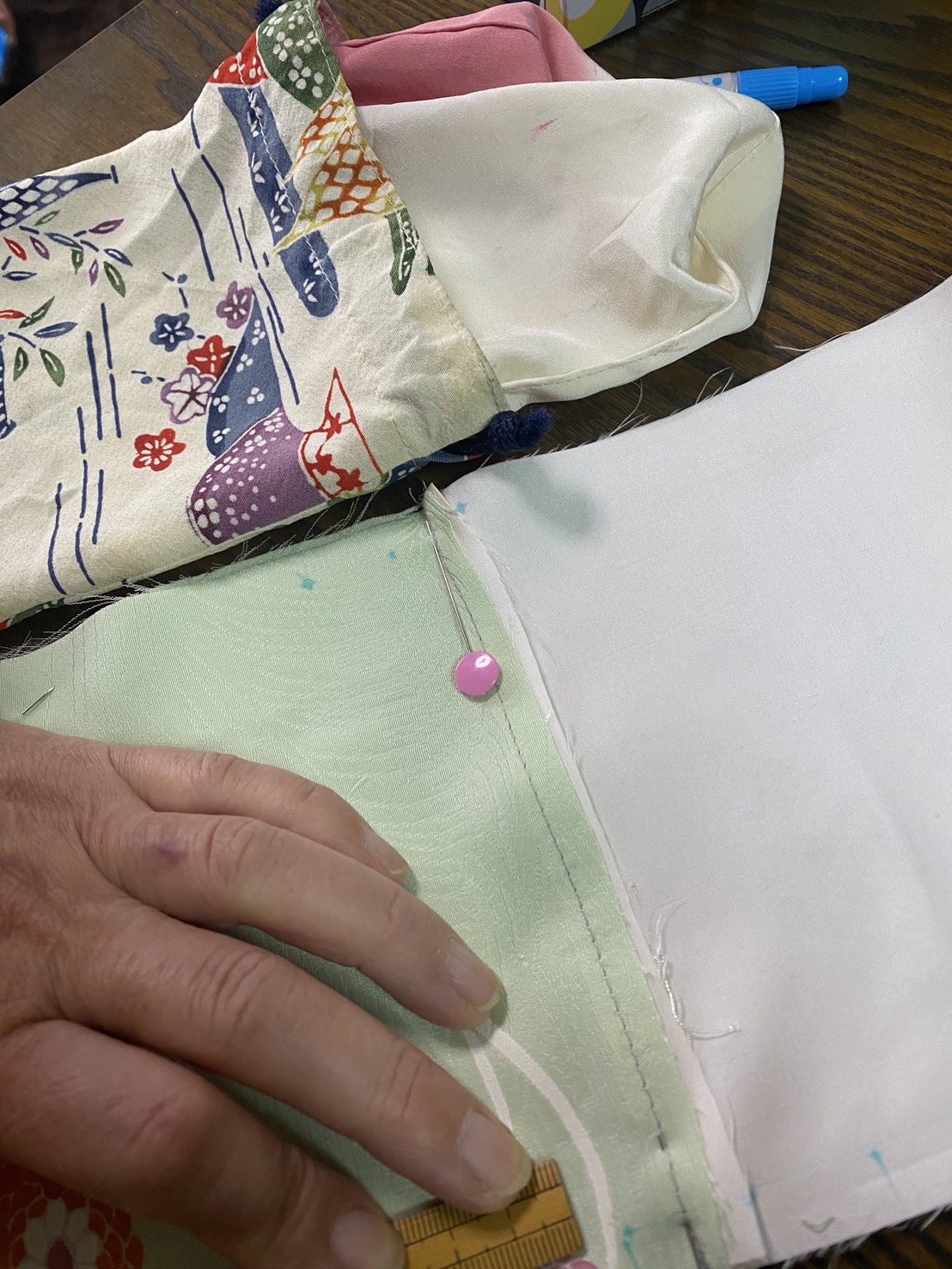
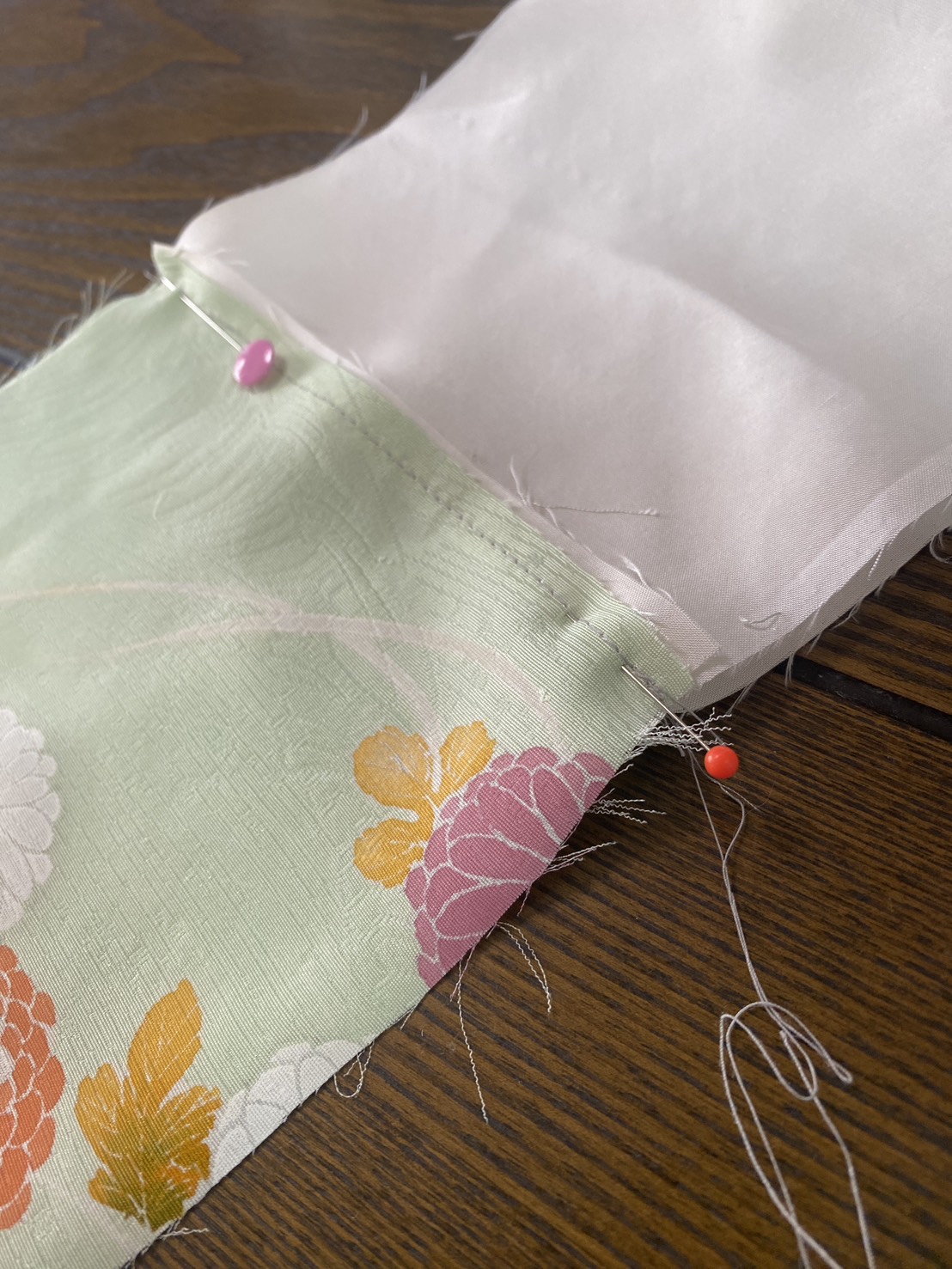
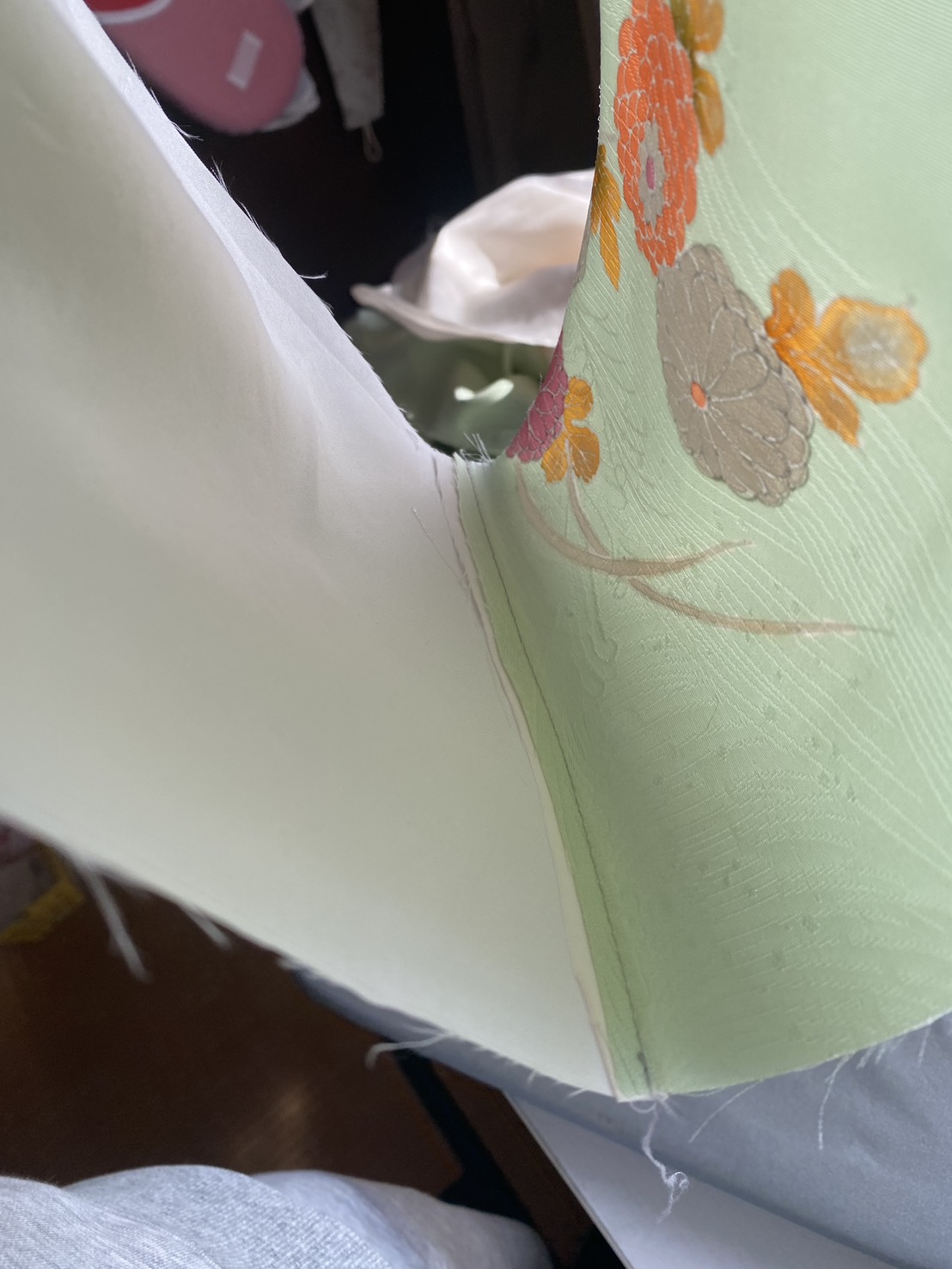
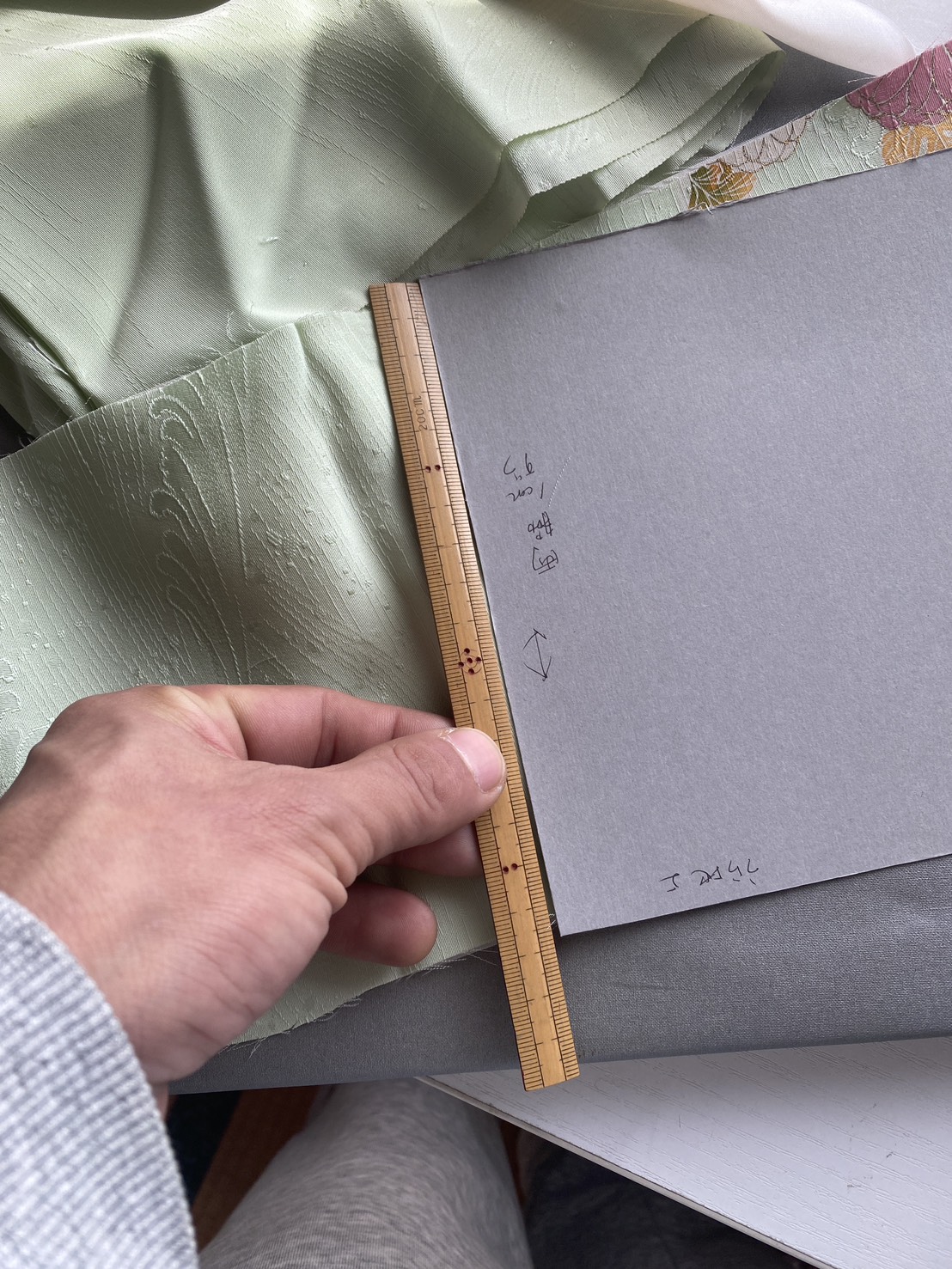
I instead asked my mother to teach me how to make kimono pouches.
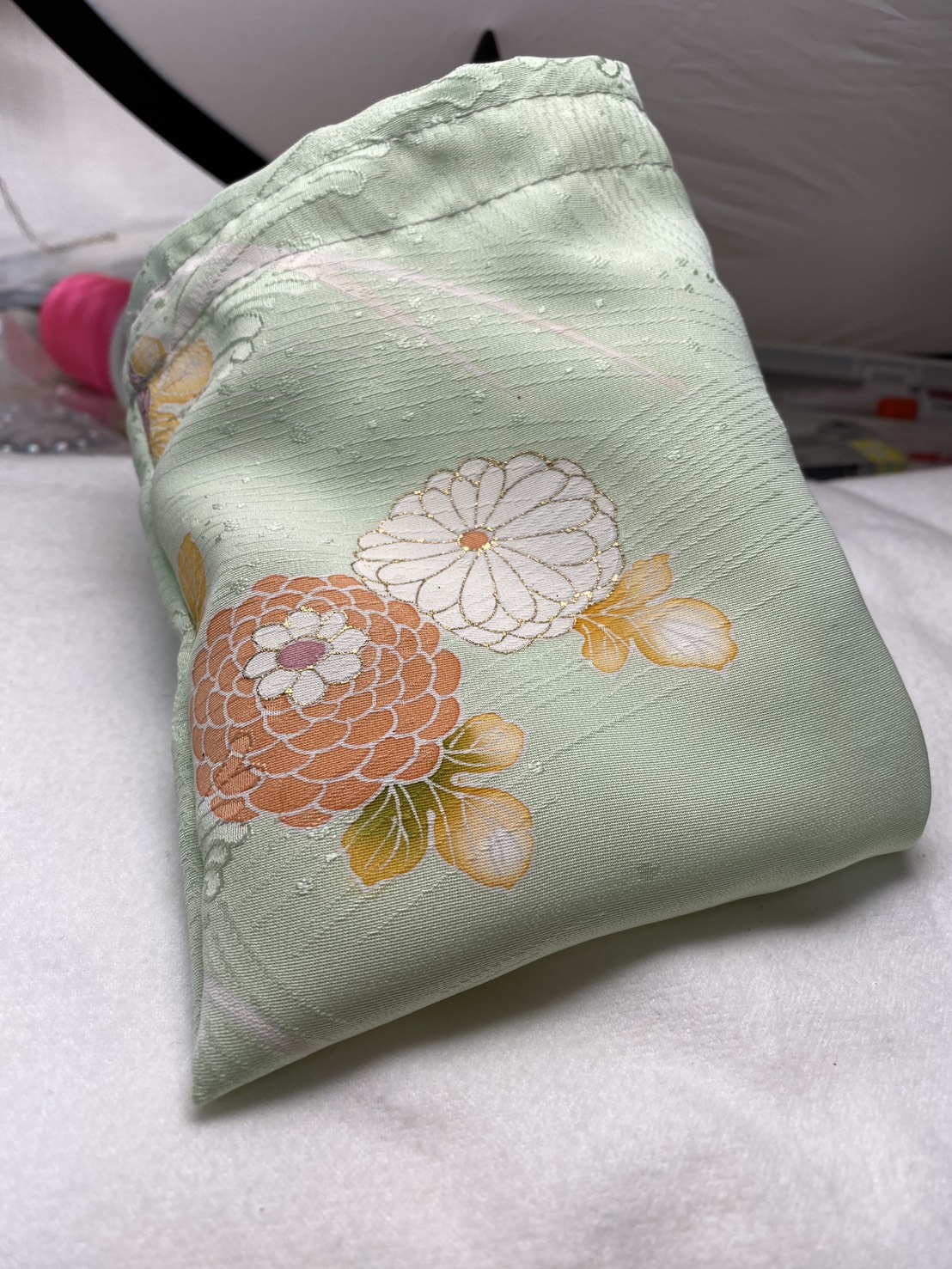
These kimono pouches are gifts I include for customers who purchase pearls from Flower Jem.
When I first started in 2019, I used standard jewelry boxes, but many customers said they did not need them.
My mother suggested making pouches from unused kimono. The first time she cut into one, she laughed bitterly, saying it had been expensive.
Those kimono were part of her bridal trousseau.
Now in her seventies, they would otherwise remain in drawers forever. With many mixed emotions, they became kimono pouches instead.

A Small Shop and Things Big Stores Cannot Do
Flower Jem is a small shop.
When you buy pearls, you receive a kimono pouch made by the shop owner’s mother.
Large stores cannot do this—nor do they need to.
In another sense, the kimono pouches connect Flower Jem and my mother. That connection means a great deal to me.
Ending the Year, Starting Again with Pearls
I returned to my home in Kobe on the afternoon of January 1st.
Exhausted, I soaked in a hot bath for two hours, then went to bed early. Even so, the drowsiness lingered into the next day as I began the Keshi bracelet remake.
While uploading a nearly four-hour video to YouTube—a process that itself takes several hours—I wrote this article.
I haven’t written much recently, so I let everything spill out.
The themes are scattered, and there isn’t much about pearls, but I hope this shows that Flower Jem continues to face pearls, even through the year-end and New Year.
I just remembered that right after the new year began, I received a message from someone I met in person last October, telling me that her custom order had arrived.
Two rings, two bracelets, and two necklaces—it took two months to complete.
I used techniques I had never used before, and I was anxious about whether she would like them. Fortunately, she was satisfied.
I told her that any future resizing would always be free.
The pieces arrived just after the new year in Japan, but in her time zone, it was still the evening of December 31st.
I wasn’t sure what greeting was appropriate.
In the end, this first article of the year has become even more scattered than usual.
Thank you for reading this far.
This bracelet took about four hours to make.
Because the video is completely unedited, it runs for about three hours and fifty minutes—long enough to make you wonder who would ever watch a video this long.The most troublesome moment came after I had already spent two hours working on the all-knot stringing, only to realize that the bracelet was still too short.As a rather forceful solution, I untied part of the thread and added twenty-five Keshi pearls by hand.
You can see how I did this starting at around the 2-hour and 6-minute mark in the video.This method may be useful as a kind of hidden technique for adding pearls midway through an all-knot process.
The exact length of each knot cannot be calculated precisely, but when you need to adjust the length of an all-knot necklace with great precision, this approach may prove effective.
If you would like to explore Akoya Keshi further, you may also enjoy these pages about how Keshi pearls were collected and used, my earlier metalworking experiments, and finished pieces made with Akoya Keshi.
Subscribe for Pearl Stories🐾
Receive occasional letters from my workshop —
stories about pearls, silverwork, Lulu the little dog, and quiet life in Japan.
As a thank you, you’ll get a secret code for 30% off —
usable every time you order, only here, not on Etsy.
I don’t send spam. Just little notes filled with love and pearls 💫
You can read our privacy policy for details.

Comment