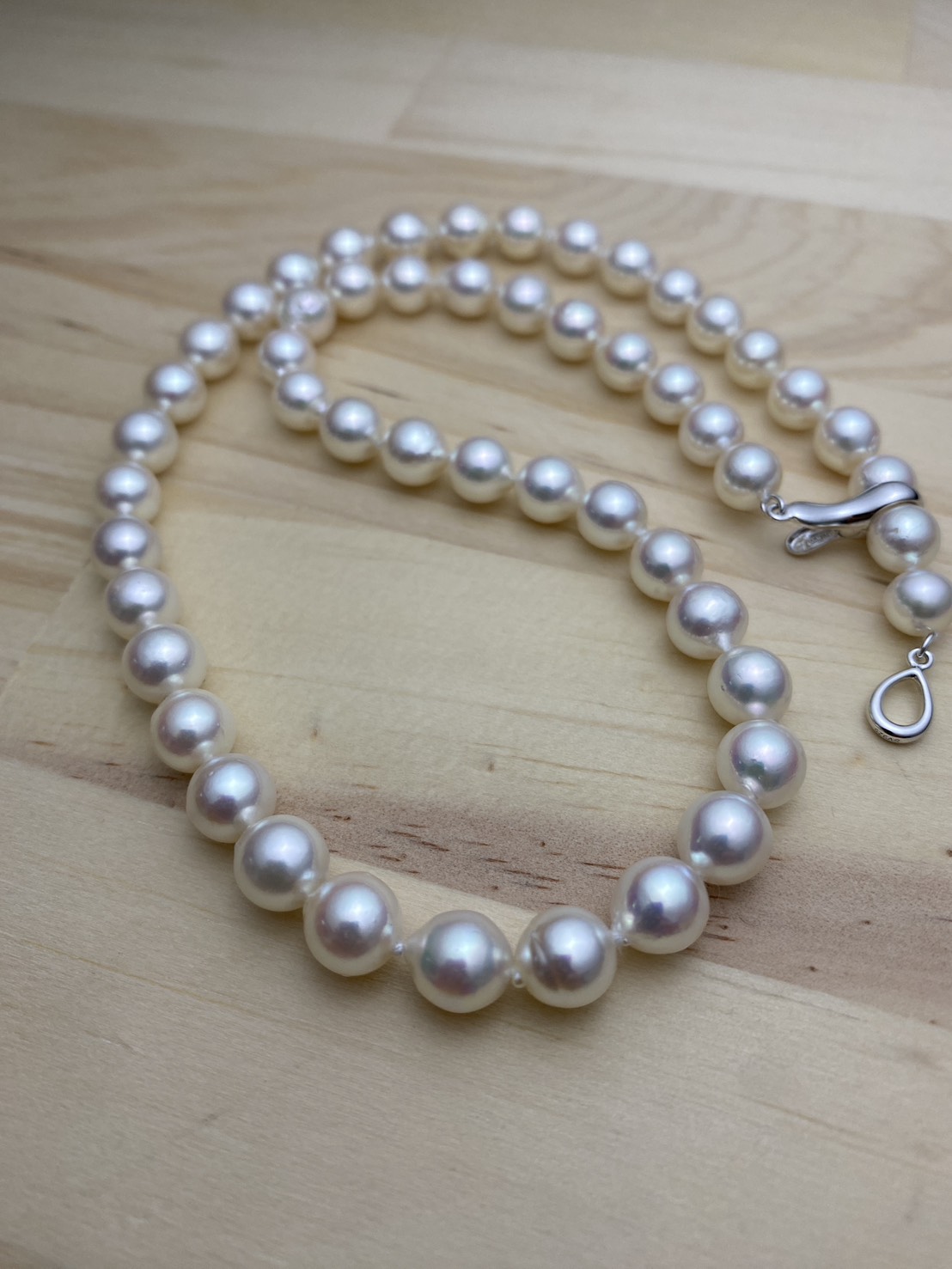
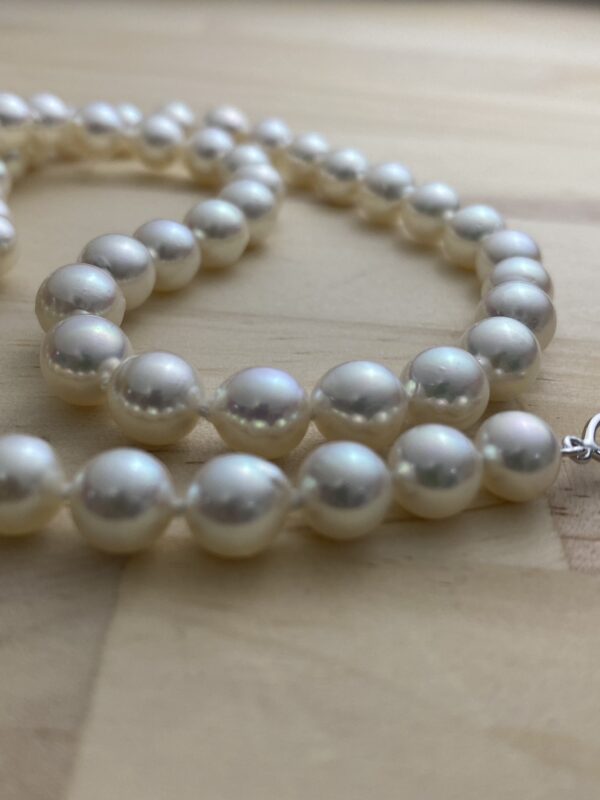
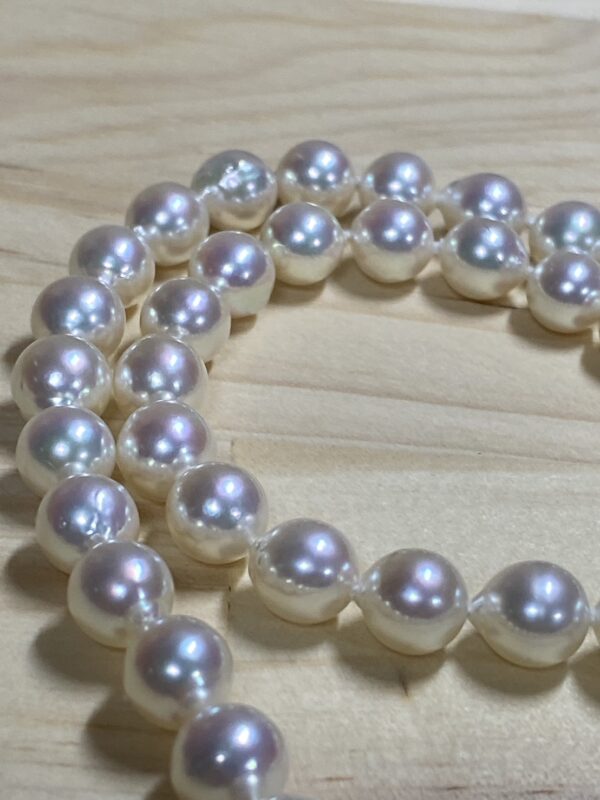
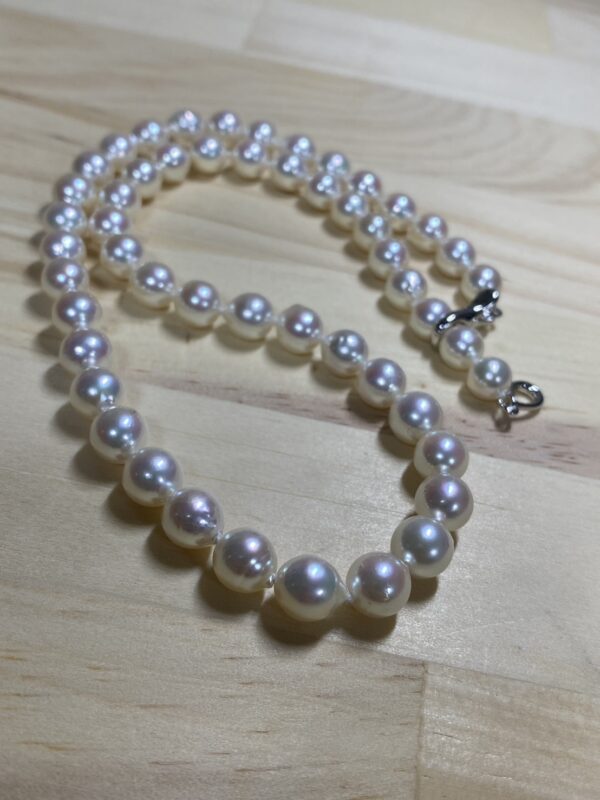
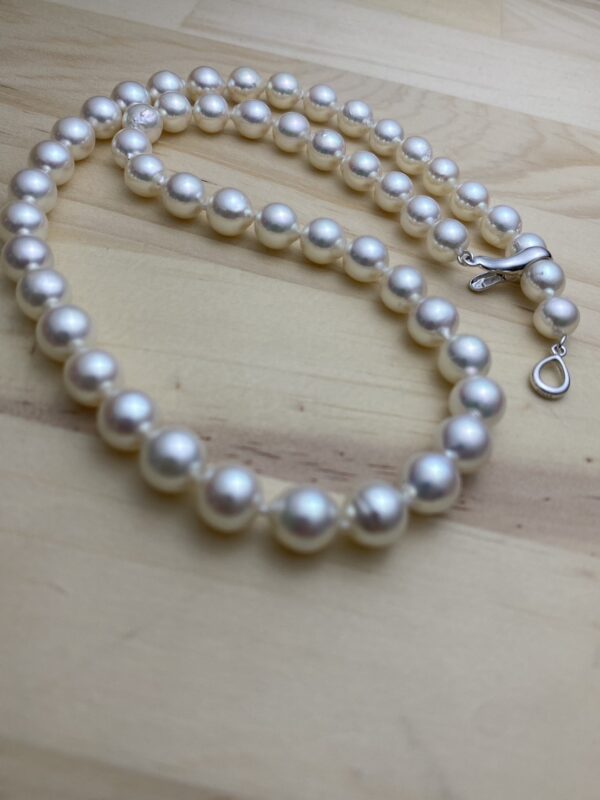
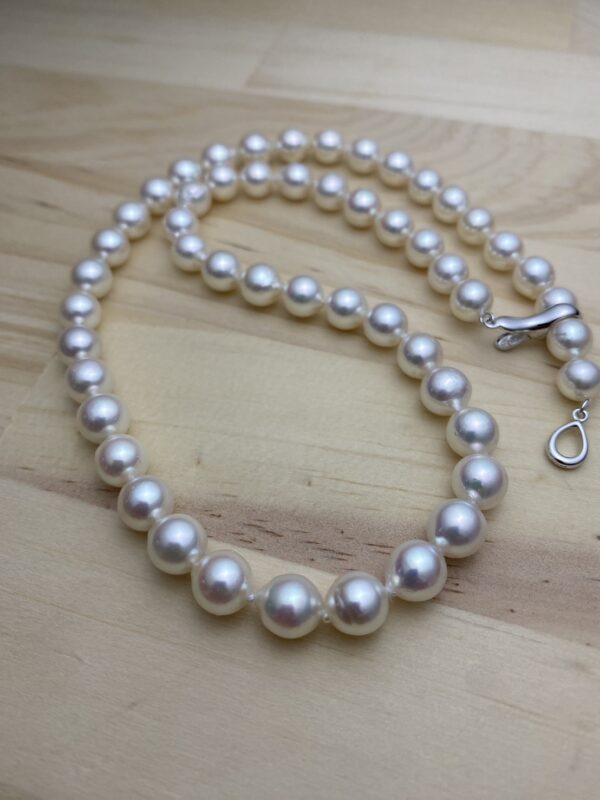
Akoya pearl (natural white-pink, baroque)
Size: 7–8 mm
Length: 17.5 inches
Origin: Tsushima, Japan
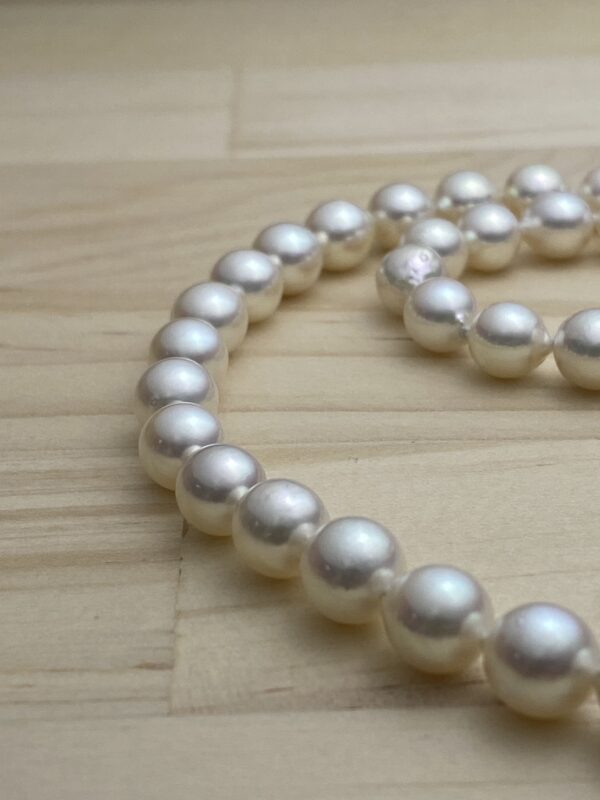
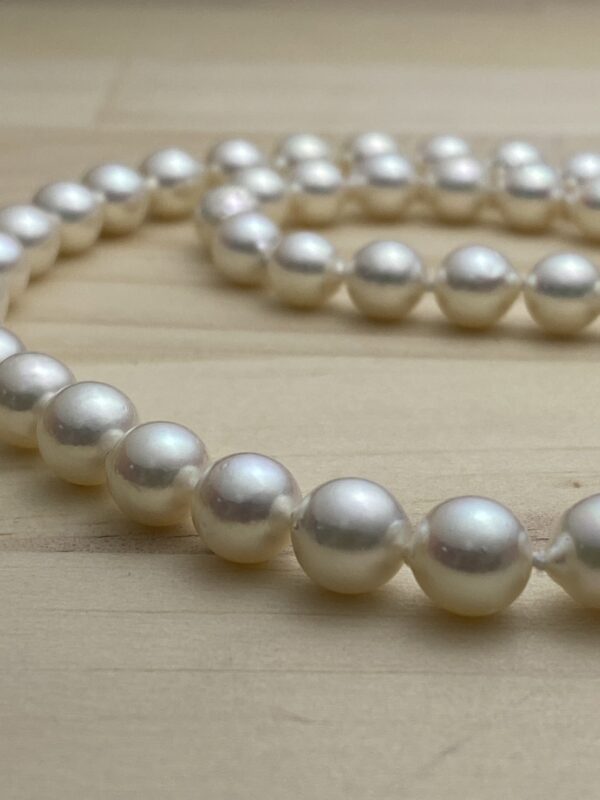
Luster: Strong
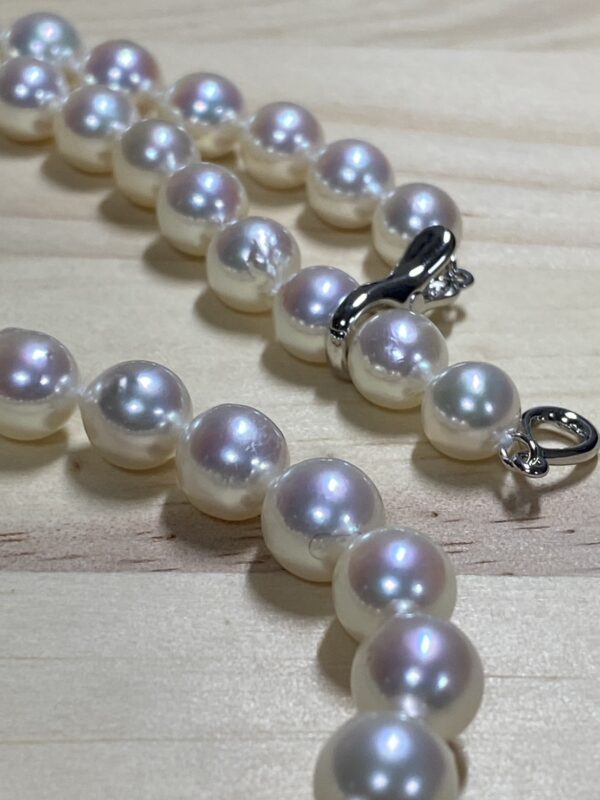
Knotting: All-knot (white thread)
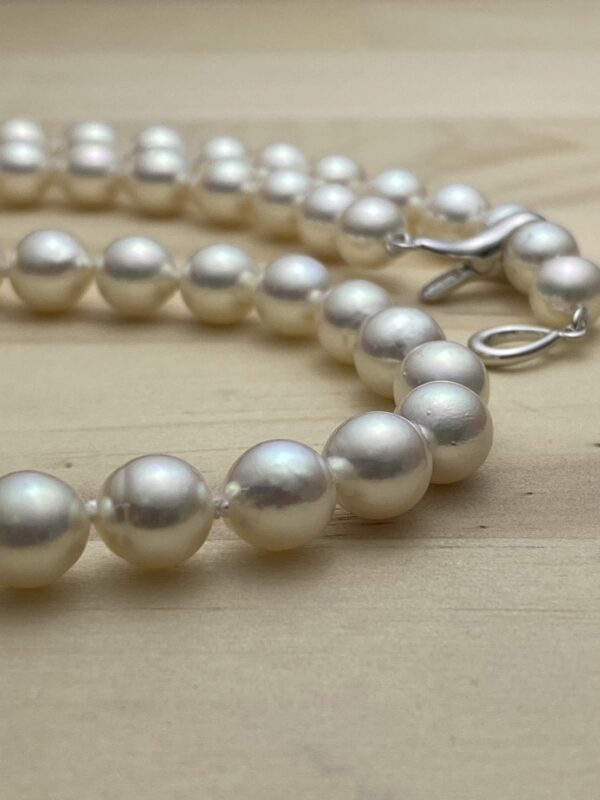
Clasp: Clip type
Material: Silver
$1,256.99
Akoya pearl (natural white-pink, baroque)
Size: 7–8 mm
Length: 17.5 inches
Origin: Tsushima, Japan
Luster: Strong
Knotting: All-knot (white thread)
Clasp: Clip type
Material: Silver
Sold Out
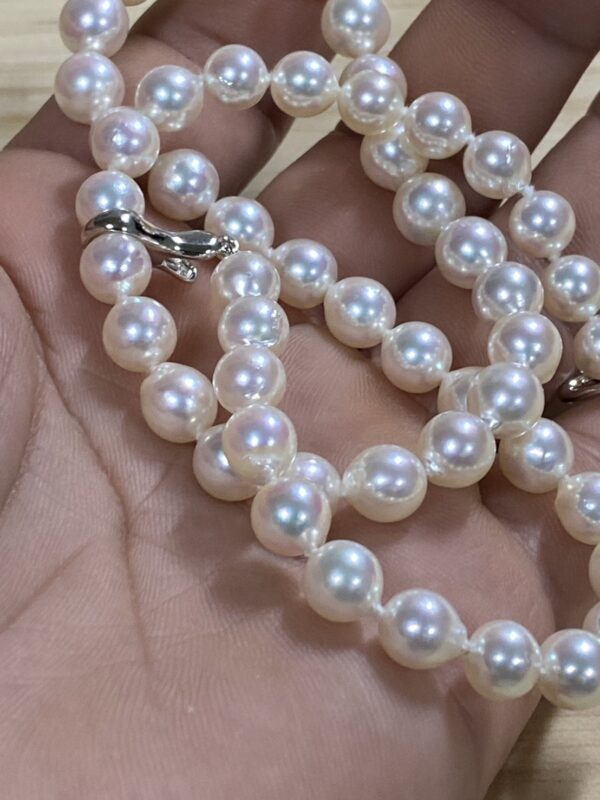
This is an Akoya pearl necklace.
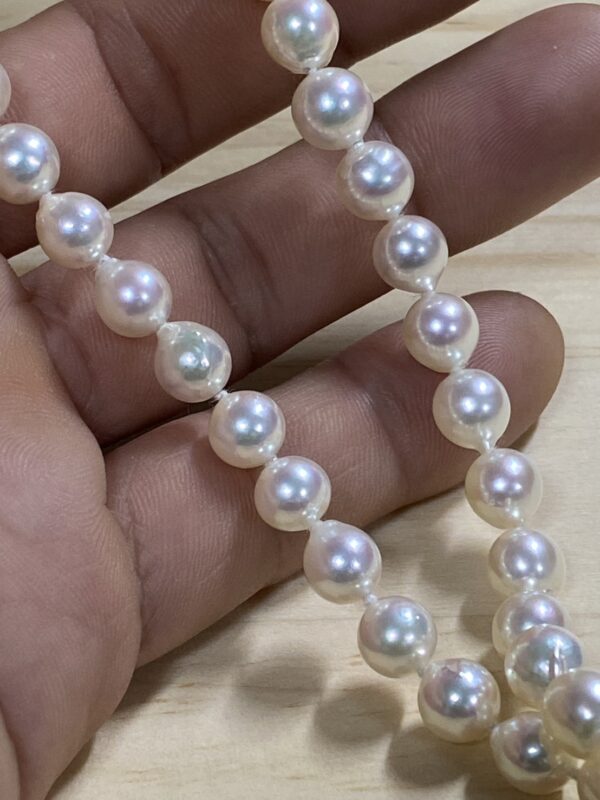
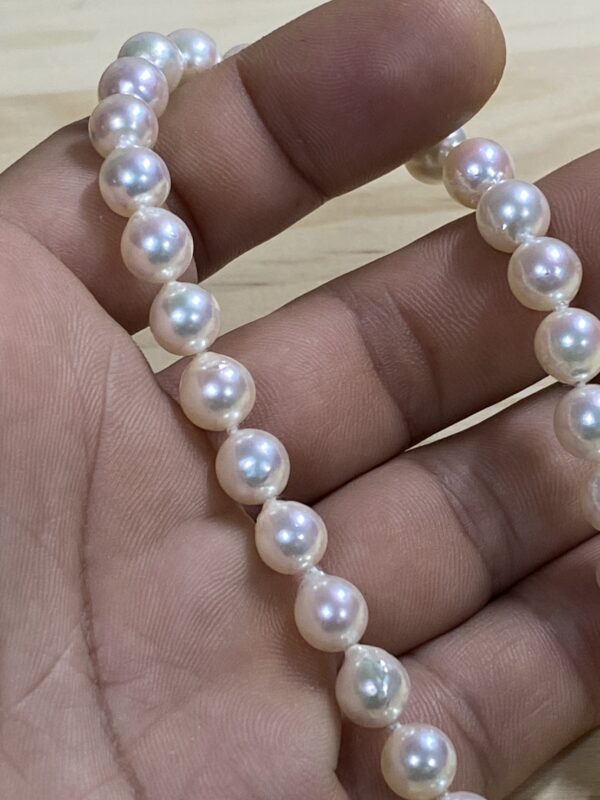
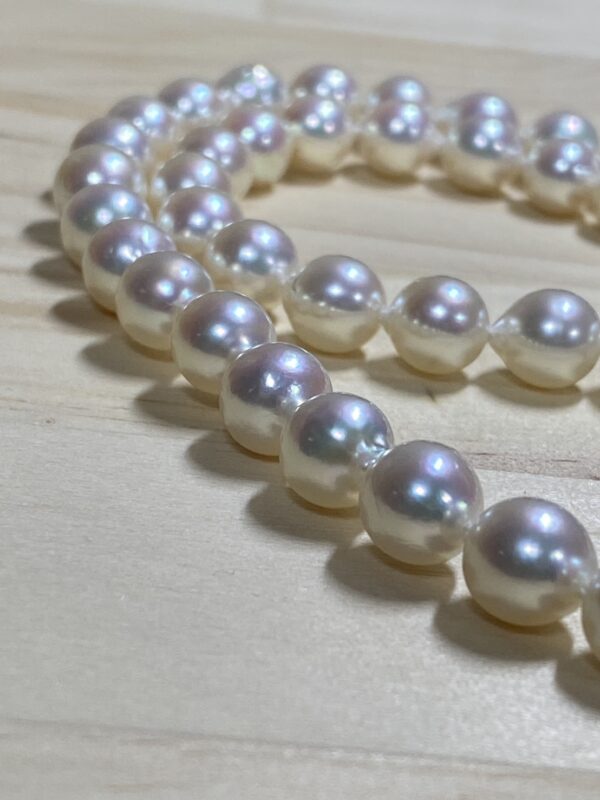
The pearls are 7–8 mm in size, natural white with a soft pink overtone, and are all-knotted with white thread.
This necklace was created at a customer’s request.
At Flower Jem, I have made many all-knotted necklaces, but this is the first time I have used white thread.
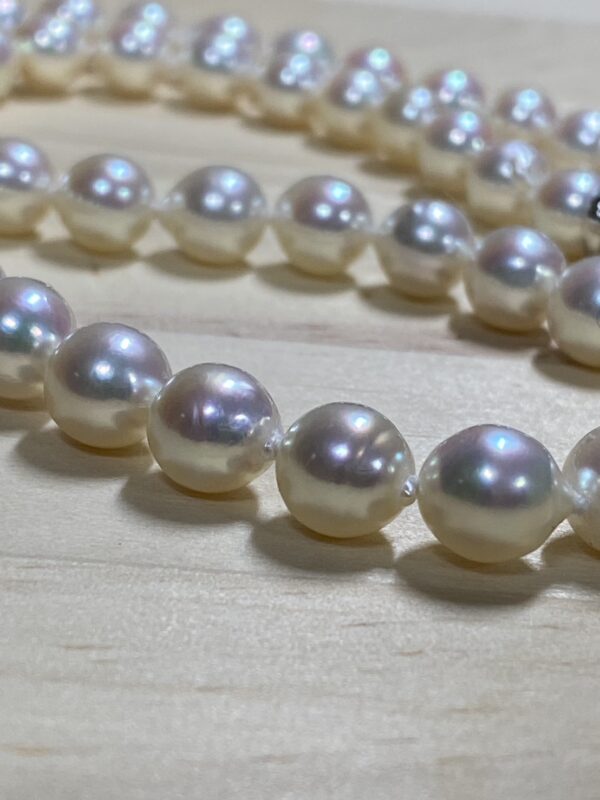
Also, a slightly finer thread than usual has been used, so the knots between each pearl are extremely small and barely noticeable.
These specifications were requested by the customer, with the intention of “highlighting the pearls.”
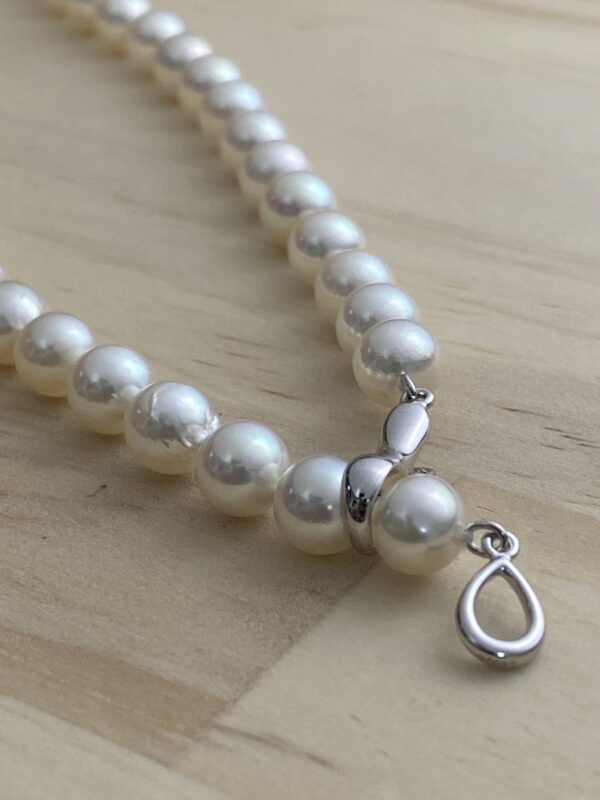
After making this necklace, I understood exactly what they meant.
The thread is almost invisible, yet the necklace is fully all-knotted.
The pearls, with their strong luster, clearly take center stage.
This is not something I would likely have come up with on my own, so I am truly grateful to have received such a request.
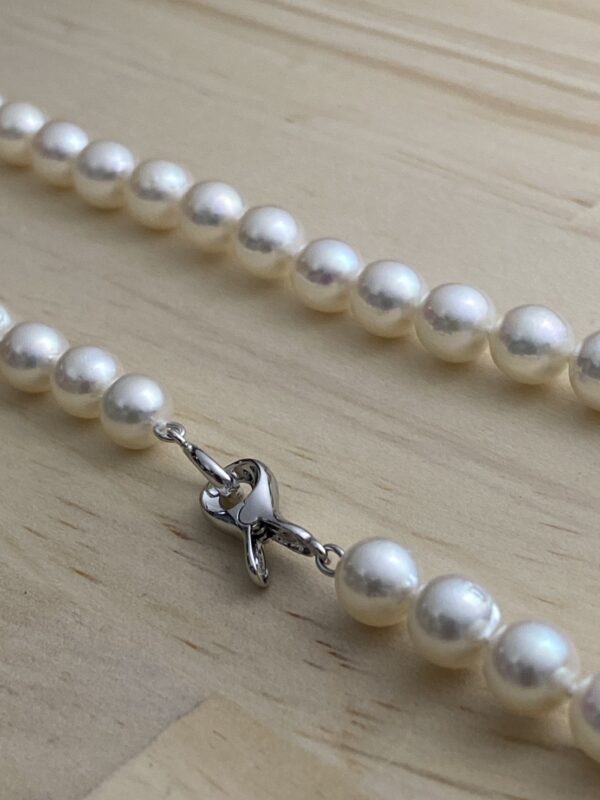
Now, I would like to introduce the pearls used in this necklace.
These pearls are part of a collection I spent nearly three years negotiating with my former company to obtain.
This will be a slightly longer read (around 7,000 words), so I would be very happy if you could enjoy it when you have some time.
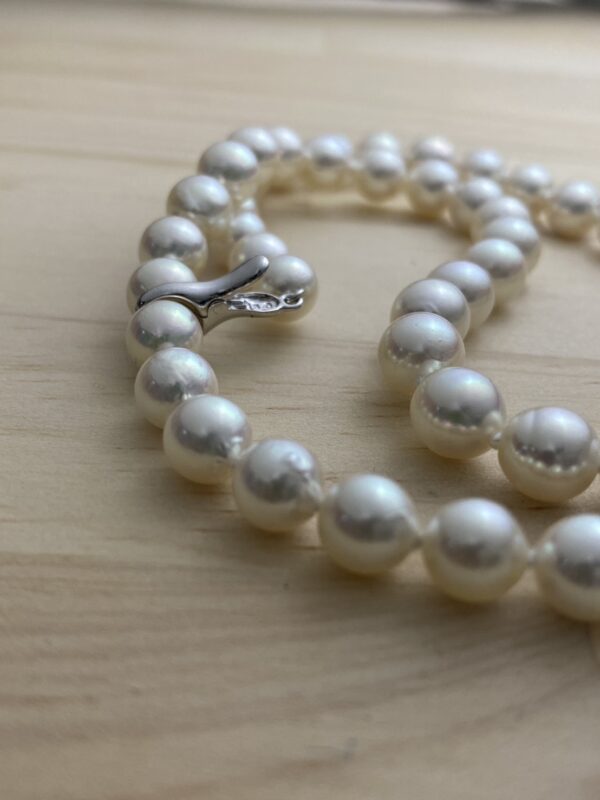
These pearls were harvested in December 2022.
They were cultivated at a pearl farm owned by the company I previously worked for.
Pearls harvested in December mean that the nucleus insertion took place between July and November of the previous year.
At this farm, the harvested pearls are generally submitted to auctions that only a limited number of authorized dealers—approved by the Japan Pearl Promotion Society—are allowed to attend.
Therefore, not just anyone can source these pearls.
Many buyers, especially from China, attempted to contact the farm directly to purchase pearls, but almost all of them were refused.
Under such circumstances, I once needed to negotiate directly with the farm in order to source pearls for one of my wholesale clients.
At that time, I was in charge of handling external inquiries.
Various pearl dealers contacted me, hoping to find a way to purchase directly from the farm.
I wanted to fulfill those requests as much as possible, so I repeatedly negotiated with the company president and the farm manager.
However, nearly all attempts ended in failure.
There are several reasons why companies avoid direct sales from farms.
Consideration for auction participants:
Dealers who participate in auctions must compete and win bids to obtain pearls. Direct sales would be unfair.
Pricing difficulties:
Auctions take place from January to March each year.
The market price for pearls is only established at that time, making it difficult to set prices beforehand.
If pearls were sold directly for $100 but later reached $200 at auction, it would result in a loss.
The reverse situation is also possible.
Since waiting for price formation may miss the auction timing, pricing becomes a complex issue.
Additionally, selling to specific buyers among many who wish to purchase directly would be unfair.
There are other reasons as well, but essentially, it is very difficult for buyers to purchase pearls directly from farms.
It took me about three years of negotiation to achieve this.
I have written about this before and may write about it again in detail in the future.
It was an extremely difficult process—so much so that I developed alopecia from the stress.
Here is a brief explanation.
The pearls I intended to sell to my client had many blemishes.
Most harvested pearls have some level of blemishes.
The plan was to remove these stains through treatment.
However, the company required that the client purchase the entire lot—even if some stains remained after processing.
The client could not accept this condition, as stained pearls are difficult to sell.
I was placed in between these conflicting positions.
At the time, I did not fully understand stain removal processing.
Surprisingly, neither did the president nor my superiors, despite acting as though they knew everything about pearls.
They left the decision entirely to me.
I sought opinions from various pearl dealers and eventually gathered enough evidence to believe that most stains could be removed.
Even so, making the final decision required great courage.
During that time, I developed alopecia.
In the end, the president, seeing my struggle, said:
“I understand. You don’t need to suffer like this. If stains remain, the company will take responsibility.”
After processing, 99% of the stains were successfully removed.
The pearls became almost unrecognizable compared to before.
After that, the president would often borrow those pearls to show customers—asking me, “May I use these for a moment?”
These were pearls I had worked on to the point of losing my hair.
At the time, I felt genuine anger, and also thought, “There is nothing more I can learn from this person.”
From then on, I began selecting pearls independently for my clients.
The pearls were part of a lot graded from 1 to 6, and I was dealing with grades 1 to 3.
Because of the wide variation in quality, I further subdivided them.
During selection, I found many pearls that were far too high-quality for the intended product.
So I selected and created nearly 20 top-quality necklaces and sold them myself on behalf of the client.
This was my first time handling stain-treated pearls, selecting pearls for necklaces, and actually assembling them.
I reclassified the pearls into grades 1 to 5 and created A, B, and C grade necklaces.
It was also my first time arranging around 40 pearls for a necklace.
Even similar-looking pearls revealed differences—some more pink, others more white—when laid out together.
This taught me how difficult it is to achieve color consistency.
After arranging, drilling followed, and finally threading them into completed necklaces.
I truly enjoyed this entire process.
The company I worked for primarily operated pearl farms.
Their work involved oyster procurement, cultivation management, analysis, and preparing pearls for auction.
They did not manufacture pearl jewelry.
Although they did a small amount of retail, it was smaller in scale than Flower Jem.
While I found great joy in transforming pearls into finished necklaces, others in the company were indifferent.
They would say, “That’s not your job. It’s the customer’s responsibility.”
So I worked outside the company, in a rental office provided by the client.
I always wondered why they had no interest in expressing the full journey—from harvest to finished product—even though they had the capability.
Even simple videos could have been effective promotion.
But they showed little interest.
Some of these processes were later uploaded to YouTube.
For pearl dealers, this is routine work, but for me, it was a first and deeply enjoyable experience.
One of the necklaces created during that time is this piece, “Still MoonLight.”
It holds deep personal meaning, so I had hesitated to list it.
This is the last remaining piece from that time.
However, I decided to use it to fulfill this customer’s request.
When I look at this necklace, it brings tears to my eyes.
I obtained these pearls despite being treated coldly by my company.
Even if it meant lowering my evaluation within the company, I needed these pearls.
I am proud that I did not give up.
Because of that, more than three years later, these pearls can now reach someone who truly loves them.
On the day these pearls were harvested, I began sorting them at the farm office.
The farm is located in Tsushima, and I returned to Kobe at nearly the same time as these pearls.
In other words, I have been with these pearls almost continuously since the day they left the sea.
Night after night, in the empty office, I would look at these stained pearls and wonder, “Will the stains really come out?”
After treatment, around 20,000 pearls were sorted together with the client and his wife during the Golden Week holidays in May.
I hoped to teach them how to evaluate pearls, but in the end they said, “We can’t tell the difference.”
Still, they appreciated the experience.
I also created and sold nearly 20 necklaces on their behalf.
In return, the client insisted on rewarding me, and eventually gifted me a trip to Okinawa.
I had simply enjoyed the process of turning raw pearls into finished products.
Receiving money for it felt strange to me.
However, I did accept the Okinawa trip and enjoyed it together with them.
This is a brief background of the necklace.
I would like to write a proper article about this story someday, so you may see it again in the future.
When that happens, please kindly smile and think, “Here we go again.”
This space is not only for reviews. You are welcome to write freely about pearl jewelry, ask questions, or share what you feel when you see this piece. Member registration is required to submit your message.
Jem
I made this necklace..
Jem
The other day, a customer who purchased this necklace told me, “I’d like to leave a review.” That made me think about adding a review feature, so I took another look at the product page. Then I realized—the review submission form was already there.
Over the next five years or so, I would like to grow this space into more than just a place for customer reviews. I hope it can become a place where people can exchange their thoughts about pearls as well.
Starting today (April 30, 2026), I plan to ask customers who have purchased from me to leave a review. I’ve been running this website for over four years, and I only noticed the review feature five minutes ago. It’s all thanks to that customer.
Thank you.
swu87
I’m grateful to be able to say that I’m the recipient of this pearl necklace. It is a beautiful piece combining the pearls’ organic beauty with the artist’s keen eye of matching/arranging/stringing so that the sum became even more than its parts.
It was a pleasure and privilege to work with Jem Flower, who generously spent much time showing me meticulous videos of the pearls and their stringing process. He took into my account my preferences and was unfailingly courteous.
The entire experience/exchange with Jem was full of friendly warmth so that by the time the pearls arrived—wonderfully and thoughtfully packaged with a handwritten letter and silk pouches made from a kimono, I felt as though I was not simply receiving a purchase but rather a gift from an overseas friend.
Jem
Thank you for your heartwarming message. Flower Jem may be a shop, but at its core, it is simply you and me—two people who love pearls. Knowing that my feeling—seeing you, who shares my love for the pearls I cherish, almost like a friend—has reached you, warmed my heart once again.