Cactus
$325.00
1 in stock
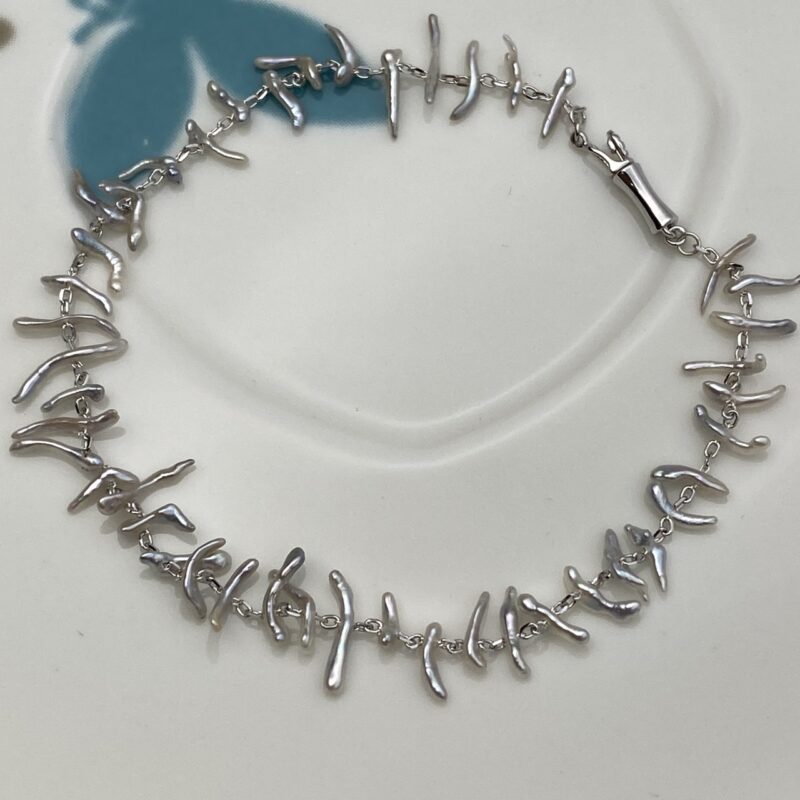
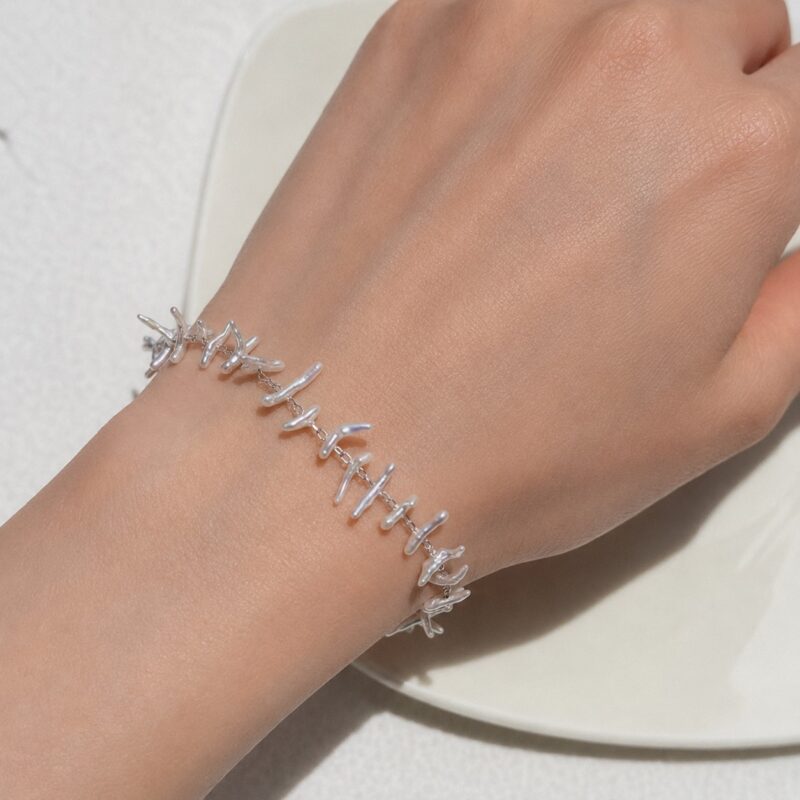
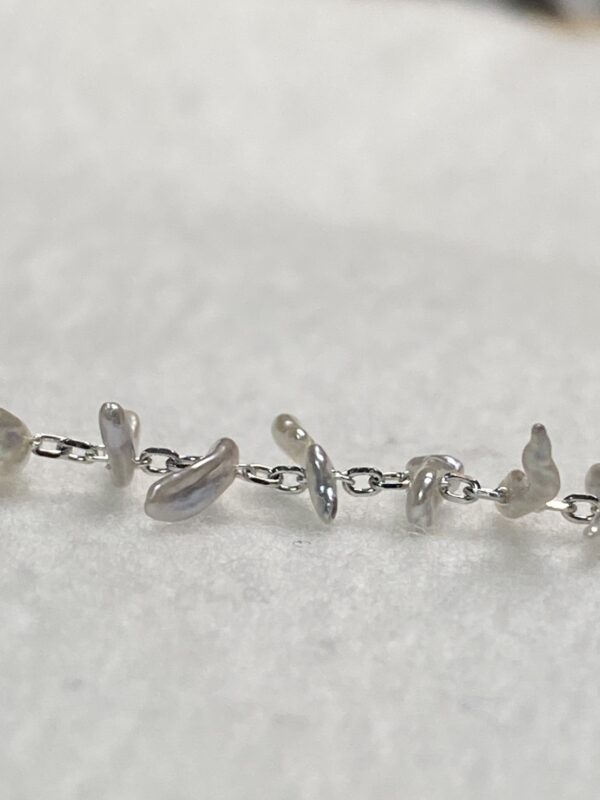
This is an Akoya Keshi pearl bracelet.
The difference between a pearl and a Keshi pearl is whether or not there is a nucleus inside the nacre. If there is a nucleus, it is classified as a pearl. If there is no nucleus, it is classified as a Keshi pearl.
Akoya pearl farmers cultivate Akoya oysters to produce pearls, not to produce Keshi pearls. However, during the pearl harvest, Keshi pearls are sometimes found among the harvested oysters, as well as among other marine organisms and seaweed attached to the shells.
At the pearl company where I used to work, the pearl harvest began every December, followed by the auction season, which continued through March. After the company-wide meeting in April, where the auction results were presented, we finally began collecting Keshi pearls.
In years when the harvest was especially abundant, there were as many as twenty cardboard boxes, each about 40 cm square, filled with shell fragments, seaweed, and other marine debris containing tangled or hidden Keshi pearls. Using tweezers, we carefully picked out Keshi pearls ranging from less than 1 mm to about 3 mm in size. We also placed the mixture of sand and Keshi pearls into a dustpan and gently shook it by hand to roughly separate them before continuing the detailed sorting process.
After the long pearl harvest, months of auctions, and the company-wide meeting, the busiest season of pearl farming had finally come to an end. It was during this quieter period that we spent our time carefully sorting these tiny Keshi pearls.
This bracelet was made by someone who helps me create products for Flower Jem. I think it turned out beautifully.
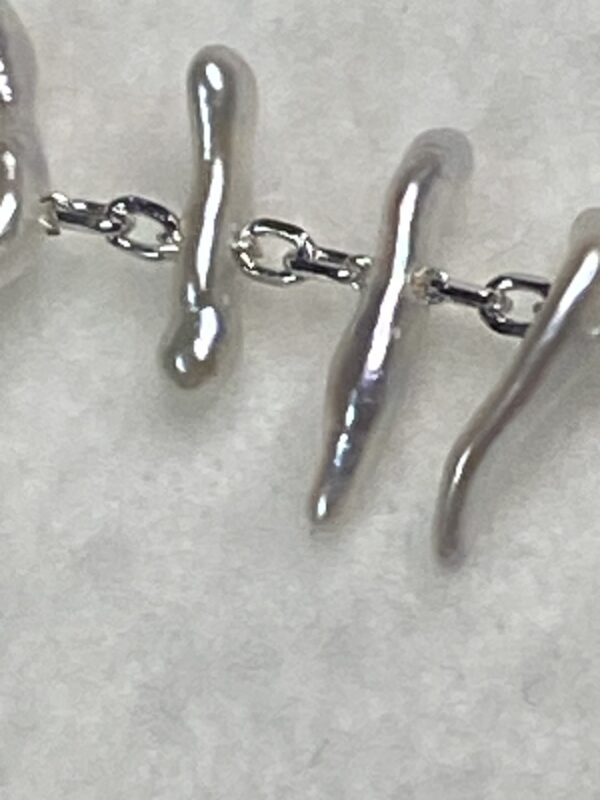
This bracelet is designed so that the chain does not pass through the Keshi pearls themselves. Instead, each Keshi pearl is connected to the chain with approximately 0.3 mm wire.
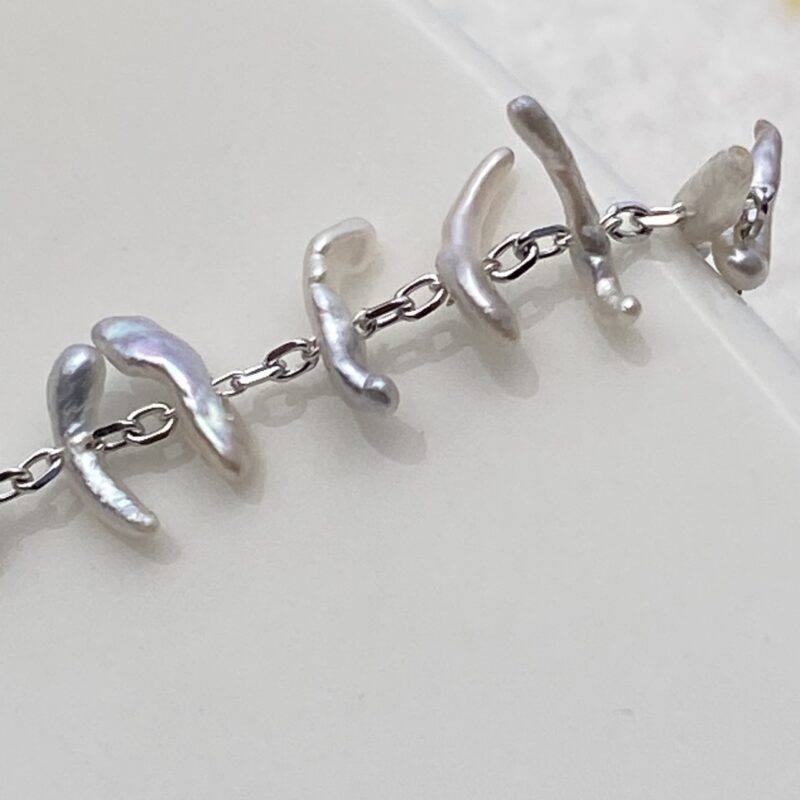
Drilling a large hole in a small Keshi pearl can sometimes cause it to crack. By connecting the chain and the Keshi pearl with wire instead, there is no need to drill a large hole.
At Flower Jem, I have made Keshi pearl bracelets before, but bracelets made using the all-knot technique can sometimes lose some of their natural flexibility.
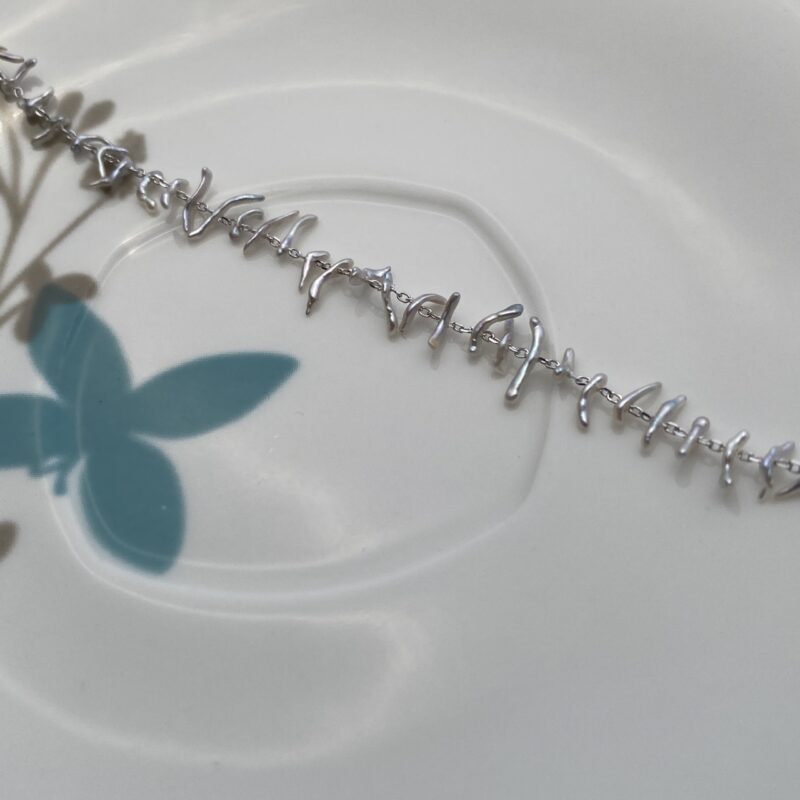
Visually, however, all-knot bracelets made with blue or pink thread have a very charming appearance.
This time, by using a chain, I believe I was able to create a bracelet with a softer, more flexible feel.
The clasp used on this bracelet is a tubular design that is relatively easy to fasten and unfasten.
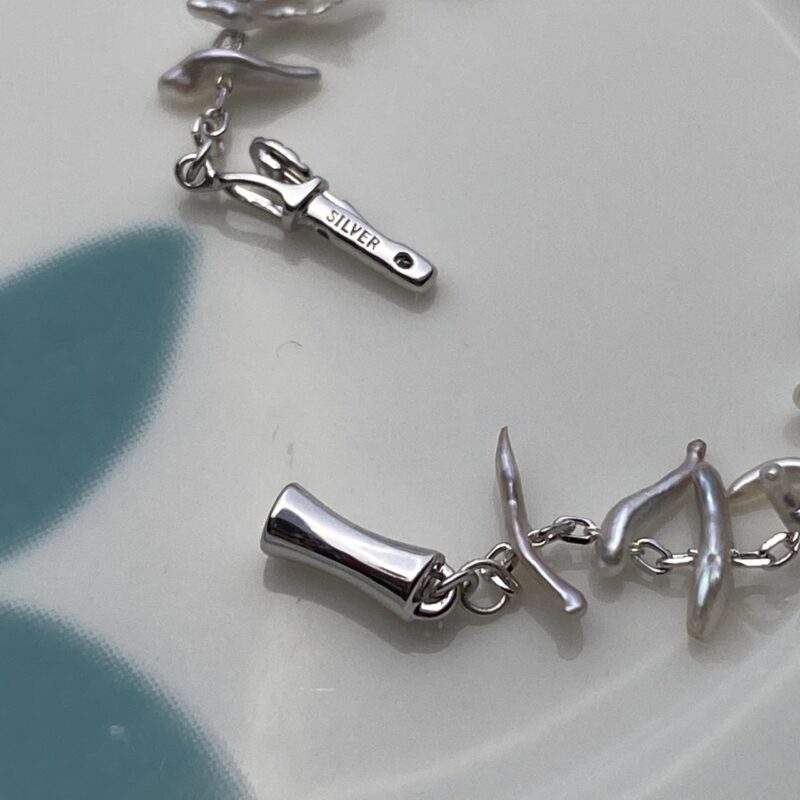
When I worked at a pearl company, bracelets were not very popular because many customers felt they were difficult to put on and took too much time to fasten before going out.
Because I wanted to enjoy wearing bracelets myself, I spent three years searching for the right clasp.
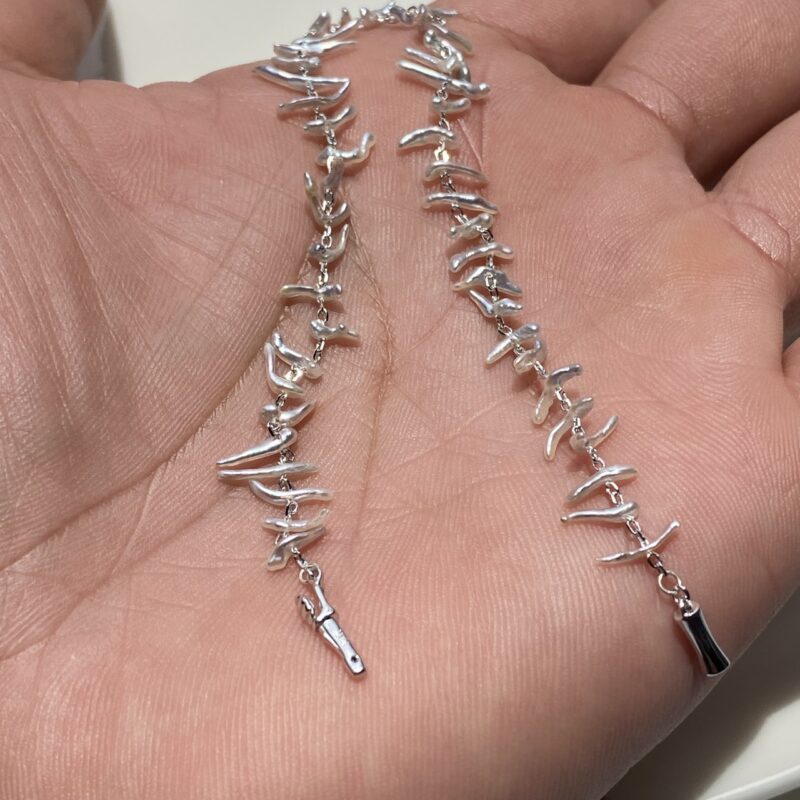
After three years, I eventually found it at a pearl jewelry findings shop near the company where I worked.
Originally, I used a standard lobster clasp with a small jump ring. However, I found that the small clasp could sometimes be difficult to handle.
After that, I switched to magnetic clasps.
Although they were easy to put on and take off, they could unexpectedly come undone from time to time. I tried several different types, including stronger magnets, but they still occasionally came loose.
Eventually, I found this clasp and decided to use it.
After that, I adopted the clip-style clasp that has now become the standard clasp used on Flower Jem bracelets. However, it was simply too large for this delicate Keshi pearl bracelet.
After thinking about it for about two months, I suddenly remembered this clasp and decided to use it.
There is a saying that fashion requires sacrifice, but I believe that being able to put on and remove a bracelet easily is just as important.
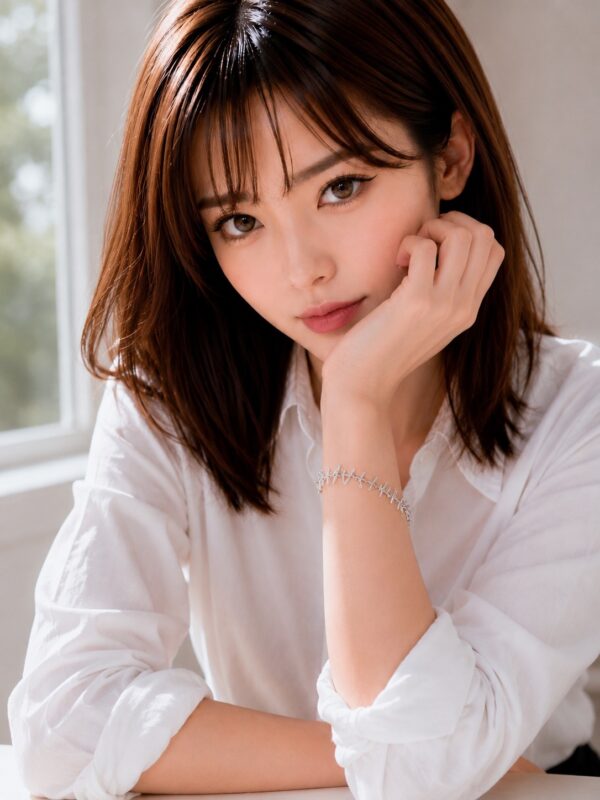
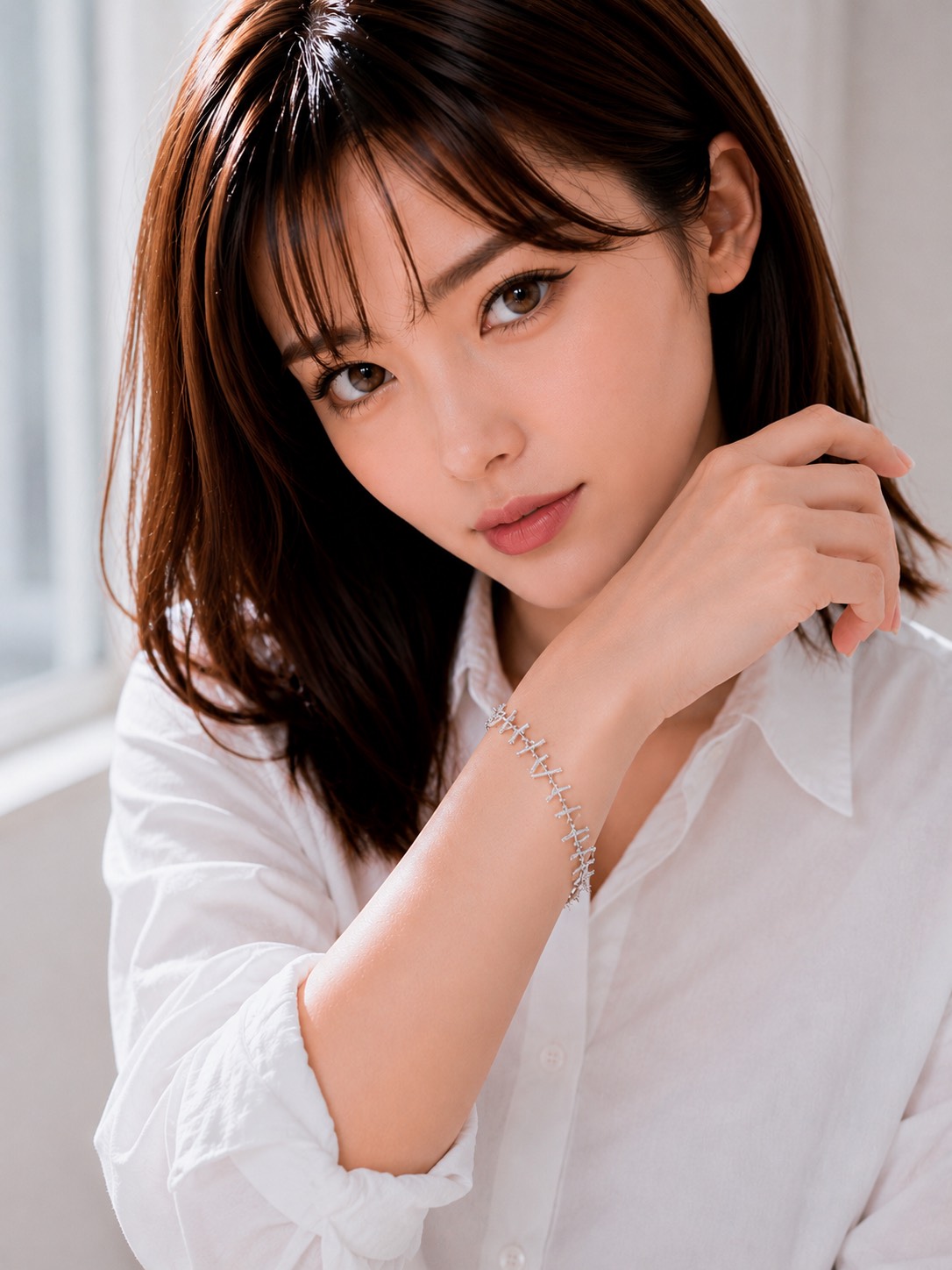
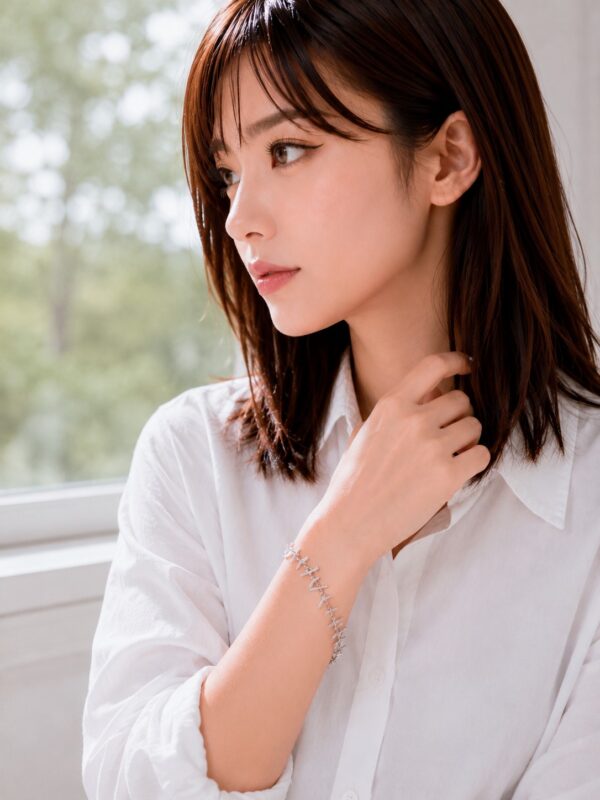
Starting with this bracelet (June 28, 2026), I also decided to begin experimenting with AI-generated models.
I believe it is more helpful for visitors to see how a piece of pearl jewelry looks when it is actually being worn.
I am not particularly suited to being a model myself, and although I have asked friends to help in the past, it is difficult to photograph both pearls and people beautifully without proper photographic equipment. It simply is not very practical.
A few days ago, I had dinner for the first time in several years with someone from a company that used to do business with the pearl company where I worked. During our conversation, he mentioned AI-generated models.
So I immediately asked AI to create one for me.
No matter how capable the AI may be, if the person giving the instructions is clumsy, the results will be clumsy too. After plenty of trial and error, frustration, and moments of despair, I finally managed to create several images.
The bracelet worn by the model is not an exact reproduction of the actual bracelet.
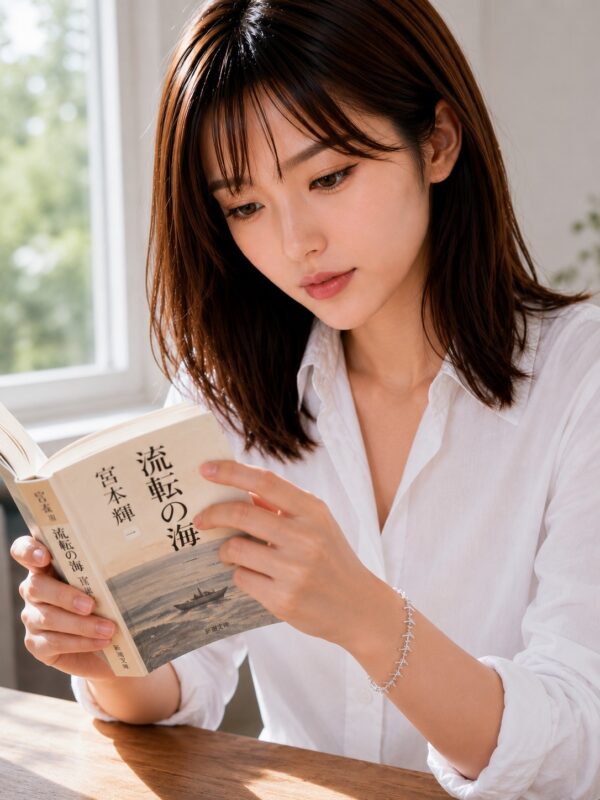
Please consider it simply as a reference to help you imagine how the bracelet might look when worn.
At the same time, I do have mixed feelings about using AI-generated models in my product photographs.
However, I also do not want to resist the changing times forever.
For me, the most important thing is helping visitors imagine what this bracelet looks like when worn.
This is still an experiment, and I would like to see what everyone—including you—thinks about it.
Pearl Bless You
Flower Jem
This space is not only for reviews. You are welcome to write freely about pearl jewelry, ask questions, or share what you feel when you see this piece. Member registration is required to submit your message.
Pearls & Stories
There are no stories yet.