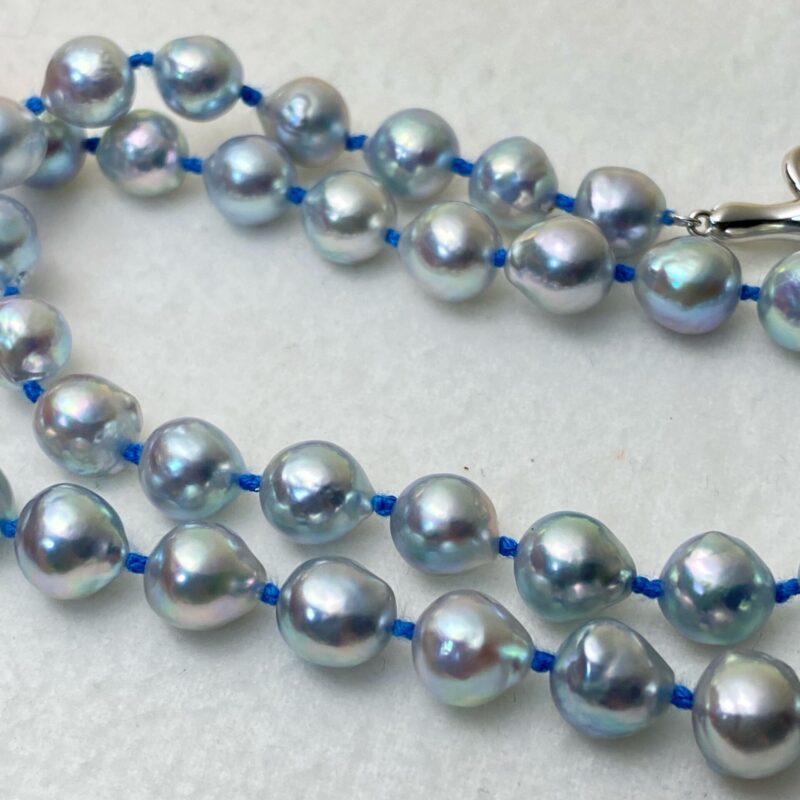
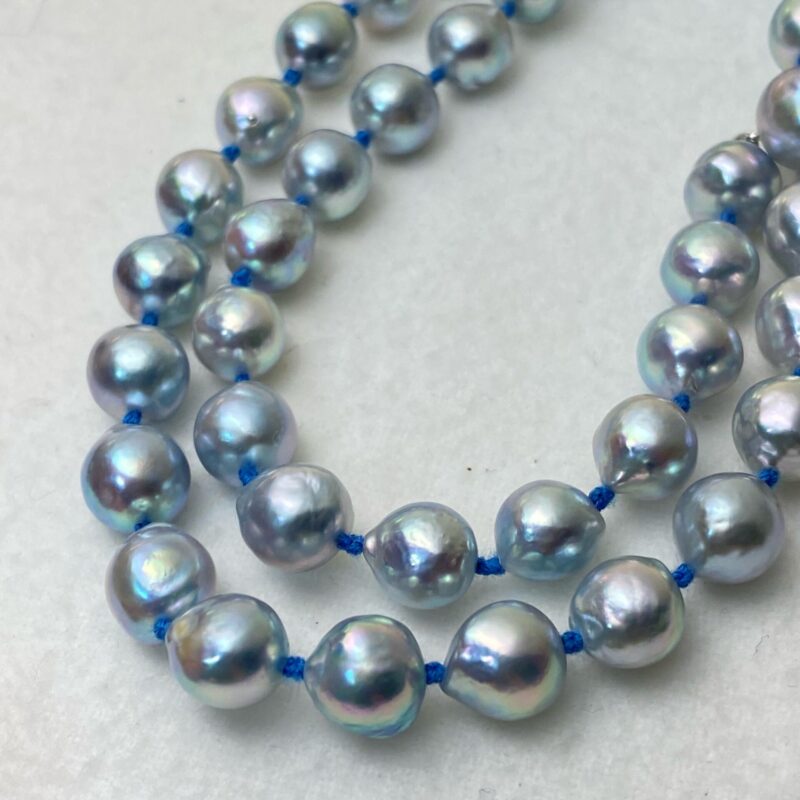
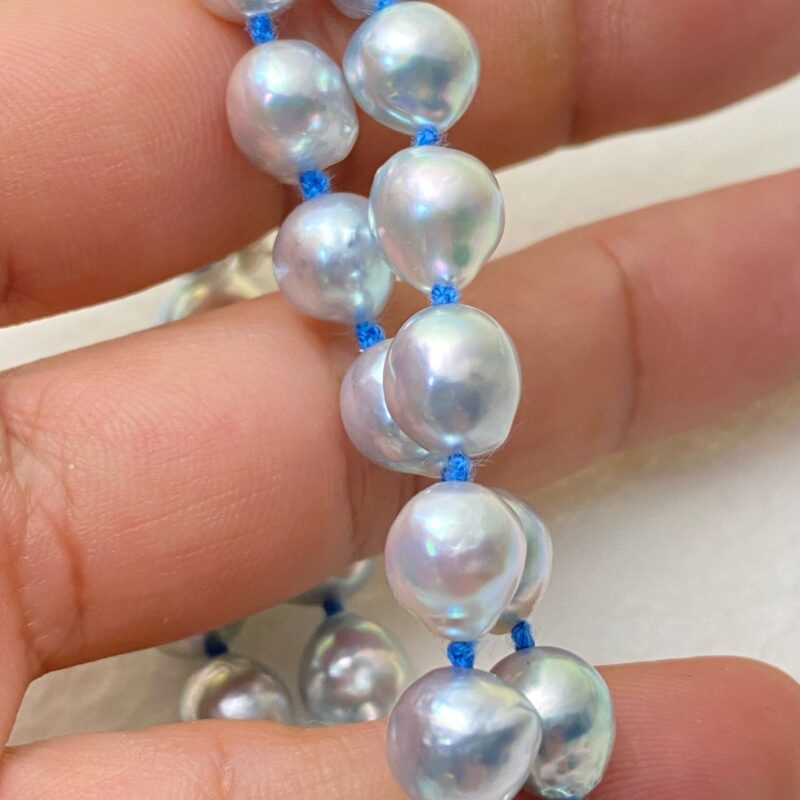
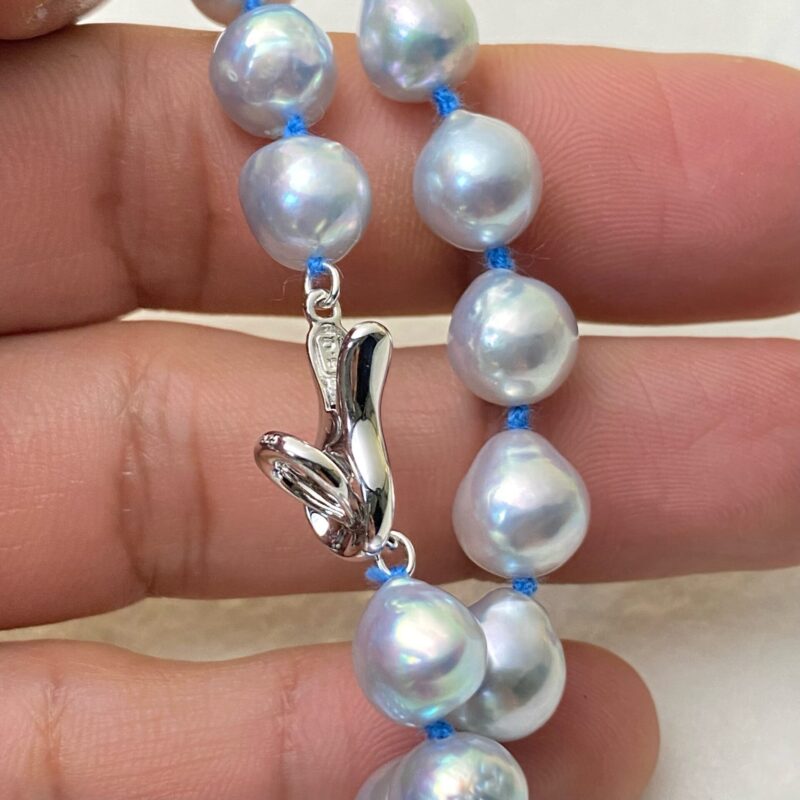
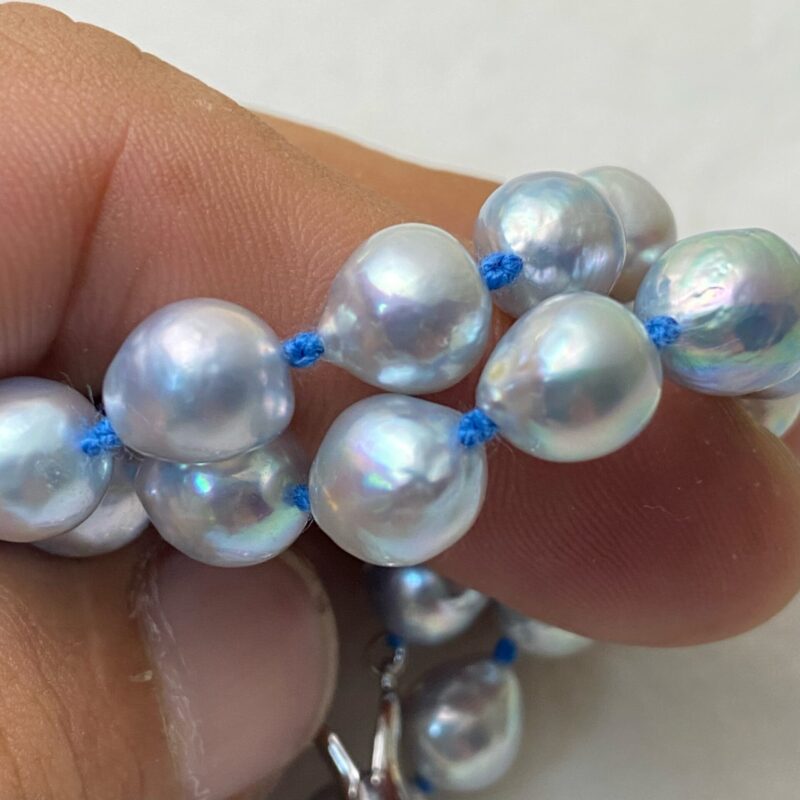
Akoya pearl necklace, 50.5cm length with 8.0–8.5mm natural blue baroque pearls. All-knotted with blue thread, silver 925 clasp, featuring deep luster and handcrafted finish.
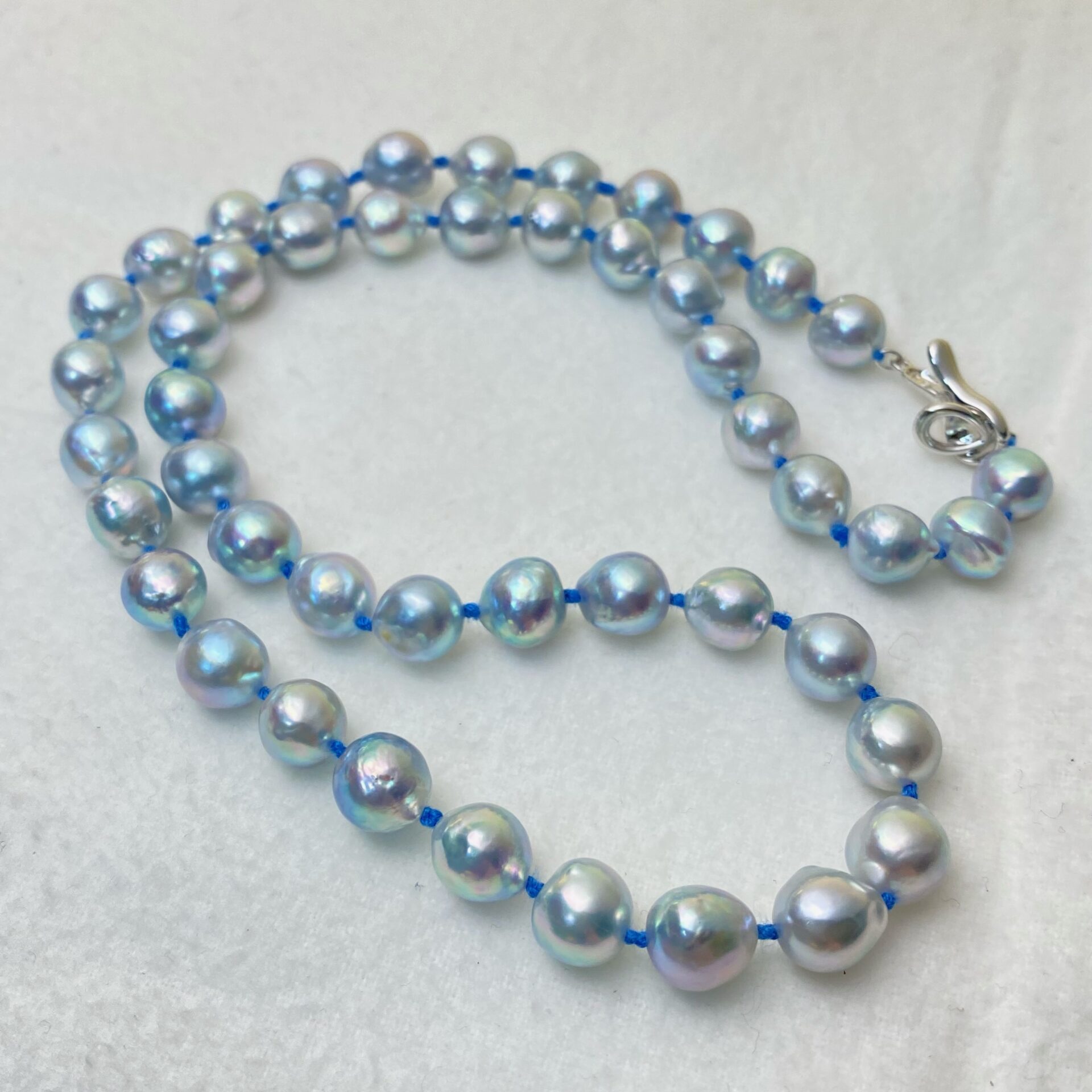
Akoya 8.0-8.5mm Necklace
$1,617.60
1 in stock
This is an Akoya pearl necklace. While round pearls are often considered the gold standard, the fact that you’re looking at baroque pearls may suggest you are quite the pearl enthusiast. Many first-time buyers of Akoya pearls tend to choose round pearls. Some buy pearls as part of a cultural tradition, for formal occasions like weddings or funerals, and through that experience, they begin to develop a love for pearls. Among these people, many choose baroque pearls when selecting their second pearl product.
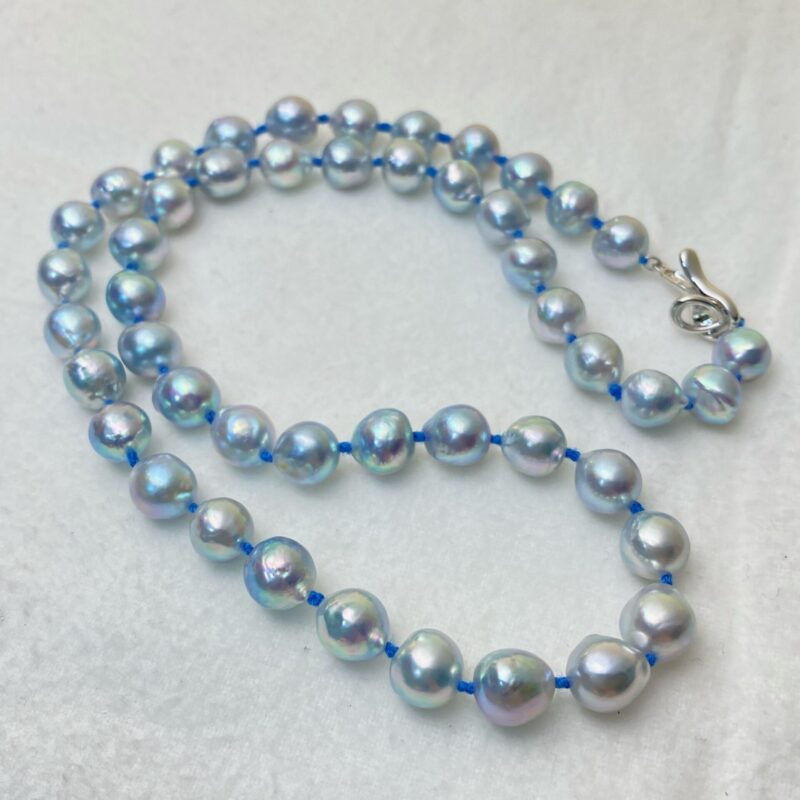
Round pearls symbolize perfection and embody the beauty of symmetry and order. In contrast, baroque pearls are, in this sense, imperfect.
However, when it comes to Akoya pearls—or any gemstone, really—what contributes significantly to their charm is their luster. And there are different types of luster. There’s the intense shine, like that of the sun. We are surrounded daily by various kinds of shine: the glint of a car’s hood under the sun, the glare from fluorescent lights or LEDs in a room, reflections from window glass or a wristwatch.
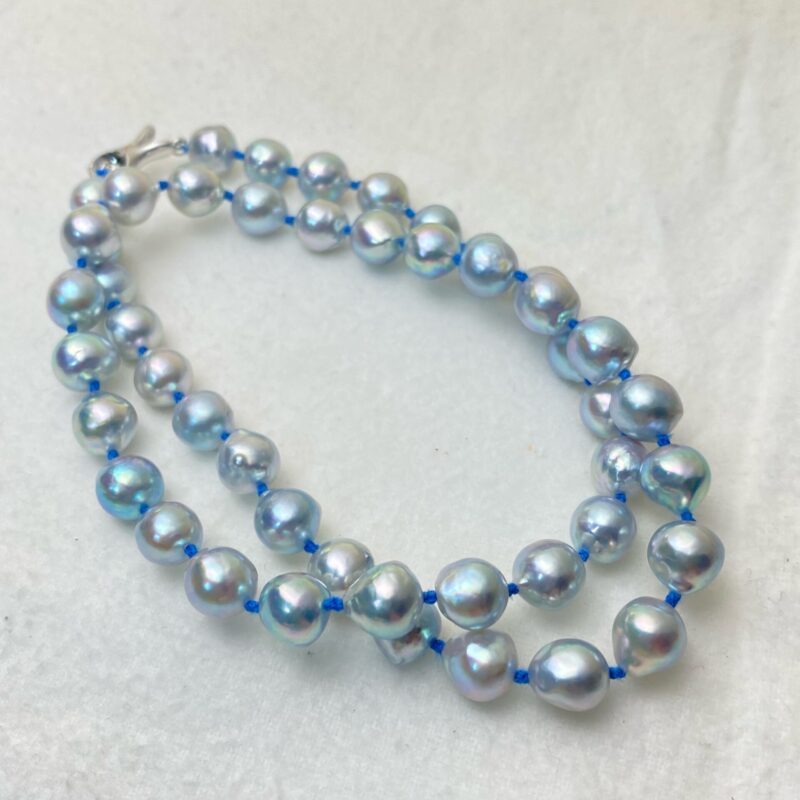
A pearl with strong luster is undoubtedly attractive. But even among pearls with a strong luster, there are different kinds.
The roundness, baroque shape, surface smoothness, and nacre thickness all influence the luster. In fact, I believe nacre thickness is the most important factor in determining the depth of a pearl’s luster.
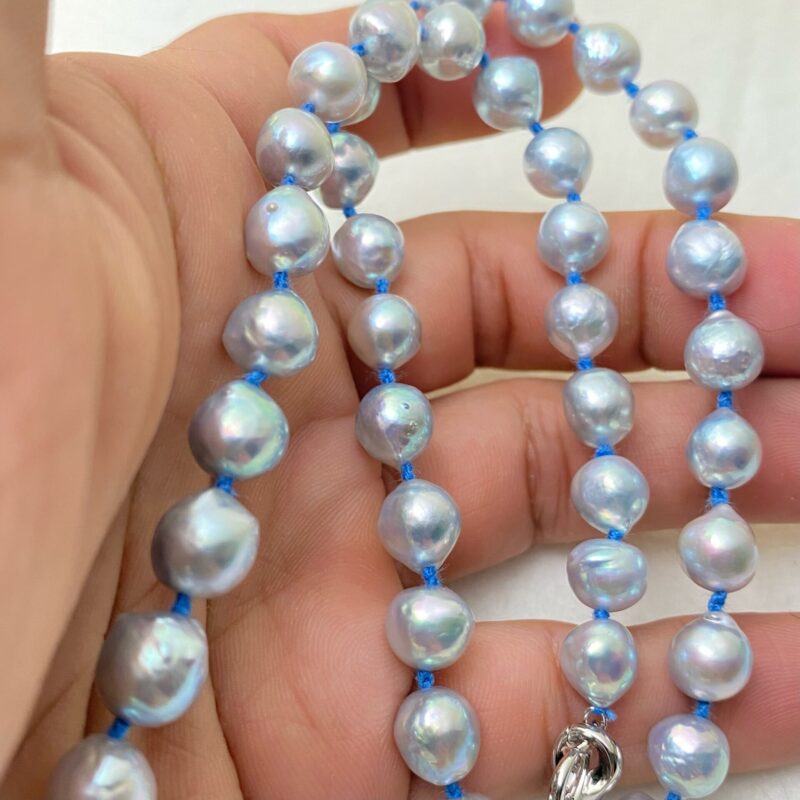
A pearl from a depth of 10 meters will reflect light differently than one from just 1 meter deep. Similarly, we use the expression “shallow person” to describe someone with little experience or superficial thinking. A thicker nacre gives a pearl a deeper, more captivating shine.
Even if a pearl has a strong luster, if its nacre is thin, it lacks appeal—even if it is perfectly round and free of blemishes. It’s just an Akoya pearl in name only. Still, pearls with strong luster, perfect roundness, and no blemishes tend to be expensive. If you ask me, I’d recommend an imitation pearl instead.
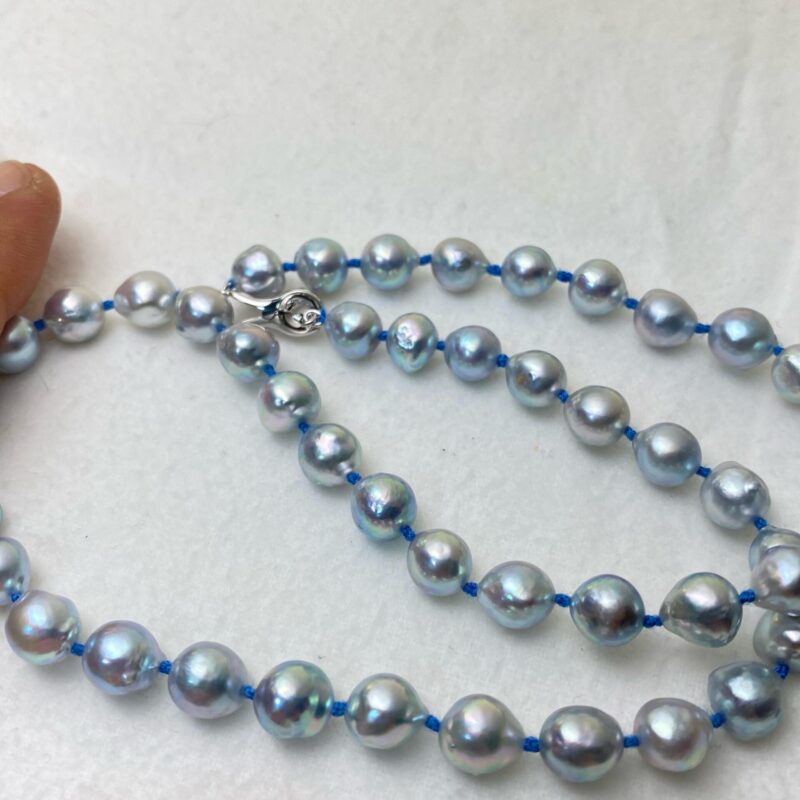
If a pearl has thick nacre, you’ll find yourself drawn in, wondering what lies beneath the surface. Thin-nacre pearls, however, don’t leave such an impression, and they don’t captivate me. Personally, if a pearl has deep luster and thick nacre, I don’t mind its shape or the number of blemishes. For me, the most important thing is the depth of its luster. This is what gives a pearl its true allure as a gemstone.
As long as a pearl has deep luster, I don’t mind if it’s baroque or has some blemishes. And since the price of a pearl is determined by its roundness, luster, and lack of blemishes, choosing a baroque pearl will significantly lower the price. By accepting some blemishes, the price drops even further.
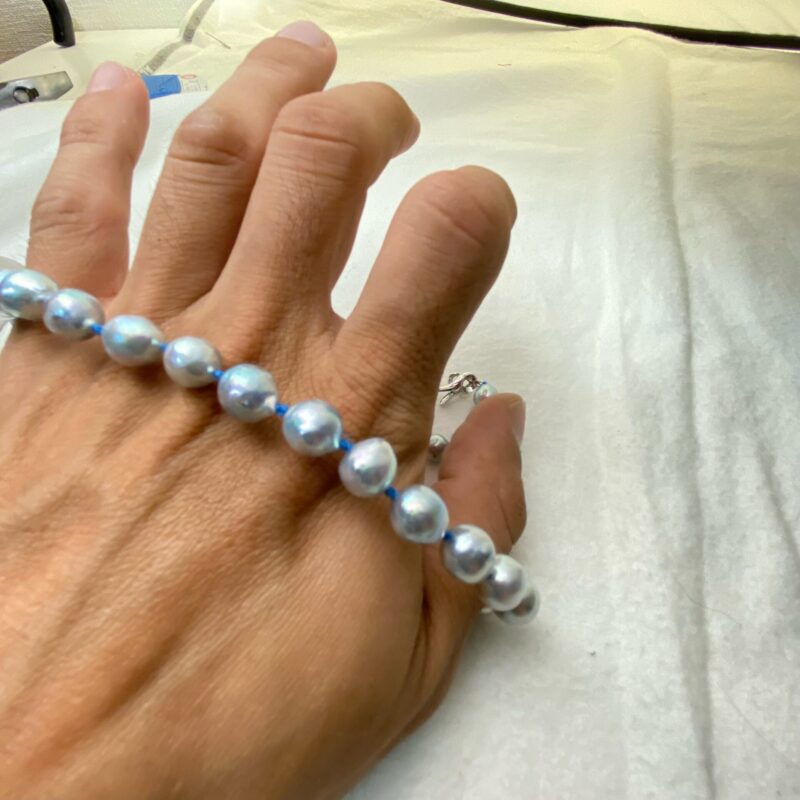
In short, you can lower the price while still ensuring that the pearl has the most important feature: deep luster.
On the other hand, if you insist on having a round pearl, the price will rise simply because it is round. With a limited budget, much of the cost goes toward roundness, leaving less for luster and blemish-free quality. As a result, you may end up with a round pearl that is not particularly lustrous, has a thinner nacre, and more blemishes.
It’s like wanting a luxury car but being limited by your budget. In that case, you might end up buying a used luxury car.
If you’re not set on a luxury car but simply want a reliable vehicle, you could find an excellent, low-budget car from a lesser-known but reliable manufacturer.
I’m not sure if this analogy makes sense, but I hope you get the idea I’m trying to convey.
I’ve worked for about 10 years at a company with its own pearl farm, and I’ve heard countless times about what ideal pearls should be like. I’ve seen these pearls too, and now I want to offer them to you. There are many pearls on the market advertised as “perfectly round, blemish-free, and of the highest quality,” but many of these pearls are only round and blemish-free. Their luster is dull, and their nacre is thin.
With currency, it doesn’t matter if the bill is crumpled or stained with coffee—it retains its value. But that’s not the case with Akoya pearls. I want you to enjoy owning pearls as gemstones, so I hope you will choose the highest quality possible.
Pearl quality can be difficult to assess, and sometimes you can’t judge a pearl’s quality without comparing it to another. I’ve seen many people satisfied with low-quality pearls simply because they trust the seller’s marketing.
I don’t believe in the mindset of “as long as the customer is happy, it’s fine.”
We all have limited budgets.
One of the most cost-effective ways to choose high-quality pearls within a budget is to opt for baroque pearls.
There are three factors that affect the price of a pearl: shape, luster, and lack of blemishes.
Unless you’re as wealthy as Elon Musk, distributing your budget evenly across all three factors will result in a pearl that’s decent but not exceptional. It will be good, but not special.
Shape: Luster: Nacre thickness: Lack of blemishes = 5:5:5
Instead, adjust this to:
Shape: Luster: Lack of blemishes = 2:9:4.
And choose a pearl with thick nacre.
By doing so, you can get a pearl with attractive luster within your budget.
Don’t chase perfection in every aspect. Focus on the essential qualities and be willing to overlook the non-essential ones. This is one of my key principles when it comes to pearls.
That said, on a personal level, I don’t find round pearls all that appealing.
At this point, I’ve written all this, but I haven’t been able to fully convey what I really want to say. I hope you’ve caught at least a glimpse of my true thoughts.
In this comparison between baroque and round pearls, I’ve focused on price. With the same budget, you’ll get a higher quality pearl if you choose a baroque shape.
However, personally, even if I had an unlimited budget, I would still choose a baroque pearl. The reason is that I feel more attached to baroque pearls.
A perfectly round, high-quality pearl gives me the impression of a “cold beauty.” It’s like a flower out of reach, sitting high on a hill.
In contrast, baroque pearls feel more like close friends.
Please remember, these are just my personal values.
Essentially, I only list products on Etsy that I myself am satisfied with. So, it’s important that you understand my values and what I consider “satisfaction in pearls.”
That’s why this product description may feel a bit odd or confusing.
First and foremost, I want you to judge the quality of the pearl by looking at the photos. Then, I’d like you to understand the seller’s thoughts—mine, in this case.
And this necklace will surely be one that people will say, “What a beautiful pearl.” Even a pearl dealer recently said, “You don’t see many pearls with such a deep blue color these days.”
Hearing compliments from pearl dealers makes me the happiest. It’s purely an opinion about the pearl itself, free from considerations of price or public image.
So, while this description may not be as concise as it could be, I genuinely appreciate you reading this far. I hope tomorrow will be a bright and shining day for you.
This space is not only for reviews. You are welcome to write freely about pearl jewelry, ask questions, or share what you feel when you see this piece. Member registration is required to submit your message.
Pearls & Stories
There are no stories yet.