Why Winter Matters for Akoya Pearls
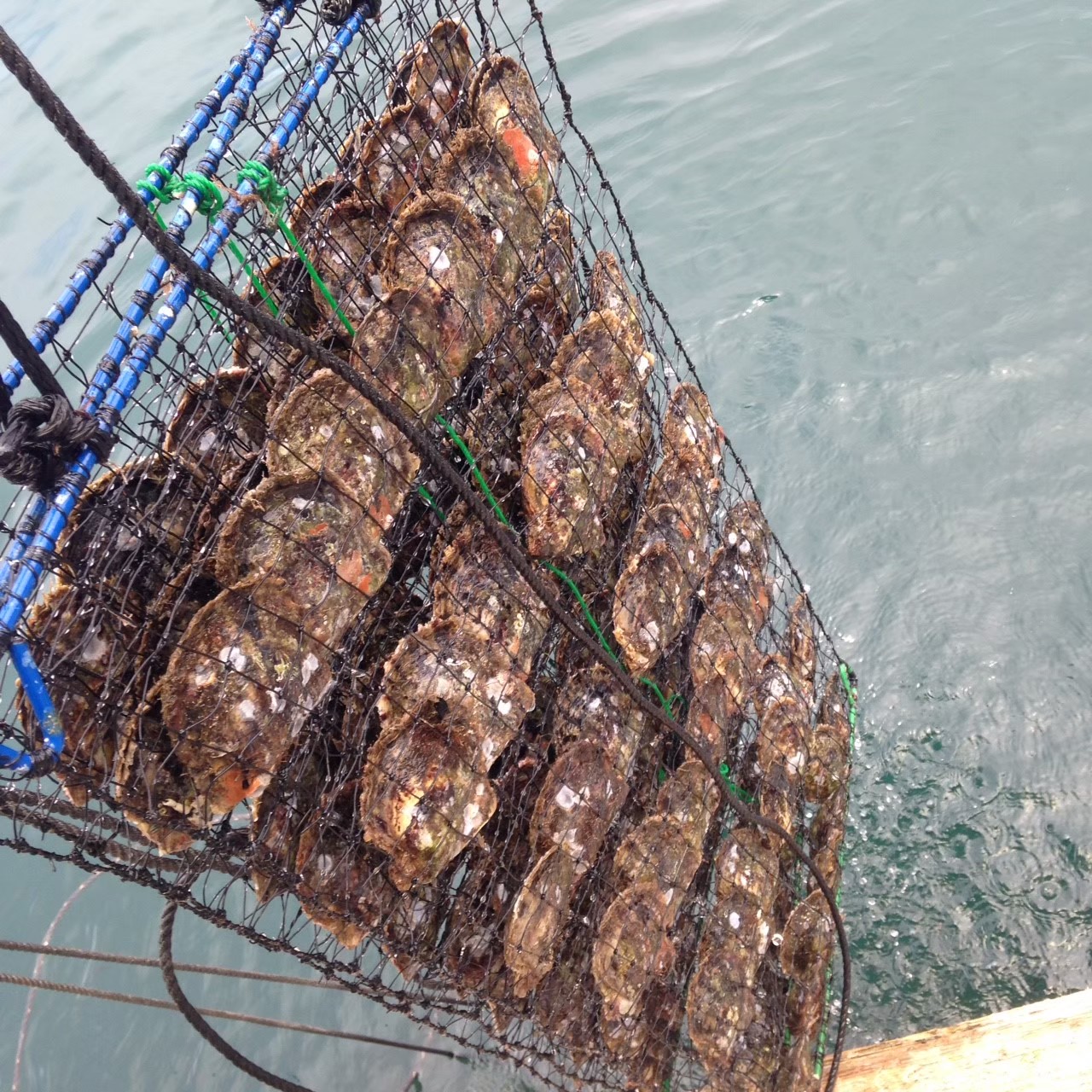
Akoya pearls are traditionally harvested in winter, and there is a clear reason for this.
As the water temperature falls, the Akoya oyster becomes less active and the formation of the pearl layer changes. This final stage can have a significant effect on the luster and beauty of the pearl.
In this article, I would like to explain why winter harvests matter, based not only on theory, but also on what I observed during many years of working with Akoya pearl cultivation.
In This Story
Why Is Akoya Pearl Harvesting Done in Winter?
The Connection Between Harvesting Timing and Auctions
Conclusion
A Story from the COVID-Era Pearl Auctions
Why Is Akoya Pearl Harvesting Done in Winter?
Akoya pearls are harvested from late November to March, depending on the farm. Some farms start as early as late November, while others delay the process until March.
If you would like to learn more about how the length of the cultivation period affects Akoya pearls, you may also enjoy:
Why is harvesting done in winter rather than in spring, summer, or autumn?
The answer is simple: winter is the season when pearls reach their most beautiful state.
The Role of Akoya Oysters in Pearl Formation
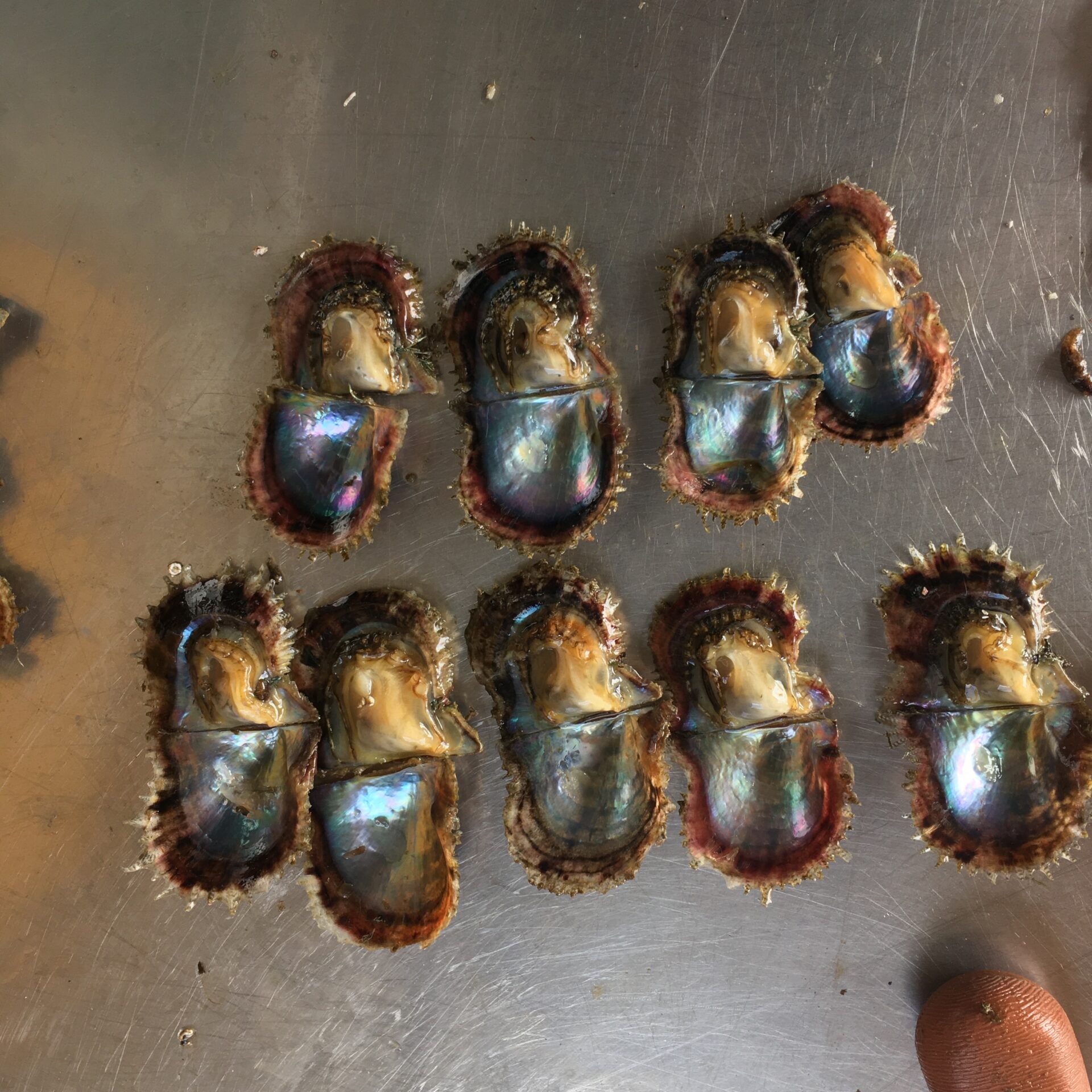
Pearls are formed inside Akoya oysters, which secrete layers of nacre around a nucleus implanted in their bodies. The quality of a pearl is largely influenced by how the oyster secretes these nacre layers.
The amount of nacre secreted is directly related to the oyster’s activity level. Akoya oysters thrive best in seawater temperatures between 23°C and 27°C. During such conditions, they are highly active and secrete large amounts of nacre. In Japan, summer seawater temperatures can exceed 30°C, which accelerates nacre secretion. However, prolonged high temperatures can also lead to oyster mortality.
How Nacre Secretion Affects Pearl Quality

When oysters are highly active and secrete large amounts of nacre, the resulting pearls tend to have rougher surfaces and less luster. Think of it like applying whipped cream to a sponge cake. In the early stages, whipped cream is applied generously, but the surface remains uneven. Similarly, during the summer months, pearls form rapidly, but their surfaces are less refined and lack strong luster.
Observing Developing Pearls
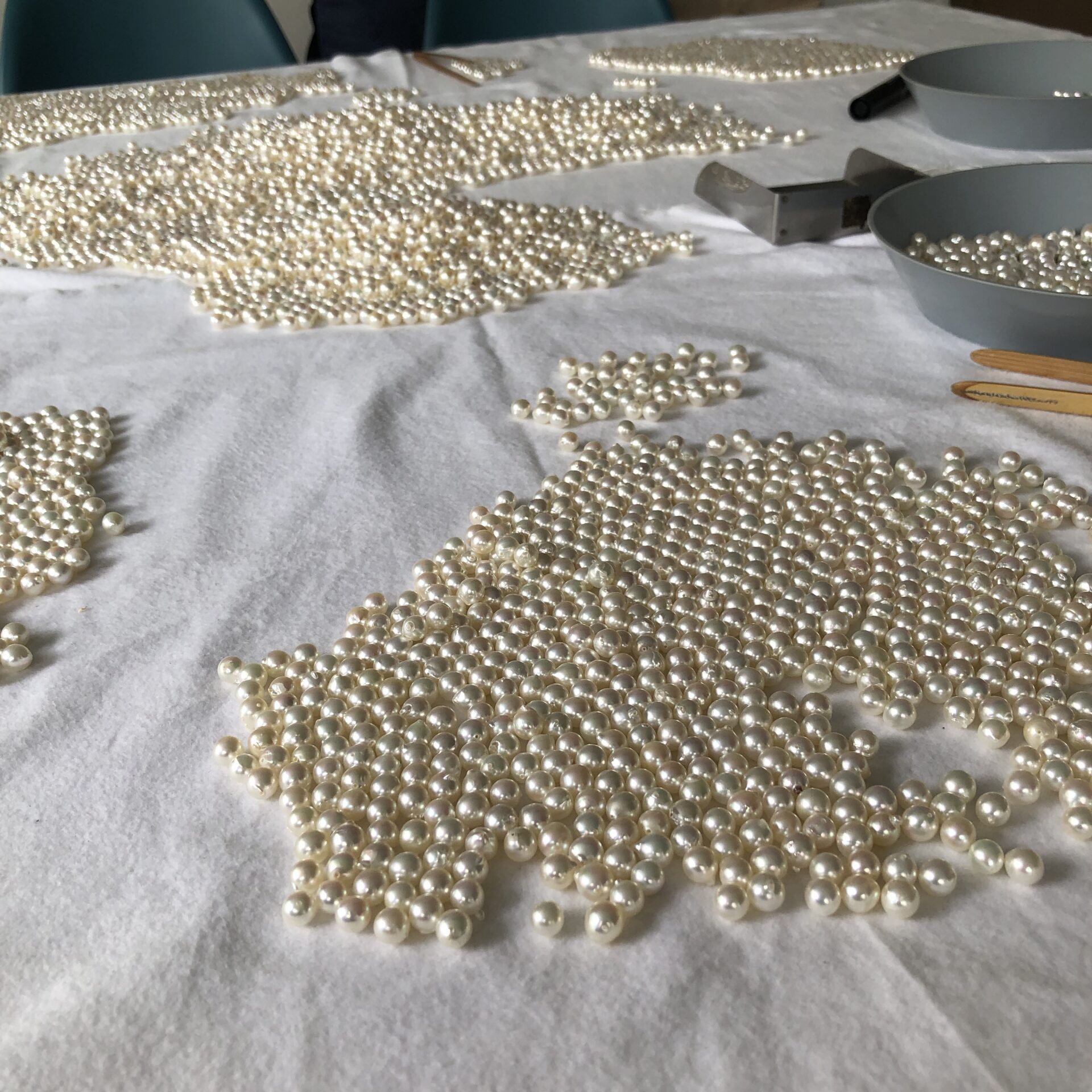
Have I seen pearls like this? Yes. Pearl farms regularly clean their oysters throughout the year, except during the harvest season. Sometimes, developing pearls fall out during the cleaning process. These pearls, called “cleaning pearls” by farmers, help predict the growth and quality of the upcoming harvest. I observed such pearls regularly over ten years, gaining insights into the cultivation process each season.
Why Harvesting in Summer Results in Lower-Quality Pearls
If pearls were harvested in summer, they would likely be rough and lack the desired shine. Conversely, harvesting in winter yields much finer-quality pearls.
The Impact of Winter on Pearl Quality
During winter, Akoya oysters become almost dormant. When seawater temperatures drop below 14°C in December, their activity slows down dramatically, much like bears hibernating. As a result, they secrete only minimal amounts of nacre. However, this nacre is extremely fine and delicate, much like the finishing touch in cake decoration.
In pearl farming, this final layer of nacre is called “Ke-Syo Maki” (化粧巻き), meaning “makeup layer.” Just as people apply makeup before presenting themselves in public, pearls also receive a final, delicate layer before being harvested. This refined nacre improves their surface texture and enhances their luster, making them more attractive.
To see how Akoya pearl cultivation develops from the earliest stages to pearl formation, you may also enjoy:
The Connection Between Harvesting Timing and Auctions
While winter is the best season for pearl harvesting, the exact timing is ultimately determined by pearl auctions. The first pearl auction of the year is typically held in mid-January. Farmers harvest their pearls just before these auctions to ensure they are ready for sale.
Before the COVID-19 pandemic, pearl auctions used to begin in mid-December. However, due to disruptions caused by the pandemic, the auctions were postponed until March that year. That delay revealed an interesting phenomenon: pearls harvested later in the season (for the March auction) were of noticeably better quality than those harvested earlier (for the December auction).
Recognizing this, pearl industry groups decided to delay auctions whenever possible to improve pearl quality. However, this posed challenges for pearl farmers, as they needed to begin nucleus implantation in April. March was already a busy time for them, with preparations for the next season and employees taking accumulated leave.
Ultimately, a compromise was reached, and auctions were permanently shifted to mid-January, one month later than before. This slight delay has allowed farmers to produce even higher-quality pearls by extending the period in which the oysters secrete fine nacre layers.
The Complex Relationship Between Farmers and Buyers
While winter remains the primary harvesting season, the final decision on timing is influenced by auction schedules. The interests of different stakeholders—pearl farmers, auction organizers, and wholesale buyers—are intertwined in a complex negotiation.
From my experience working in the pearl industry, this is the general process. However, top-tier pearl farms are less dependent on auctions. These farms work directly with globally renowned pearl companies, selling pearls exclusively to them. The companies select the pearls they wish to buy and return the rest to the farms. This direct business model allows these elite farms to operate independently of auction schedules and optimize their harvest timing based on pearl quality alone.
Back then, I watched these top-tier farms with admiration. Their smaller scale allowed them to care for their oysters with meticulous attention, resulting in consistently superior pearls. In contrast, the large-scale farm I worked for had to manage far greater volumes, making such precision difficult.
Conclusion
In summary, Akoya pearls are harvested in winter because colder water slows the activity of the oysters, allowing them to form finer and more delicate layers of nacre. These final layers play an important role in creating the smooth surface and strong luster we associate with high-quality Akoya pearls.
The ideal harvest timing, however, is influenced not only by nature but also by the practical realities of the pearl industry, including auction schedules, farm operations, and relationships with buyers. What appears to be a simple seasonal tradition is actually the result of biology, craftsmanship, and business all meeting at the same moment.
A Story from the COVID-Era Pearl Auctions
As a side note, during the COVID-19 pandemic, a well-known pearl company president and his right-hand man got into a huge argument.
At the time, many pearl dealers were refraining from bidding at auctions, but this company’s president declared, “Bid on everything!” However, his right-hand man objected, saying, “If we bid in this situation, we’ll end up buying everything! The price of pearls is crashing—there’s no way we should be buying up all the pearls now!”
This right-hand man was famous for being a very gentle and kind elderly man. He was known for his kindness toward everyone, so when he turned red with anger and started shouting in the auction hall, it became a major talking point at the event.
In the end, the company ended up winning a massive quantity of pearls at an auction where most others were holding back on purchases. The following year, pearl prices soared, leading to enormous profits for the company.
Even now, the right-hand man laughs sheepishly, saying, “At the time, I thought the president was being reckless. In the end, it worked out well, but back then, I just couldn’t believe it. Well, I guess the president was right after all.”
His honest and endearing personality is something I really like.
And with that, this concludes my discussion on when Akoya pearl auctions take place.
Continue Exploring Pearls
Subscribe for Pearl Stories🐾
Receive occasional letters from my workshop —
stories about pearls, silverwork, Lulu the little dog, and quiet life in Japan.
As a thank you, you’ll get a secret code for 30% off —
usable every time you order, only here, not on Etsy.
I don’t send spam. Just little notes filled with love and pearls 💫 You can read our privacy policy for details.

Dear Mr. Jem at Flower Jem,
I hope this message finds you well, and hope that spring is treating the Japanese people well.
I write to say I found the article about harvesting of Akoya pearls very interesting and informative. Thank you very much for sharing.
Best wishes,
Bella
(From Denmark, who uses the same knotting technique as you, but for personal use only)
Thank you for your spring-like warm message. I’m very happy. It seems that the article on pearl harvesting was useful to you, so it was worth it for me to write it. And you also make necklaces with all-knot. I am very honored to have had such a connection with you. I will continue to provide information about Akoya, so I hope you will continue to see it. Thank you.