9mm Natural Blue Akoya Baroque Pearl Bracelet, 21 cm, Japanese Akoya Pearls, K14 White Gold, Akoya Keshi
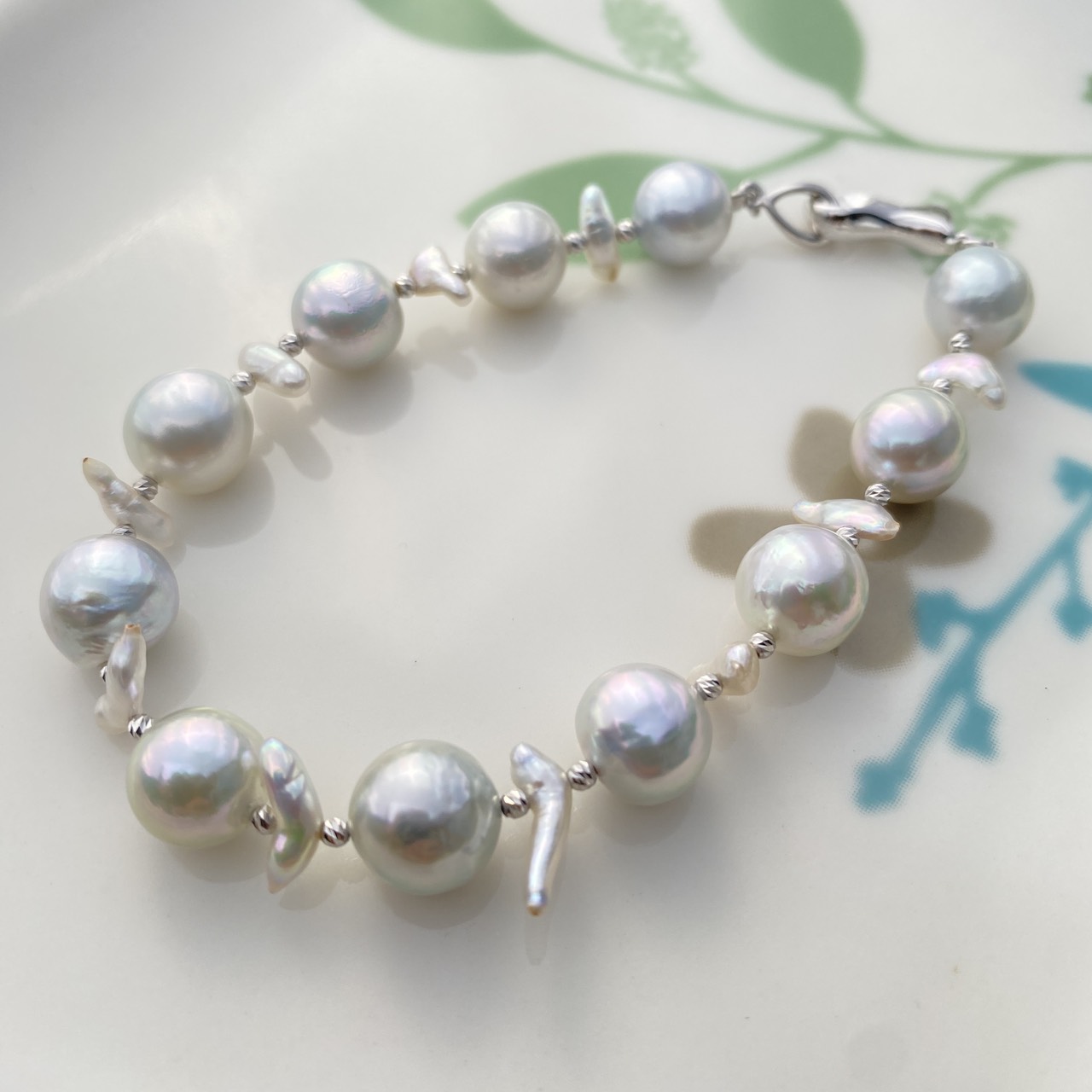
River Bloom 9-007
$750.00
1 in stock
🌸Bloom 9-007
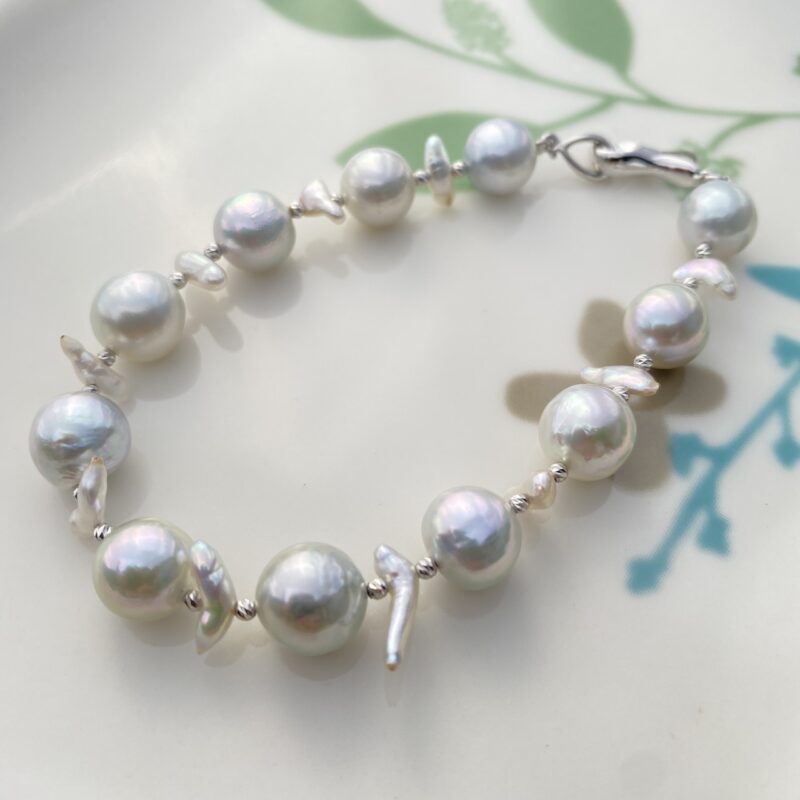
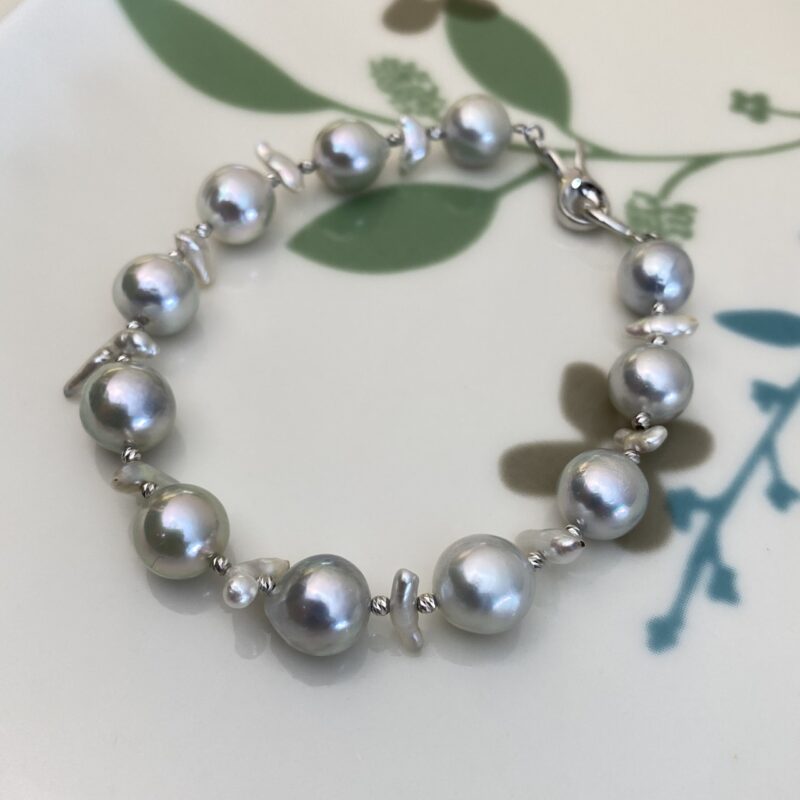
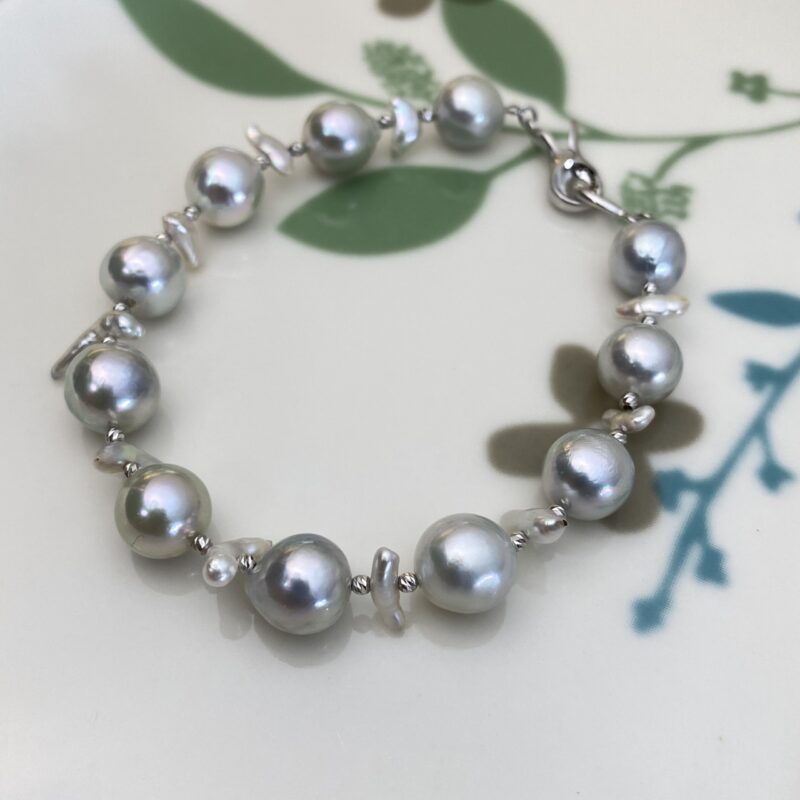
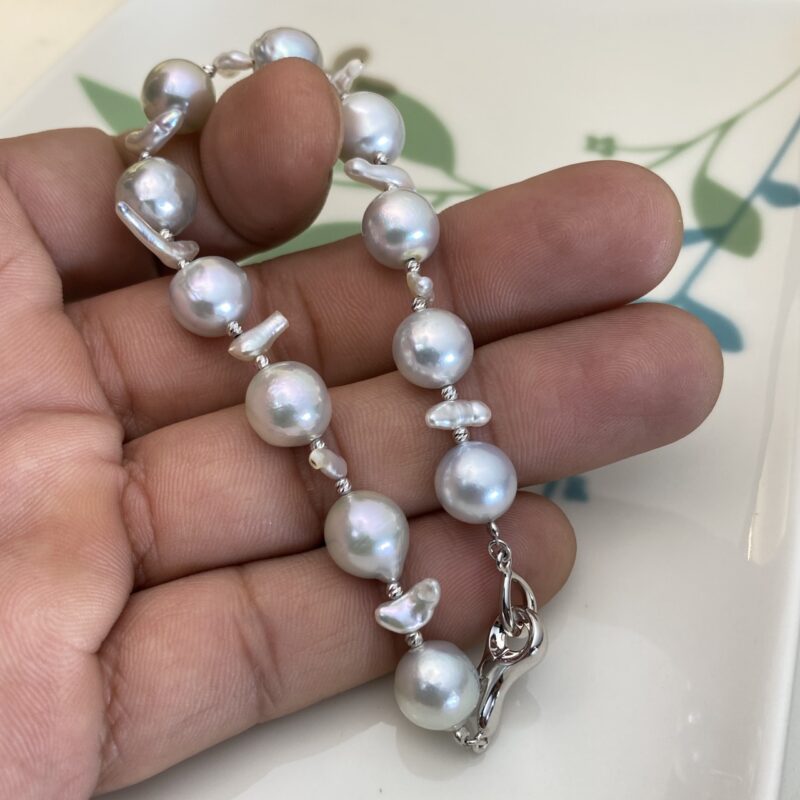
Length: 21 cm (adjustable with clip clasp)
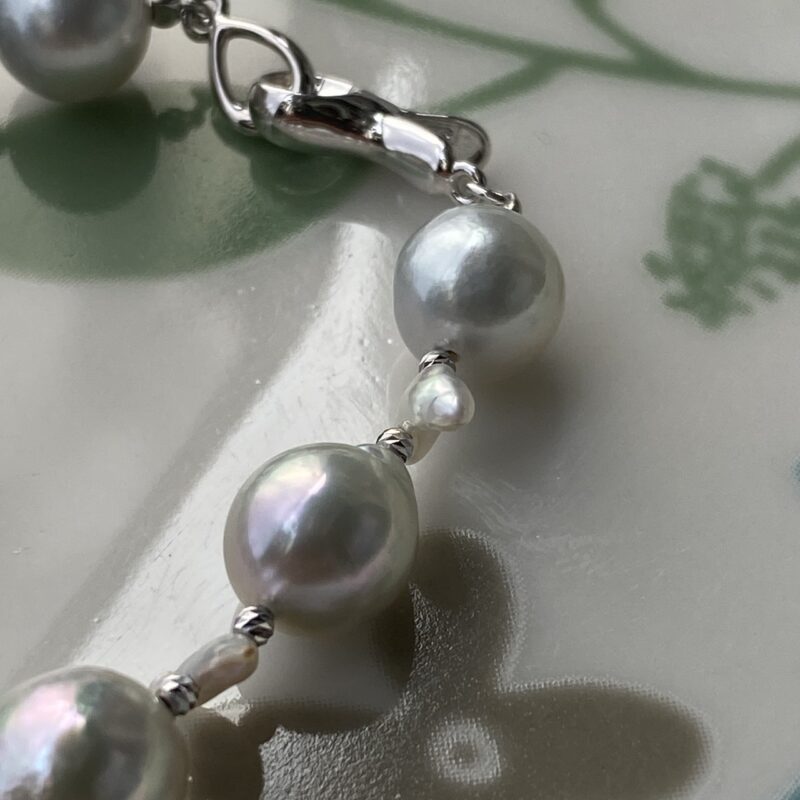
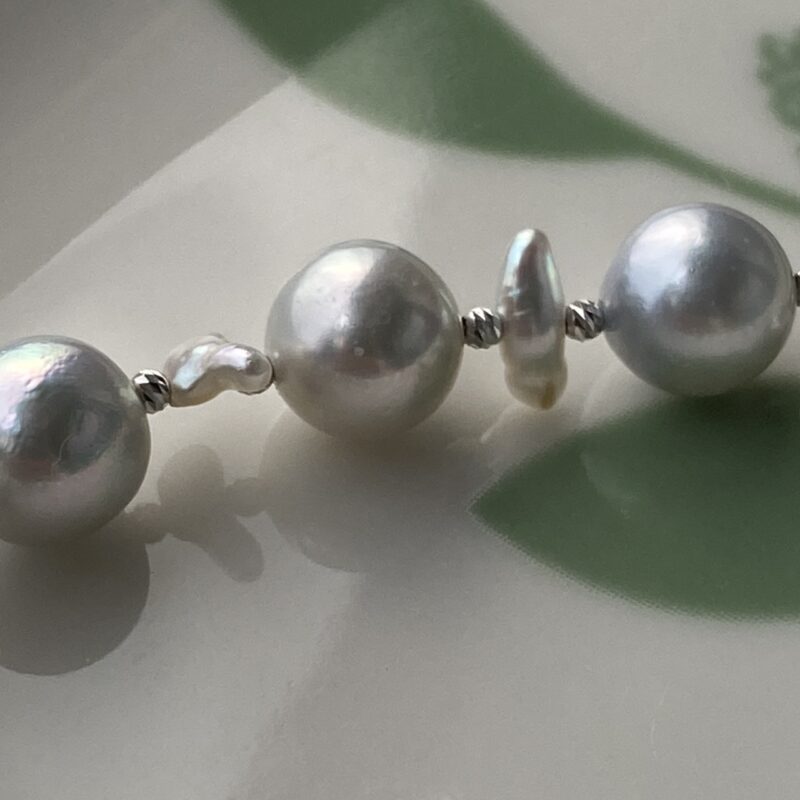
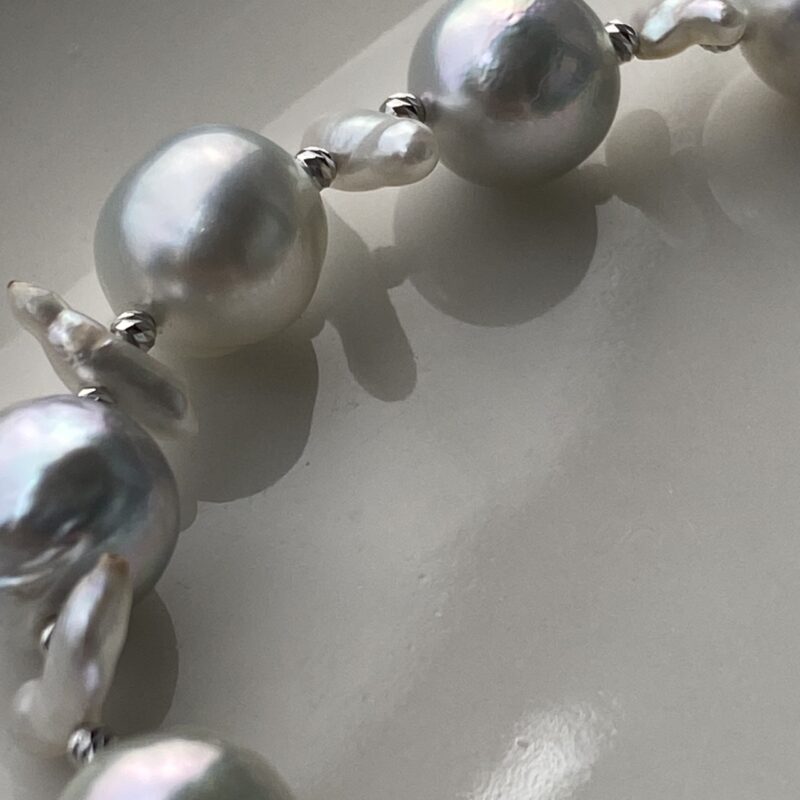
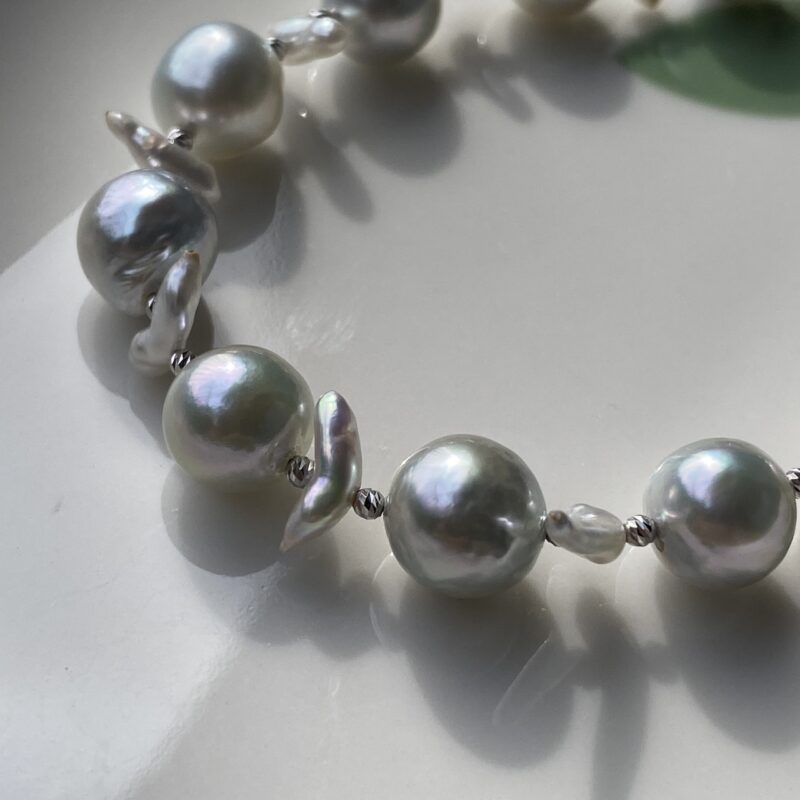
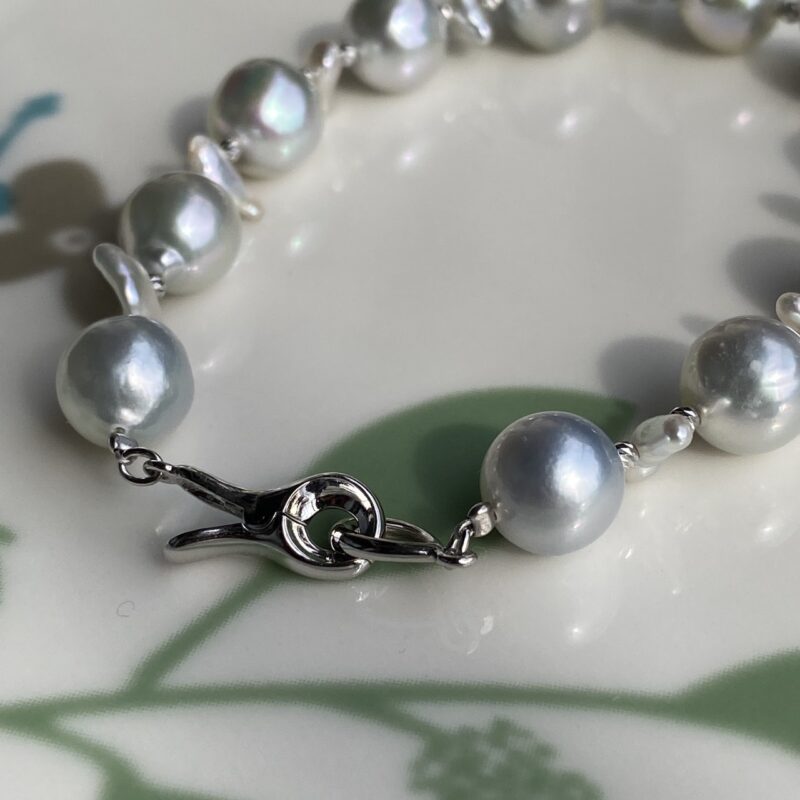
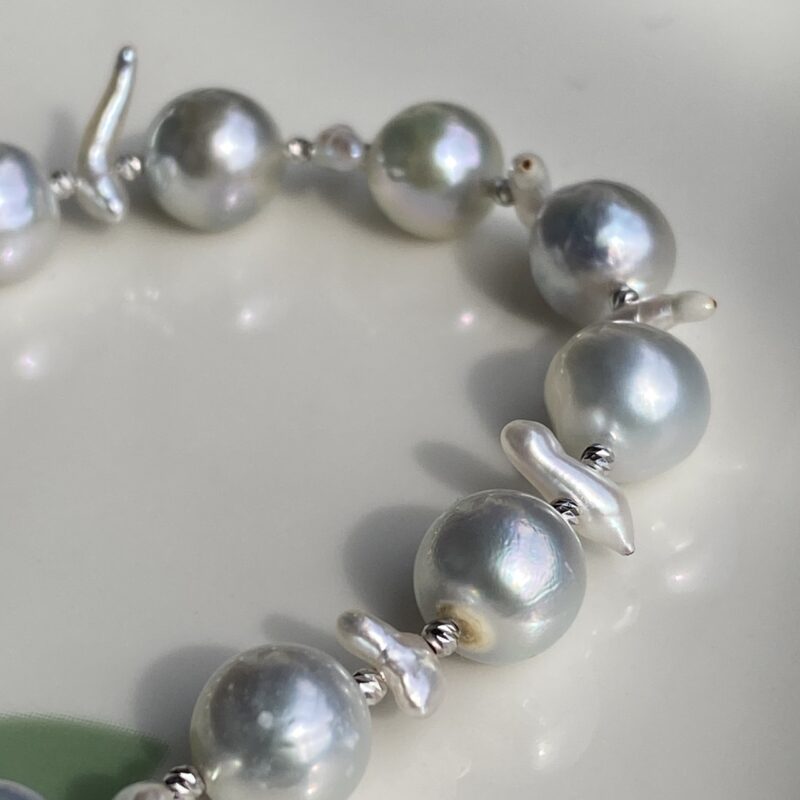
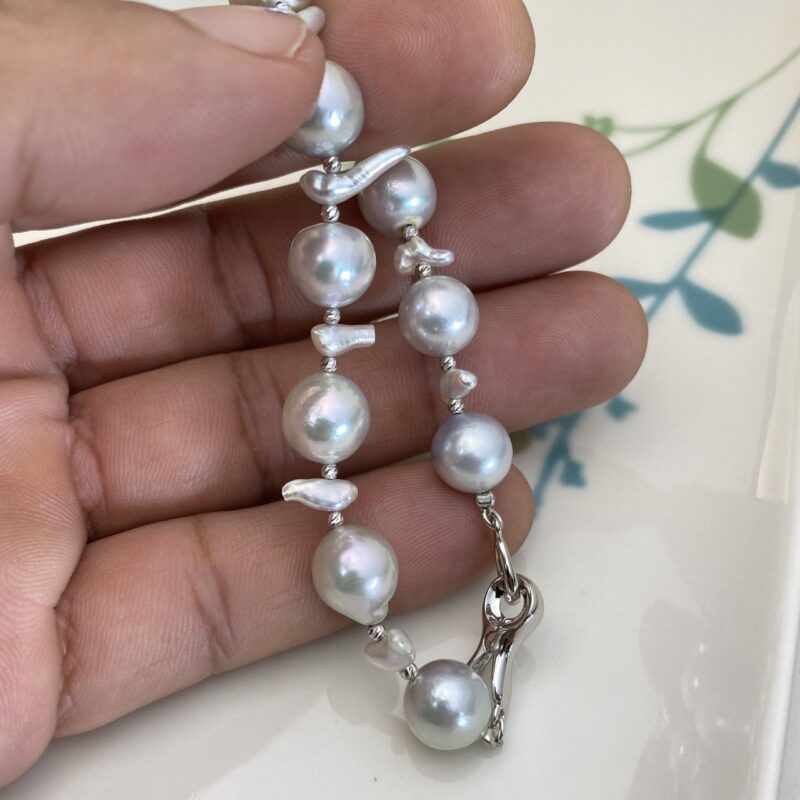
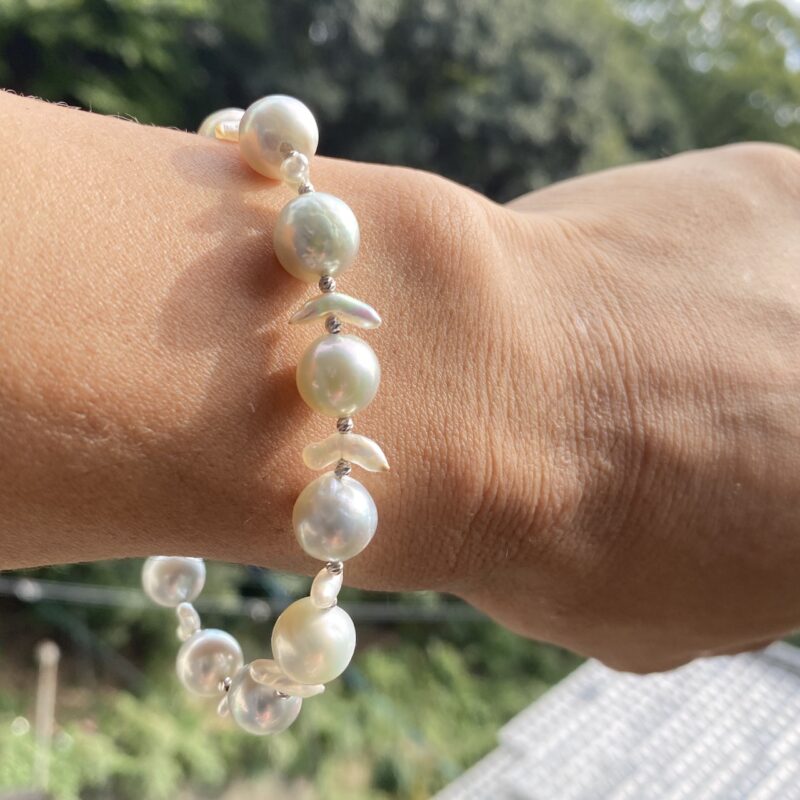
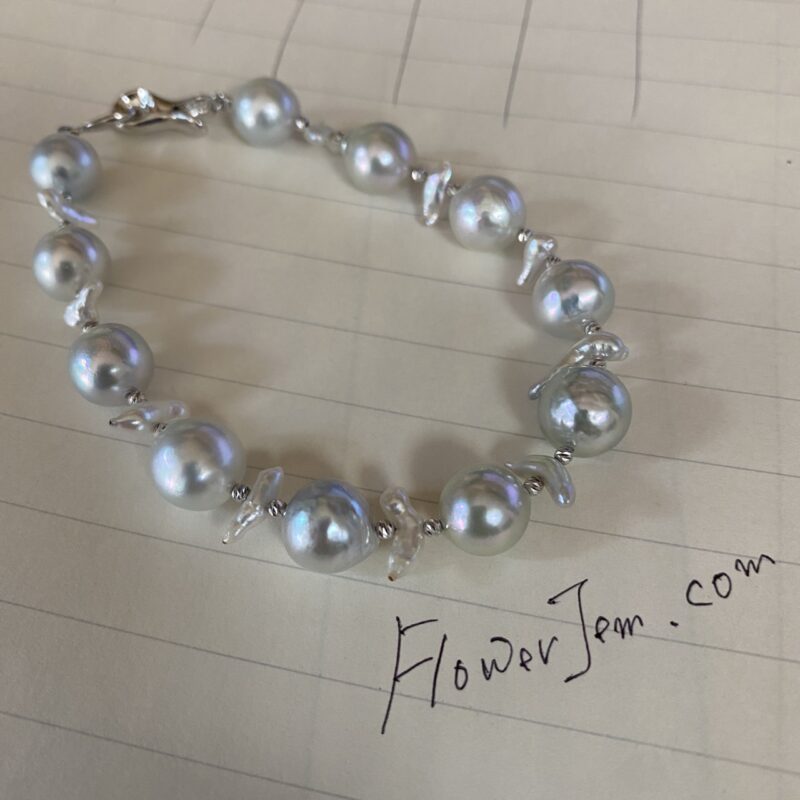
Pearls: 9 mm Natural Blue Baroque Akoya Pearls (Untreated) and Akoya Keshi Pearls
Mirror Balls: K14 White Gold
Clasp: Rhodium-Palladium-Plated Silver (Clip Type)
The seventh and final bracelet made from a lot of 114 Akoya pearls. Features slightly irregular pearl shapes and some variation in blue color intensity.
🌸Shipping to the United States
Flower Jem pays all customs duties and other import-related charges in advance for shipments from Japan to the United States. Your order will be delivered with these costs already covered by Flower Jem.
🌸Let me introduce River Bloom Bracelet 007.
Since I have been listing seven similar bracelets in a row, I imagine some people are thinking,
“Another bracelet that looks just like the others?”
It’s a bit like preparing a week’s worth of meals on Sunday afternoon.
Making several bracelets at once is simply more efficient.
Now, these River Bloom bracelets were made by sorting 114 pieces of 9 mm Natural Blue Baroque Akoya pearls.
I sorted them according to their luster, wounds, shape, color, and other characteristics.
You might assume that No. 1 is the best and No. 7 is the lowest in quality, but in reality, it doesn’t seem to be quite that simple.
That is because the depth of the blue color is also part of the selection criteria.
The intensity of the color has nothing to do with quality.
When selecting pearls based on how dark their blue color is, a pearl that would otherwise rank highly may be placed in a lower group simply because its color is lighter.
Conversely, a pearl may be placed in a higher group just because its blue color is darker.
My best friend from junior high school, Kosaka-kun, had extraordinary athletic ability.
In fact, he entered a high school famous for its baseball team based solely on his excellent performance in physical education.
Even after entering high school, Kosaka-kun still couldn’t write many kanji characters.
He was what you might call a natural bully, so he wasn’t bothered by this at all.
“Hey! Tell me how to write this kanji!”
That was the sort of thing he would say.
He joined the baseball team, but soon injured his lower back and had to leave the team.
He simply said, “It can’t be helped,” and seemed to accept it without much fuss, although I imagine he must have been shocked.
We attended different high schools, so we rarely saw each other.
When I was in my second year of high school, I met Kosaka-kun again for the first time in quite a while.
According to him, he had injured his back shortly after entering high school and had quit the baseball team.
He had entered that school specifically to play for its baseball team, only to end up leaving it.
Afterward, he began throwing the javelin as part of his rehabilitation.
Then he started achieving remarkable throwing distances and began training seriously in the javelin.
He told me that he had reached fourth place at the National Sports Festival.
Kosaka-kun had never even held a javelin before, yet I heard that he was achieving remarkable success.
Several years later, I met him again.
He told me that he had joined the athletics team of a major corporation as a javelin thrower.
He had found employment at a large company.
Later, I heard that he had become a part-time physical education teacher at a high school.
Let me repeat something.
When Kosaka-kun was in his first year of high school, he couldn’t write the kanji for “teacher” (先生), which Japanese children learn in their first year of elementary school.
Even after learning it, he often wrote the characters in reverse order, as 生先.
For an ordinary student like me, with no particular outstanding talents, the choice of which high school to attend was determined mainly by general academic ability.
Kosaka-kun, on the other hand, carved out his own path through life entirely through his extraordinary athletic ability.
After becoming a part-time high school teacher, Kosaka-kun was apparently told almost every day by the principal to stop commuting to school on his extremely loud motorcycle.
But he would simply reply,
“Then buy me a car.”
Even while sorting 9 mm pearls, memories like this sometimes come back to me, whether they are related to pearls or not.
Why did this pearl end up in the sixth group?
Ah, because of these wounds.
Why is this other pearl ranked higher even though it has wounds?
Ah, because its blue color is darker.
When pearl dealers encounter an apparently beautiful necklace being sold below the market price, they look for the reason.
And when they discover inferior characteristics, such as wounds or weaker luster, they feel relieved.
When quality and price do not match, the pearls begin to look suspicious.
In fact, in the wholesale pearl trade, if round Natural Blue pearls with strong luster are being sold considerably below the market price, there is a very high possibility that they have been dyed.
After pearls are harvested, they are traded at auctions, then sorted and sold wholesale.
At that stage, there is usually very little difference in pricing.
They are generally sold at prices close to the prevailing market rate.
Retail stores, on the other hand, may charge very different prices depending on added value, such as the strength of their brand.
For example, I might buy something for $100 and sell it for $300, while a luxury brand might sell the same thing for $1,000.
If you find a particularly beautiful pearl being sold at an unusually low price, please be careful and consider it thoroughly before buying.
An acquaintance of mine is a veteran pearl company president who operates a pearl farm, a retail shop, and a pearl-processing business.
Even someone as experienced as him once purchased a large quantity of necklaces from an overseas pearl dealer, believing that they were naturally colored Natural Blue pearls.
He then sold those necklaces to his own customers.
However, one of his buyers contacted him with a complaint, saying,
“These pearls are dyed.”
That was how he discovered that the necklaces he had purchased and resold were actually dyed pearls, not naturally colored ones.
When the necklace threads were cut for inspection, the threads themselves were blue.
He is a pearl dealer in Kobe, but on that occasion, unusually, he had purchased the necklaces from an overseas pearl dealer rather than a dealer in Kobe.
Since it was a new supplier, he had been somewhat cautious.
However, he had not gone so far as to cut the necklace threads to examine them before selling the necklaces.
The story quickly spread among the pearl dealers in Kobe, and dealers engaging in such dishonest practices did not appear there again afterward.
Well, I have wandered off in so many directions that I am beginning to lose track of what I was talking about.
Now, about River Bloom 007.
Although these pearls were selected from the original 114 and placed in the seventh group, the difference between No. 006 and No. 007 is interesting.
No. 006 contains pearls that are relatively round but have white spots.
No. 007, on the other hand, contains pearls without those white spots, but their shapes tend to be more baroque than those in No. 006.
So the choice is between pearls that are round but have a few wounds, and pearls that have no wounds but are somewhat irregular in shape.
A wealthy but arrogant person, or a kind person without much money.
That is a rather extreme comparison, but please translate it into an example of your own.
When we decide to do something with someone, or decide who we want to do it with, I think we probably weigh that person’s different qualities in our minds, much as we weigh a pearl’s shape, luster, wounds, and other characteristics.
At work, there are all kinds of people.
Some work quickly but have difficult personalities.
Others are gentlemanly and careful in their work, but are slow.
However, when people are assigned to suitable roles according to the purpose of the work, the results can sometimes be excellent.
When choosing pearls, the first thing to do is decide specifically what you want from your pearls.
“I don’t mind a few wounds. I like round pearls.”
“I don’t mind a somewhat baroque shape. I prefer pearls with strong luster.”
Everyone is different.
Personally, as long as the nacre is thick and the luster is strong, I don’t mind a few wounds or irregular shapes.
Once again, I have wandered away from the subject.
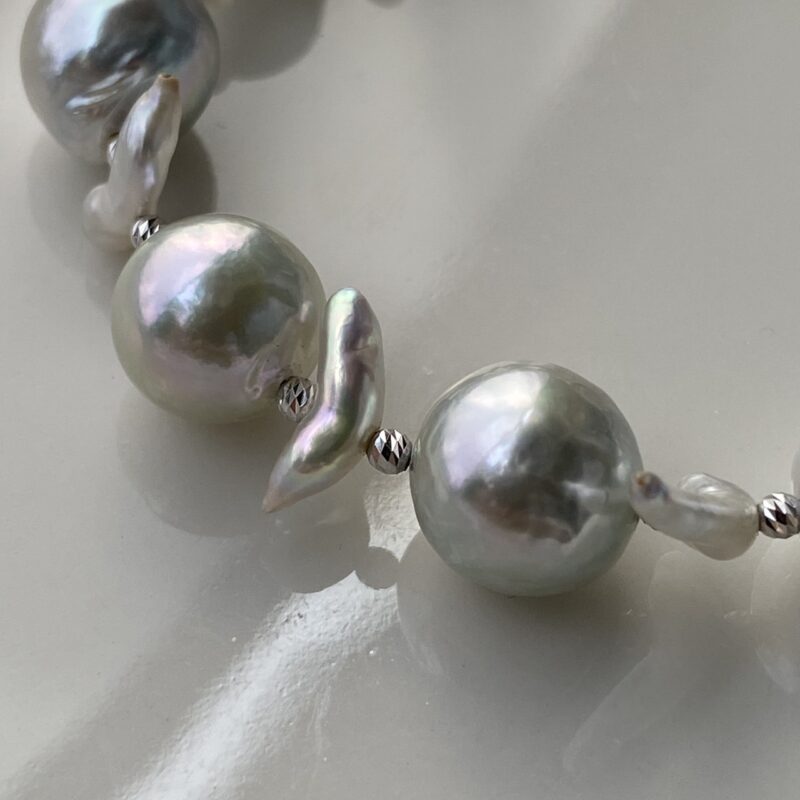
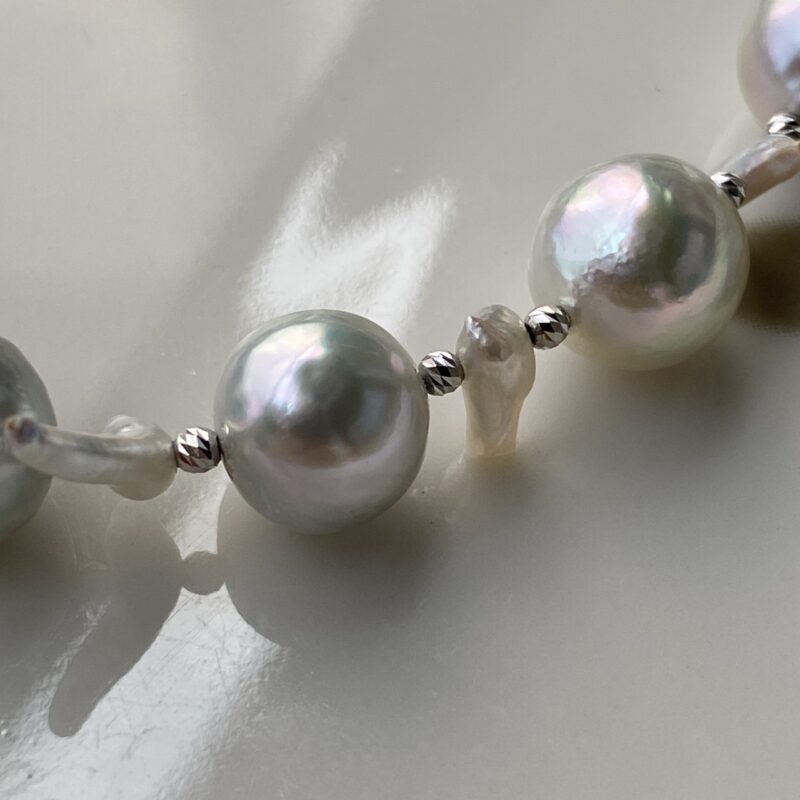
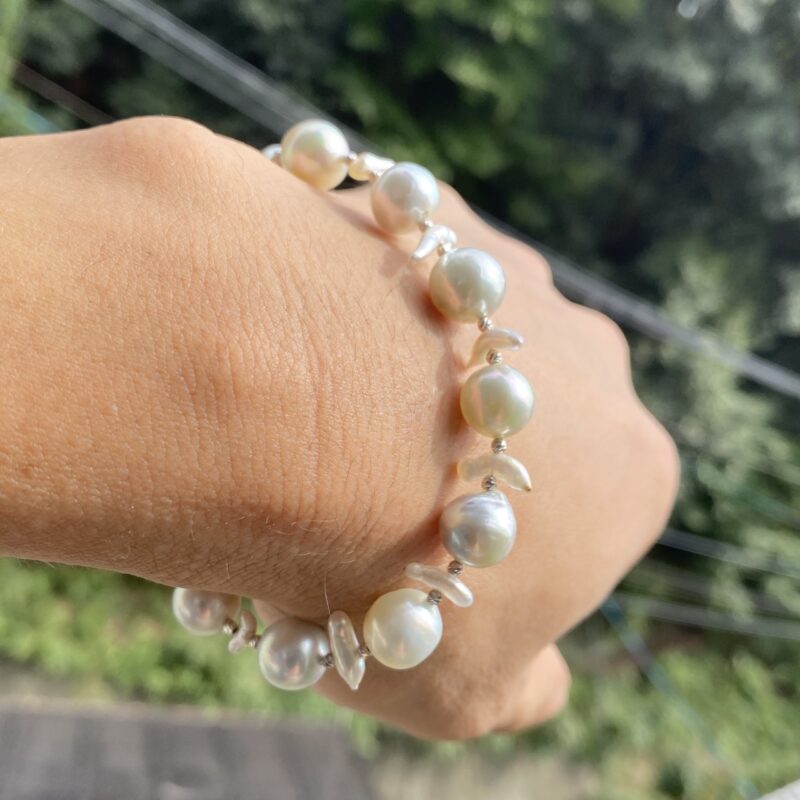
As you can see in the photographs, the pearls in No. 007 are slightly irregular in shape.
Between the 9 mm pearls are K14 white gold mirror balls and Akoya Keshi pearls.
I like this arrangement so much that I have made it into a series called River Bloom.
Since No. 007 was made from the last pearls I could gather from the lot, there is some variation in the depth of their color.
If a pearl dealer saw it, they might say,
“Did you push things a little too far with this one? Haha.”
For that reason, No. 007 is priced lower than the higher-ranked No. 001.
Originally, all the pearls came from the same lot, and their individual costs were the same.
However, by sorting them appropriately, I can give each pearl a price that better reflects its individual characteristics.
The clasp is a clip-type clasp made of silver with rhodium-palladium plating.
This is the standard clasp used by Flower Jem.
Because it can be fastened at various points, the bracelet has a maximum length of 21 cm, but depending on the wearer, it can also be worn at a shorter length.
I once sold bracelets with this type of clasp to a couple I know.
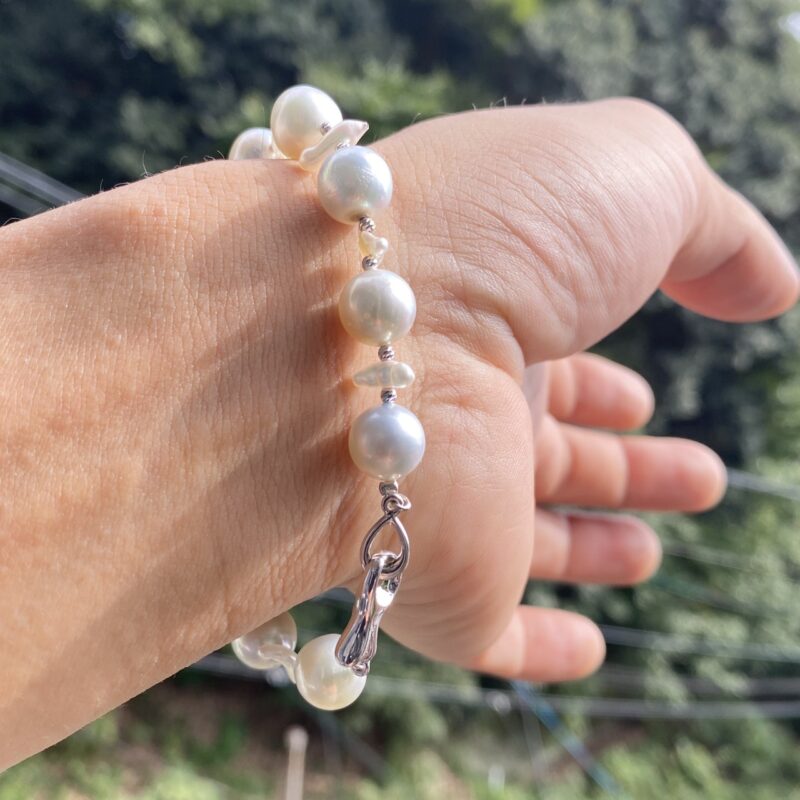
Recently, I heard that the woman has been connecting her boyfriend’s bracelet to her own and wearing the two together as a necklace.
That is something made possible by this clip-type clasp.
She says,
“It looks better on me, so I’m using my boyfriend’s bracelet too.”
No, I certainly don’t think women are frightening.
I have absolutely no comment.
I am simply happy that they are enjoying wearing their pearl bracelets.
And so, with No. 007, my introductions to the seven River Bloom bracelets finally come to an end.
I wrote the articles for No. 001 through around No. 004 quite seriously.
But personally, I couldn’t stand keeping that up any longer, and the articles gradually began wandering further and further away from the subject.
And I rather like that.
🌸Explore More Stories from the Flower Jem Library
If you enjoyed this story about River Bloom 9-007, here are three more articles about pearl sorting, quality, and processing.
They are based on my own experiences working with Akoya pearls, including disagreements at pearl farms, the difficulties of selecting pearls, and the differences between natural colors and pearl treatments.
And, as usual, the stories sometimes wander away from pearls.
Pearl Harvesting Experience: From Sorting Rituals To Showa Era Nostalgia
The Secrets of Pearl Processing: Crafting My Akoya Pearl Earrings
Subscribe for Pearl Stories🐾
Receive occasional letters from my workshop —
stories about pearls, silverwork, Lulu the little dog, and quiet life in Japan.
As a thank you, you’ll get a secret code for 30% off —
usable every time you order, only here, not on Etsy.
I don’t send spam. Just little notes filled with love and pearls 💫
You can read our privacy policy for details.
This space is not only for reviews. You are welcome to write freely about pearl jewelry, ask questions, or share what you feel when you see this piece. Member registration is required to submit your message.
Pearls & Stories
There are no stories yet.