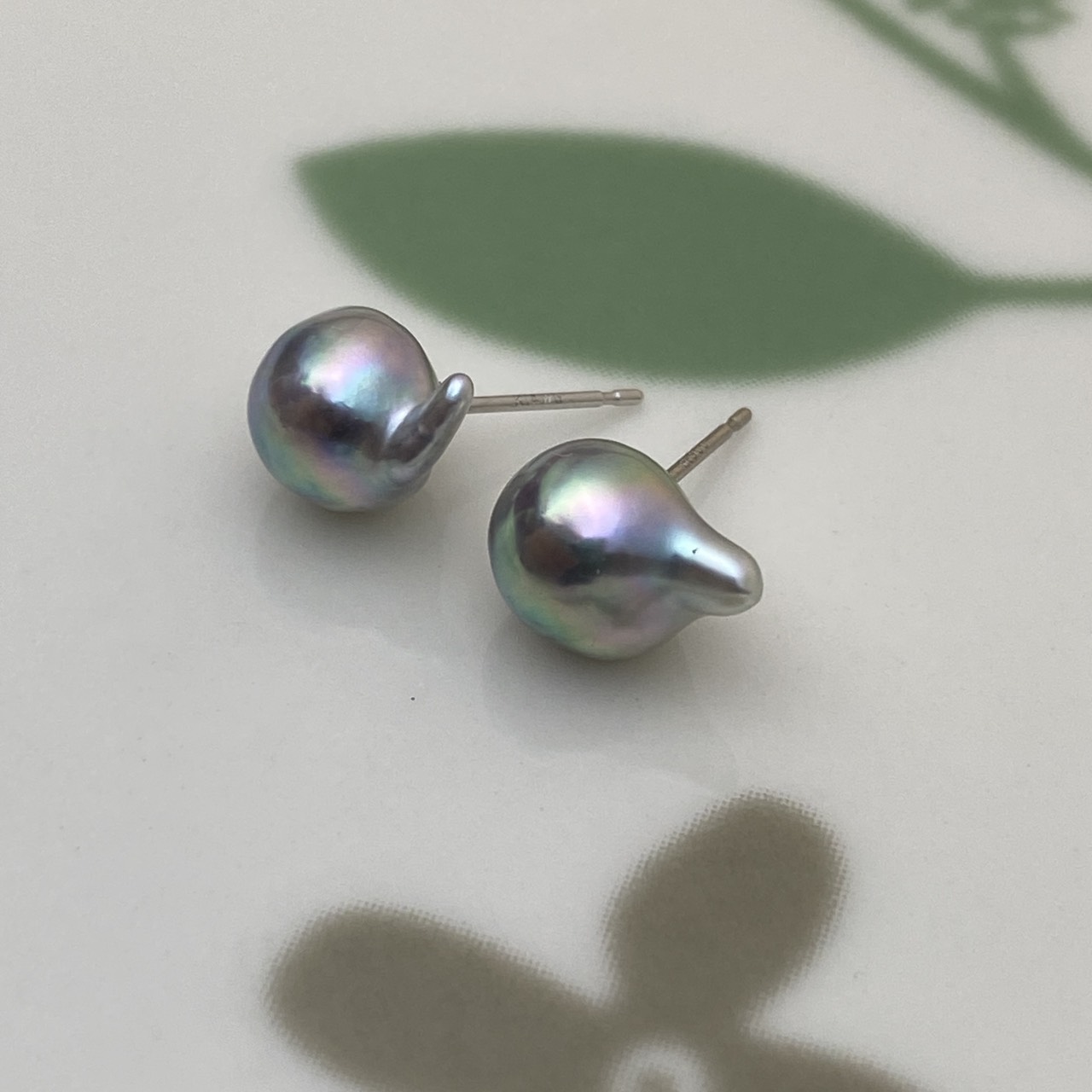
Japanese Akoya Natural Blue 7.5mm Baroque Pearl Earrings, Fittings: Platinum 900 (Pt900)
Thumbs Up
$200.00
1 in stock
Thumbs Up – The Beauty of an Imperfect Akoya Pearl
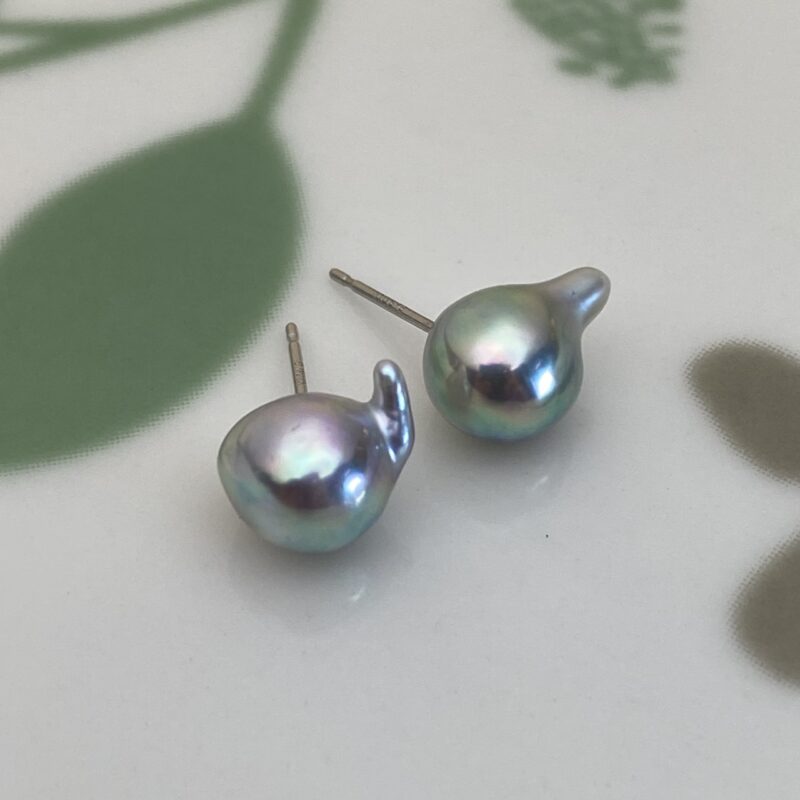
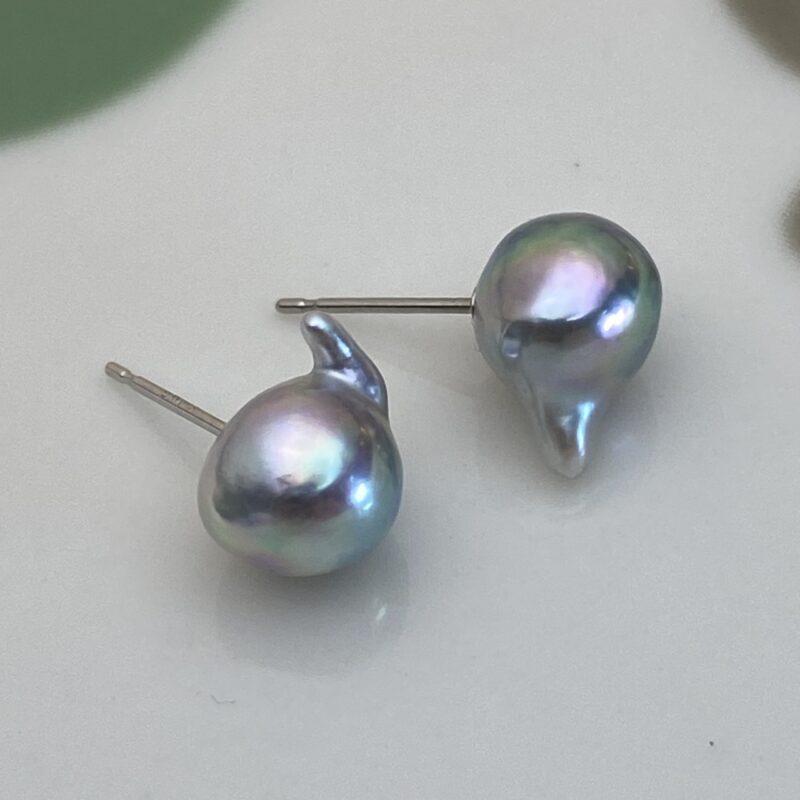
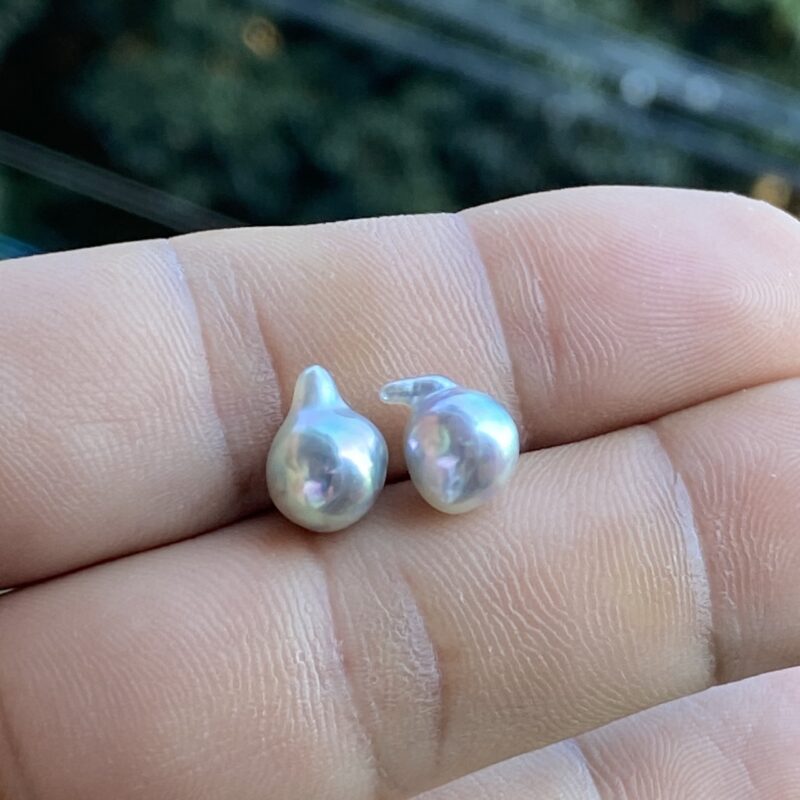
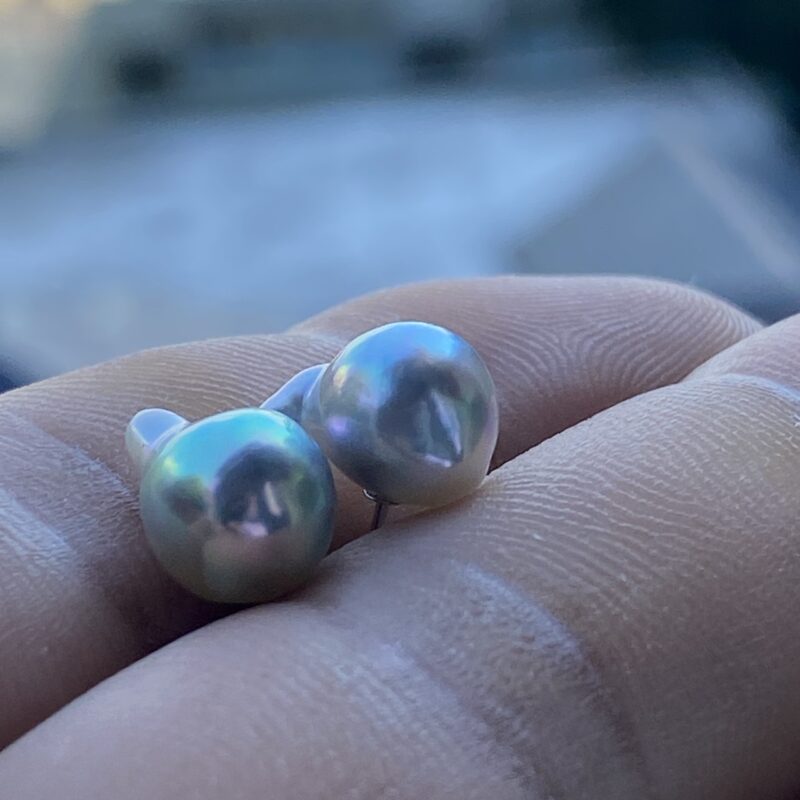
These earrings feature Akoya pearls with large, horn-like protrusions.
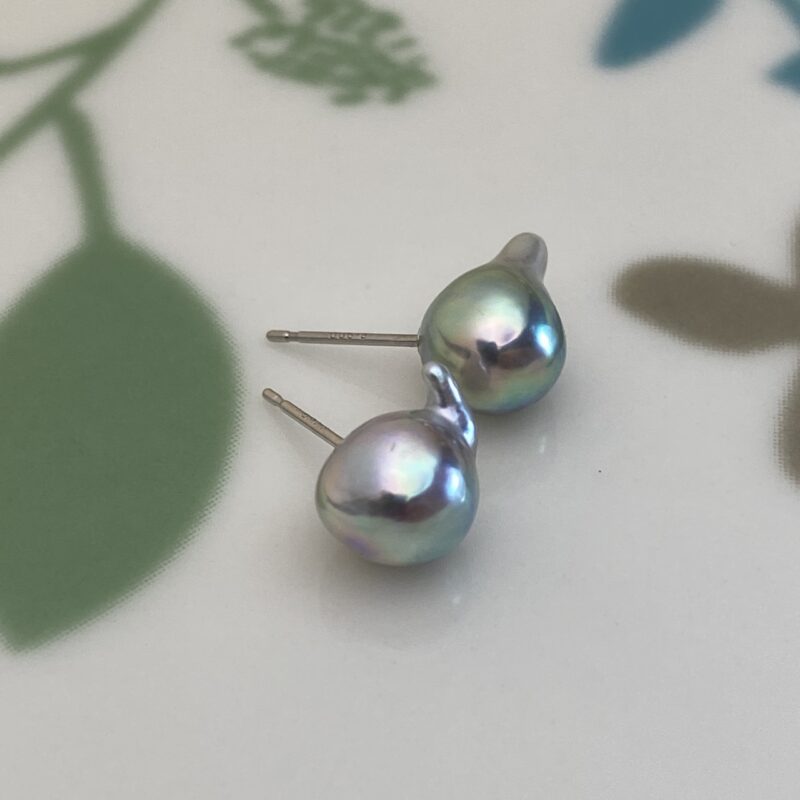
They are exceptionally beautiful baroque pearls, with a deep blue-green color and subtle reddish overtones.
Now, why did these horns form?
Pearls are formed when a round nucleus is inserted into an Akoya oyster, which then secretes layers of nacre around it.
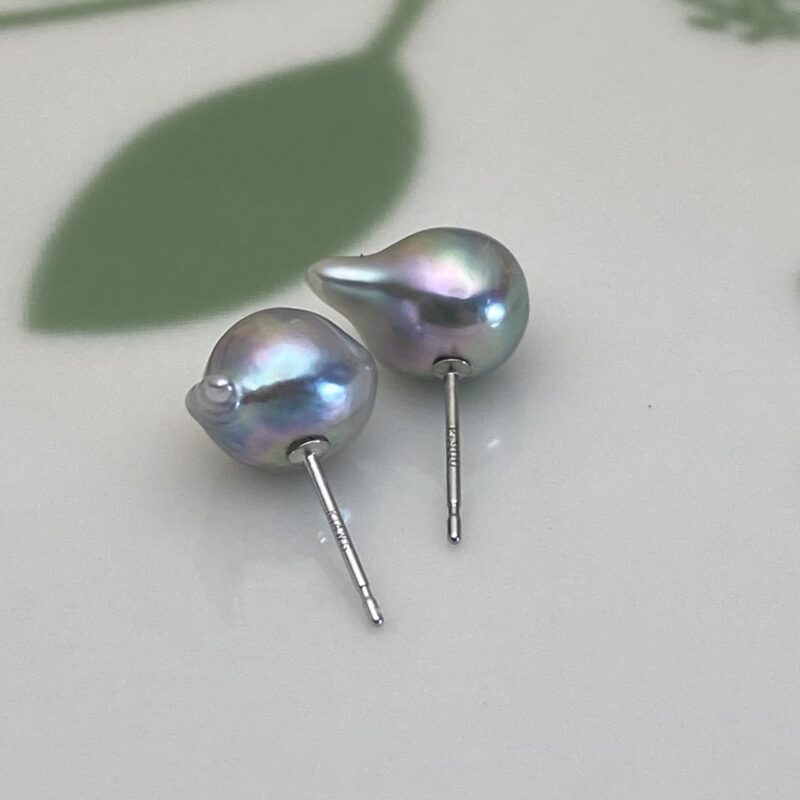
During the nucleation process, a small incision of several millimeters is made with a surgical scalpel at a specific location inside the oyster. The nucleus is then inserted through this opening.
If the incision is not made cleanly, the wound may not heal properly, allowing nacre to escape through the opening.
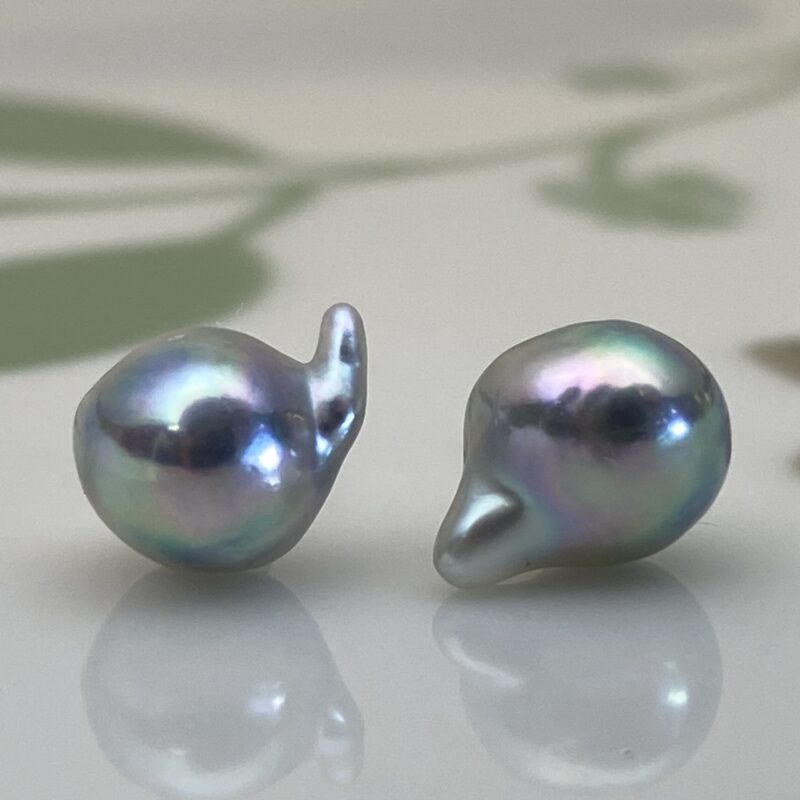
This is something that often happens when the person performing the nucleation is inexperienced or still learning the technique.
At pearl farms, some oysters are carefully tracked so that we know exactly who performed the nucleation. This allows us to evaluate each technician’s skill level and use the results for training.
The most important factor affecting pearl quality is the health and development of the Akoya oyster. The next most important factor is the individual skill of the technician.
When comparing the results of experienced technicians with those of beginners, the difference is quite obvious.
Pearls produced by experienced technicians tend to be rounder, while those produced by beginners often have more protrusions.
And it is not just the shape.
Pearls nucleated by beginners also tend to have more blemishes and discoloration.
For example, when inserting a nucleus into an Akoya oyster, it is better to avoid oysters that contain eggs.
Oysters carrying eggs are more likely to produce pearls with stains or blemishes.
Successful nucleation requires several skills: handling the scalpel correctly, placing the nucleus precisely in the proper location, and accurately assessing the condition of the oyster.
However, even when the nucleation process does not go as intended, something wonderful can occasionally happen.
A pearl may emerge with an unusual shape yet possess exceptionally beautiful luster and color, just like the pearls featured in these earrings.
From the perspective of a pearl farm, such a pearl is considered a failure.
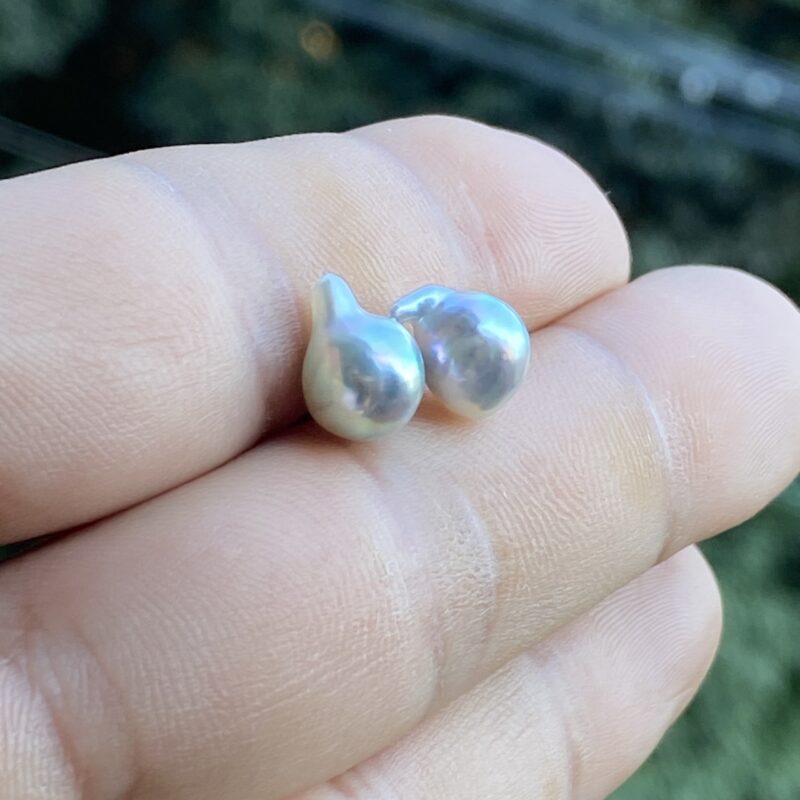
But when we look at it individually, it can be a truly fascinating and beautiful pearl.
Of course, pearl farms depend on producing round pearls with strong luster and desirable white-pink colors to remain profitable.
No matter how charming or distinctive baroque pearls may be, a harvest consisting mostly of baroque pearls would significantly reduce the farm’s profits.
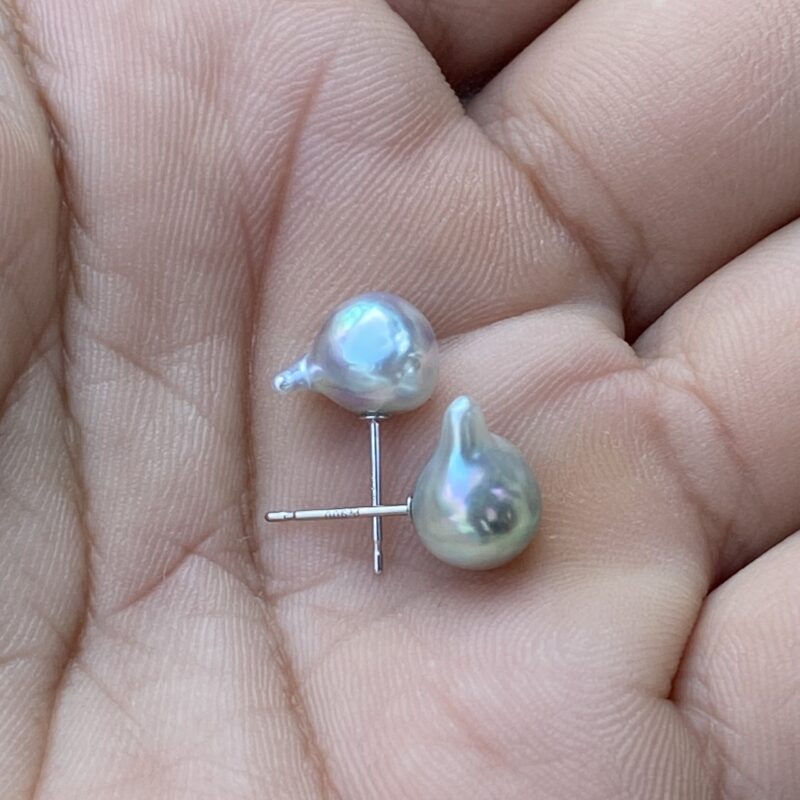
However, for baroque pearl lovers like you and me, pearls like these are exactly what we love to discover, aren’t they?
Pearl: Japanese Akoya Natural Blue Baroque Pearl
Size: 7.5 mm
Color: Deep Blue-Green with Subtle Reddish Overtones
Shape: Heavy Baroque with Distinctive Protrusions
Treatment: Naturally Colored, Untreated
Metal: Platinum 900 (Pt900)
🌸If you enjoyed the story behind these unusual Akoya pearls, here are three more articles exploring pearl cultivation, the unique beauty of baroque pearls, and the fascinating world of pearl processing.
What Are Baroque Pearls? They’re Oddly Shaped—But Are They Valuable?
Nucleus Insertion in Akoya Pearl Farming Begins This Fiscal Year
The Secrets of Pearl Processing: Crafting My Akoya Pearl Earrings
Subscribe for Pearl Stories🐾
Receive occasional letters from my workshop —
stories about pearls, silverwork, Lulu the little dog, and quiet life in Japan.
As a thank you, you’ll get a secret code for 30% off —
usable every time you order, only here, not on Etsy.
I don’t send spam. Just little notes filled with love and pearls 💫
You can read our privacy policy for details.
This space is not only for reviews. You are welcome to write freely about pearl jewelry, ask questions, or share what you feel when you see this piece. Member registration is required to submit your message.
Pearls & Stories
There are no stories yet.